



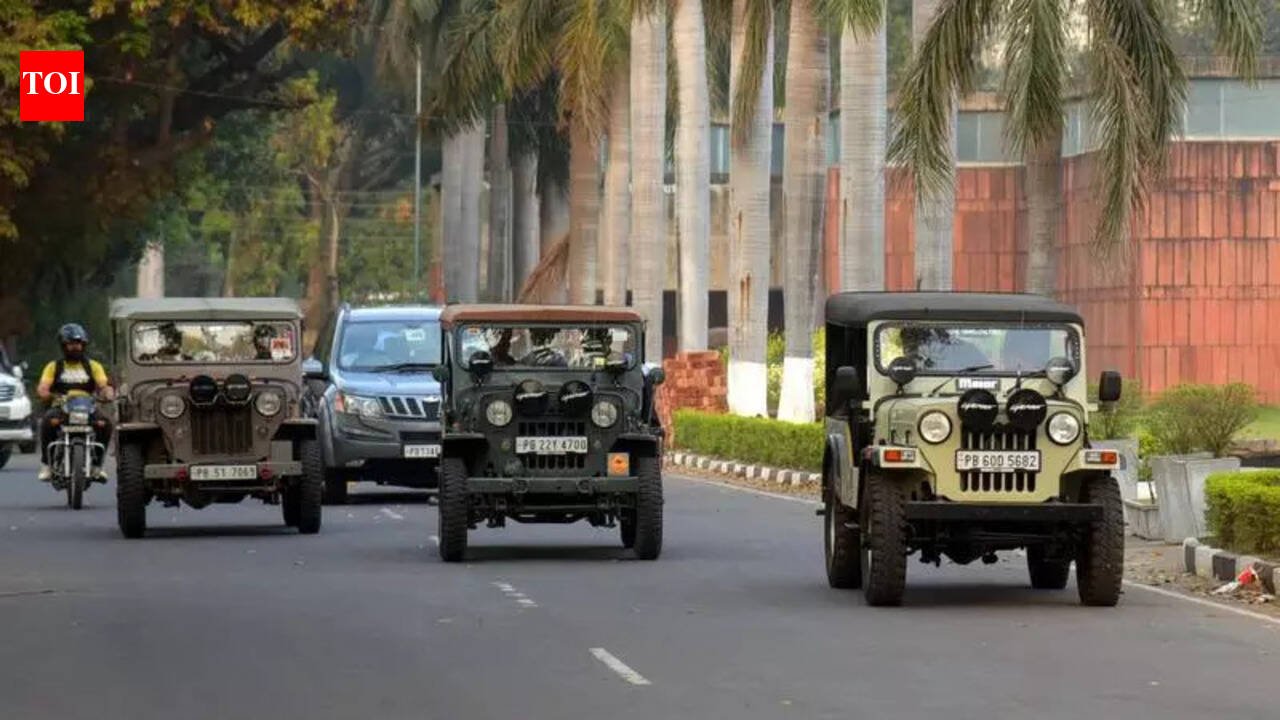
Chandigarh: A guttural roar is felt even before it is heard. A low growl reaching the pit of the stomach. At the next moment, the fight or flight response melts into a sigh of relief. It is the typical boxy, old-school diesel jeep, which has been pulled out of sepia-toned memories and placed on present day roads of Panjab University. The Willys derived Mahindra Jeeps, from the classic CJ3B to the later Major models, are turning heads on internal roads of the varsity again, part of the proud procession of customised vintage off-roaders.Many of these vehicles trace their roots to the thriving modification business in north India, particularly Dabwali in Haryana, a town widely known among automobile enthusiasts for workshops that specialise in rebuilding and customising old vehicles. From there, these rugged machines often find their way into the hands of young owners, especially students who enjoy driving them on city roads and, occasionally, through the wide avenues of Panjab University.The trend is not new. Students recall that such jeeps were a familiar sight a few years ago. Their seniors, present day professionals and even freshly retired seniors, recall the heydays of the jeep before they vanished briefly. They are back and in a new avatar. Call it modification, trend-setting or more philosophically, an expression of individuality. Also, this is the perfect time to zip around in the romanticised jeeps — its neither too hot, nor too cold — a mellow window before Chandigarh’s scorching summer arrives. The evergreen jeeps retain their old world charm with upright windshields, flat fenders and high bonnets, resembling the classic Willys design that inspired the Mahindra CJ3B. But most are far from stock.Owners often rebuild them with modern mechanical components to make them more practical for present-day driving. Diesel engines from newer Mahindra vehicles, upgraded gear boxes, improved steering systems and stronger braking setups are among the common modifications.One such vehicle belongs to Angad Dhillon, who drives a Mahindra CJ3B 1984 model fitted with a Bolero Turbo DI engine.“The original engine was not very practical today. The Bolero Turbo DI engine makes it more reliable and easier to maintain,” Dhillon said. “At the same time, the body and character of the CJ3B are what people like about it.”Modern traffic rules have also influenced how these jeeps are restored. Many older models originally came without seat belts, but owners now install them for obvious reasons. “If you drive these vehicles in the city, you have to update them according to the rules,” Dhillon said. “Seat belts are necessary now.”Another important change involves the roof. Completely open-top jeeps, locally referred to as ‘landi’ or hoodless vehicles, are not permitted on Chandigarh roads. Panjab University authorities do not allow such open vehicles to enter the campus.As a result, most owners keep canvas hoods installed when entering the university. Some drivers, however, remove the hood once inside the campus for short drives along the internal roads.The vehicles are unmistakably conspicuous. Parked near the Student Centre or Arts Block, they often draw curious onlookers who pause to examine the modifications or take photographs.“In a parking lot full of modern cars, these stand out immediately,” said Arshveer Gill, a law student. “They look completely different.”The revival exists partly in a grey area. While many jeeps continue to run with extended registrations and proper documentation, students acknowledge that not every vehicle seen inside the campus regularly ventures onto city roads.Some are kept largely within the university and taken out mainly for short drives or ‘gedis’ around the campus.Whatever their paperwork status, the effect is marked. Each time one of these vehicles passes through PU, its diesel beat chug turns heads, a reminder that decades after they first rolled onto Indian roads, their spirit still finds new admirers.


