



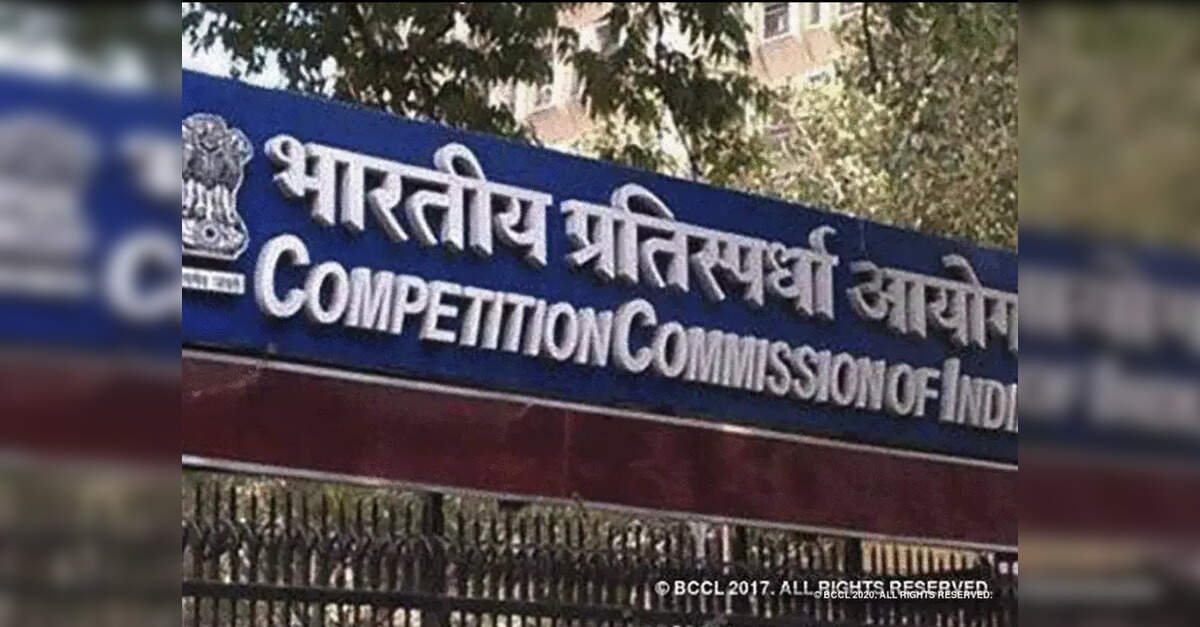
The Competition Commission of India’s (CCI) decision to curb suo motu probes in order to avoid conflicts of interest is raising concerns among competition lawyers, who warn that the move could reduce deterrence in precisely those markets where complainants are least likely to come forward.
In its report tabled in Parliament, the committee noted a clear decline in cases initiated by the CCI on its own motion and specifically questioned the regulator on why ex‑officio enforcement is being scaled back. CCI chairperson Ravneet Kaur acknowledged that suo motu matters were more common in the Commission’s early years, when public awareness of competition law was limited, but said the institution now sees “somewhat of a conflict” in both establishing and adjudicating the same case.
CCI said that it now avoids taking up matters suo motu “unless nobody else is willing to come forward” and exercises restraint in sectors where specialist regulators already exist.
For Alay Razvi, managing partner at Accord Juris, the retreat from suo motu powers cuts deepest in markets where smaller players are economically dependent on dominant enterprises. “The shift away from suo motu probes does reduce deterrence in precisely those markets where competition law is most needed: where buyers, suppliers or smaller rivals are economically dependent on a dominant player and are unlikely to file complaints,” he says.
“If the CCI signals that it will act only when someone formally complains, parties with limited bargaining power may simply absorb the harm rather than risk retaliation. The result is that anti‑competitive conduct can persist, especially in sectors with information asymmetry, weak trade associations or fear of blacklisting. Over time, that can erode the normative force of the Competition Act, turning it into a tool that is used mainly when there is a well‑resourced complainant, rather than as a general safeguard for market structure and contestability,” said Razvi.
The panel also recorded that out of 1,375 anti‑trust cases received so far, 1,237 have been disposed of, reflecting a maturing docket but leaving open the question of how future market‑wide issues will be surfaced if the Commission relies primarily on private complaints.
Restraint in regulated sectors
The CCI has also said that it exercises restraint in sectors where regulators such as TRAI, RBI or SEBI operate, a stance that has helped avoid overt jurisdictional clashes.Indian courts have consistently treated CCI as the primary authority on competition issues even in regulated sectors, while requiring a sequencing where sectoral regulators first resolve technical or licensing questions before CCI assesses market conduct, as seen in decisions such as Bharti Airtel and later commentary on the sequencing test.
Academic work mapping CCI’s interface with regulators like TRAI, SEBI and electricity commissions has shown that sectoral statutes often contain only narrow competition‑related provisions and lack the analytical tools needed to evaluate cartels or exclusionary conduct.
“It is important for the CCI to determine, on a case by case basis, whether the sector regulator alone presents the solution or whether there is an aspect of conduct that falls within the CCI’s jurisdiction. Since the CCI is entrusted with the exclusive jurisdiction for addressing complaints under the Act, each time it determines not to intervene, the rights of a claimant are impacted,” said Avaantika Kakkar, partner and head of competition at Cyril Amarchand Mangaldas.
“Where the CCI steps back too far, anti‑competitive conduct can be addressed, if at all, as a technical breach of sectoral rules, not as a structural problem that distorts the market,” Razvi said. “The courts have recognised that CCI’s jurisdiction over competition issues is independent and concurrent, even where sectoral regulators exist. A more calibrated approach would be for the CCI to use its reference powers, engage in structured consultation, and intervene where there is a clear competition law dimension that sectoral law does not adequately capture.”
Structural Solutions
Policy work on the “regulatory structure of competition law” recommends internal protocols and review mechanisms, such as clearly documented thresholds for prima facie formation under Section 26, transparent use of reference powers, and ongoing monitoring of the competitive impact of regulatory actions, to both safeguard ex‑officio powers and reduce frivolous challenges to the Commission’s authority by showing that investigation and decision‑making are governed by consistent, predictable standards.
Rather than “avoiding” suo motu cases altogether, Razvi favours structural solutions within the CCI that preserve ex‑officio powers while addressing natural‑justice concerns head on. “The better approach is to preserve the CCI’s ex‑officio powers but build internal firewalls that separate the investigative and adjudicatory functions,” he argues.
“Largely, especially in merger regulation, the CCI has committed to natural justice and the process has been appreciated by both domestic and international stakeholders. On the issue of investigations and the enforcement of the law prohibiting anticompetitive conduct however, there will be more challenges to the CCI’s authority because of larger stakes and on this aspect, it would be helpful for the regulator to develop an SOP that prevents frivolous challenges to the CCI’s power,” said Kakkar.


