



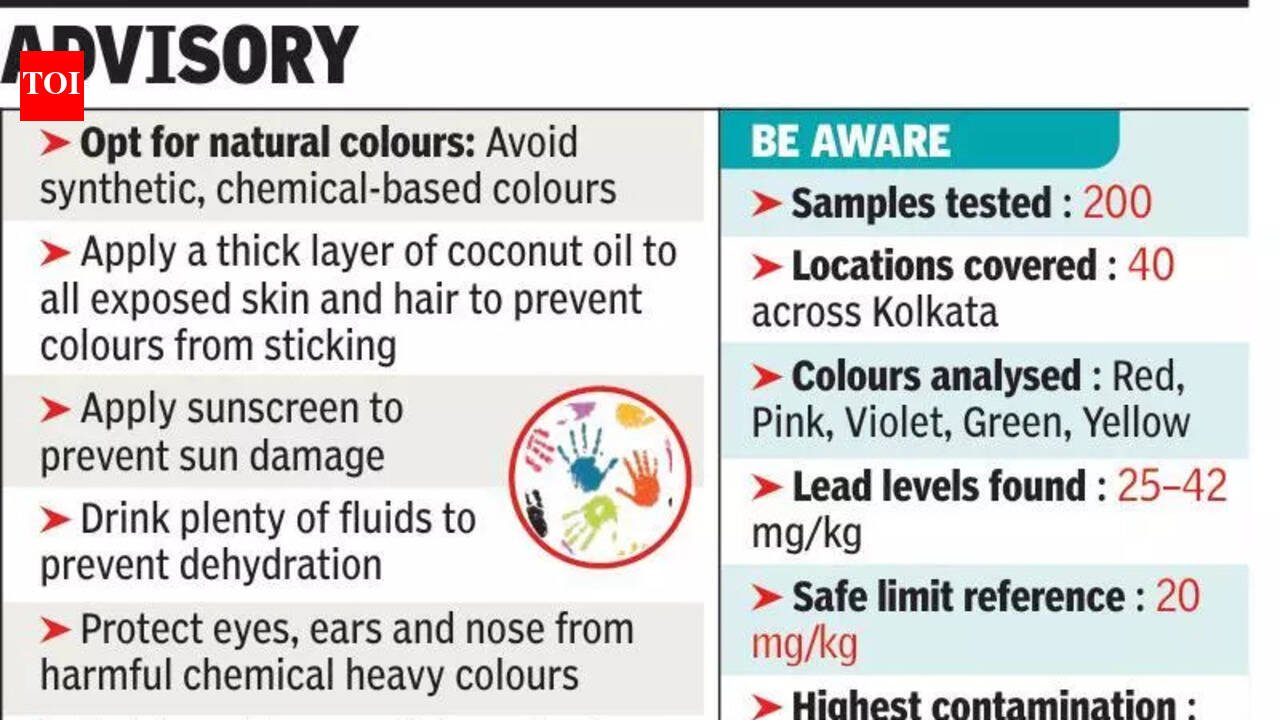
Kolkata: As Kolkata prepares for the vibrant celebrations of Holi, a scientific study has sounded a cautionary note about the safety of commonly used festive colours sold across the city. Research conducted by Krishnajyoti Goswami of Lincoln University College, Malaysia, and Ipsita Mazumdar of KPC Medical College, Kolkata, revealed that several commercially available Holi powders contained potentially harmful levels of toxic substances.The peer-reviewed study analysed 200 samples of coloured powders, including red, pink, violet, green and yellow, collected from 40 locations across Kolkata and its surrounding areas. Many of these products were marketed as “herbal” or “eco-friendly”, yet laboratory testing revealed the presence of heavy metals and bacterial contaminants that could pose serious health risks.Using Inductively Coupled Plasma Mass Spectrometry (ICP-MS), researchers found that lead levels in the samples ranged from 25 to 42 mg/kg, significantly exceeding the 20 mg/kg safety benchmark used for cosmetic products. Yellow powders contained the highest concentration of lead among all colours tested.In addition, endotoxins, harmful substances produced by certain bacteria, were detected at levels up to 35 times higher than internationally accepted dermatological safety limits.Experts warn that exposure to lead, even in small quantities, can have long-term health implications. The metal can enter the body through skin contact or inhalation of fine powder particles, particularly during outdoor celebrations where colours are thrown into the air.Lead exposure is known to affect the nervous system, kidneys and reproductive health, and is especially dangerous for children and pregnant women. In children, even minimal exposure can impair brain development and physical growth.The study also highlighted that endotoxins present in these powders may trigger inflammatory reactions, potentially leading to skin allergies, dermatitis, respiratory irritation and eye injuries.Medical practitioners often report a spike in post-Holi cases involving skin rashes, conjunctivitis and breathing issues. Fine particles from synthetic colours can aggravate asthma and other respiratory conditions.Despite being sold widely in local markets, many Holi colours lack proper labelling, ingredient disclosure or safety certification. Researchers found that several powders were made using industrial dyes typically intended for textiles or leather, raising further concerns about their suitability for direct skin contact.Currently, Holi colours fall outside stringent regulatory oversight, leaving consumers exposed to possible chemical and microbial contamination. The researchers called for stronger quality control measures and clearer safety standards for festive colours, urging authorities to bring them under regulations similar to cosmetics.Chemical or synthetic colors damage hair and may lead to hairfall, other than triggering skin rashes, said Surit Malakar, deramatologist at Techno India DAMA Hospital. “Protect eyes, ears and nose from harmful chemical heavy colors,” he said.As Kolkata gets ready to celebrate, experts recommend opting for certified natural colours and avoiding loose powders sold without proper packaging. While Holi symbolises joy and togetherness, ensuring safe celebrations may require a return to traditional, plant-based colours once used in the festival’s earlier days, researchers said.


