



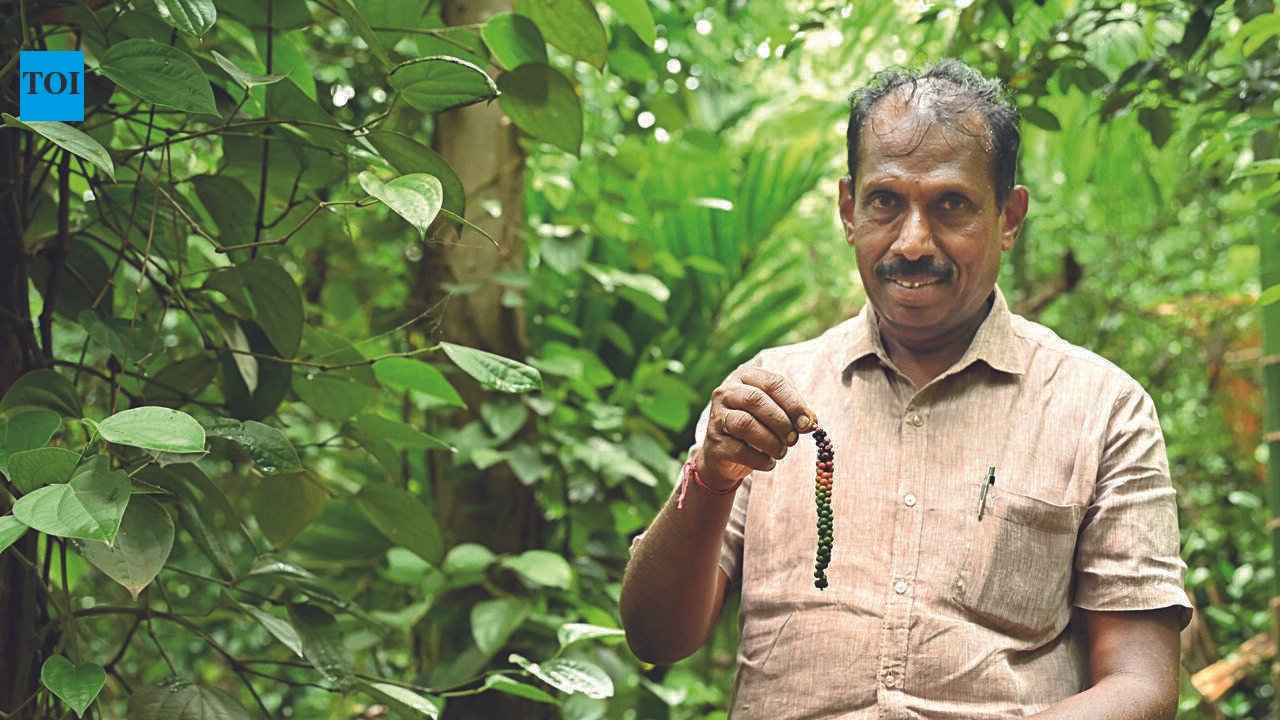
Protecting soil is the duty of every farmer, says V T Valluvan. On his 36-acre farm at Vettaikaranpudur near Pollachi in Coimbatore, he has done just that, raising soil organic carbon from 0.5% to 3.4%, cutting water use and turning an unprofitable coconut plantation into a flourishing food forest.The farming method recently earned Valluvan recognition from the UN Food and Agriculture Organization as a ‘soil health guardian’ for demonstrating how natural farming can restore degraded soils, build climate resilience and ensure profitable farming without chemicals.His model has also been documented globally on the WOCAT platform as a successful farmer-led ecological transformation. “The natural farming system I follow is part of Tamil Nadu’s traditional agricultural wisdom,” says Valluvan.In a region known for coconut plantations, Valluvan’s farm stands apart. Instead of rows of coconut trees, his land resembles a dense food forest, with timber trees, spices, fruits, and other intercrops growing under a multi-layered agroforestry model.“I started coconut farming in 2006 but switched because of poor returns,” says Valluvan, a civil engineer from Vadavalli who also runs a construction firm. “A coconut tree used to yield 110 nuts. The maintenance cost of a tree was more than `500, but coconuts were sold for `3 each. Even if I sold everything I earned only `350 per tree.”Valluvan says he was introduced to natural farming practices through volunteers associated with Isha’s outreach initiatives and a close aide of Nammalvar (green crusader who died in 2013). “They advised me to move away from monocropping and adopt Tamil Nadu’s traditional multi-crop, multi-layer farming system,” he says.Along with coconut, Valluvan started growing mahogany, mountain neem, red sandalwood, ironwood, nutmeg, pepper, banana, papaya, yam, turmeric, curry leaves and several other intercrops. His farm now has more than 9,000 timber trees and 2,000 coconut trees.“If one crop fails or the price of one produce falls, other crops support. This gives stability,” he says. “Through chemical-free farming, mulching, biomass recycling and native cattle-based bio-inputs, carbon content has increased.”The average annual income, he says, has risen to `2.5 lakh per acre annually (from `30,000) supported by diversified income from pepper, nutmeg, fruits, vegetables, timber and spices.“South India has the advantage of farming 365 days a year, with good sunlight, moderate rainfall and healthy soil. Tree-based farming is the need of the hour,” says Valluvan, who has trained more than 7,000 people in natural farming. The farm has also received Tamil Nadu organic certification.


