






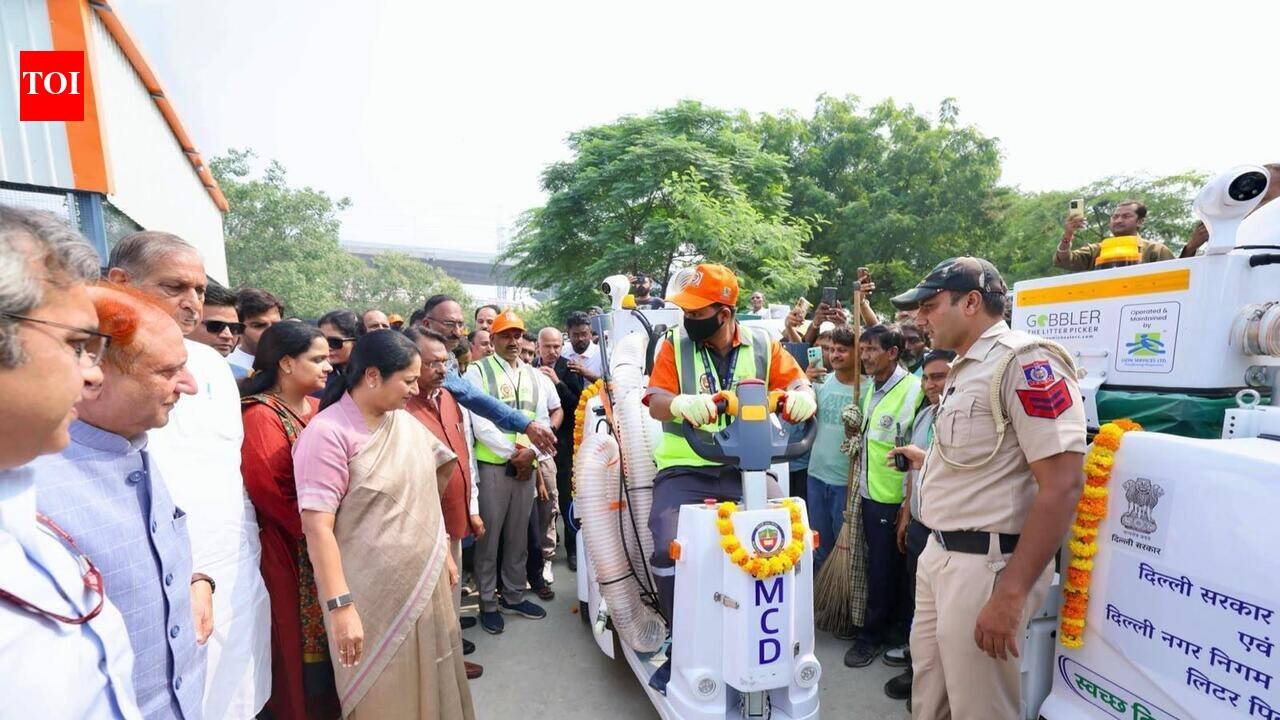
New Delhi: Delhi govt will deploy 1,000 battery-operated mechanical litter pickers across all 250 MCD wards and ramp up waste collection and processing infrastructure as part of a long-term plan to tackle the nearly 15,000 metric tonnes of garbage the city generates every day.Chief minister Rekha Gupta Saturday inaugurated a fixed compactor transfer station (FCTS) in Sarita Vihar and flagged off the first batch of 50 litter pickers, along with new waste collection vehicles to be operated by 35 newly appointed women drivers.“Sanitation and proper waste management are among Delhi’s biggest challenges. The govt is working on a long-term plan to ensure that Delhi residents would not have to face waste management problems over the next 15 to 30 years. Earlier, only 6,000-7,000 metric tonnes of the nearly 15,000 metric tonnes of waste generated daily could be processed. As a result, the city’s garbage mountains continued to grow. To address this situation, work was underway to set up new waste-to-energy plants, increase the capacity of existing plants, establish e-waste centres and install biogas plants to manage cow dung. The govt is also focussing on providing new sanitation machinery, improving infrastructure and making additional staff available,” she said.The govt aims to strengthen door-to-door collection, improve the removal of litter from roads and public spaces, and expand waste processing capacity to prevent further accumulation of garbage at landfill sites. It also aims to ensure that all waste generated in the city is processed and disposed of on the same day.To strengthen collection and transportation in the South-East zone, the govt has approved 428 auto-tippers, 128 e-rickshaws, 25 Tata 407 vehicles for door-to-door collection, 27 refuse compactors, five additional compactors and 30 hook loaders. The zone has also been provided with 100 compactor bins, 1,500 steel dustbins, 300 HDPE dustbins and 10 tipper trucks for horticultural waste.Of the 1,000 battery-operated litter pickers planned for deployment, 150 machines have arrived, with the remaining units expected within a month, Gupta said. The machines will collect small pieces of litter from roads and public spaces and support vacuum cleaning. Funds have also been provided for 100 mechanical sweeping machines.The chief minister said the govt was also working on improving the disposal of religious and household waste. Residents have been urged to deposit unwanted clothes at ‘Arpan’ centres near metro stations for recycling and reuse rather than discard them with regular garbage.Separate arrangements are also being made to collect and process broken idols and puja material. Immersion kiosks are planned across all 250 wards, with around 100 already established, Gupta said. The initiative aims to prevent religious material from mixing with municipal waste.


