






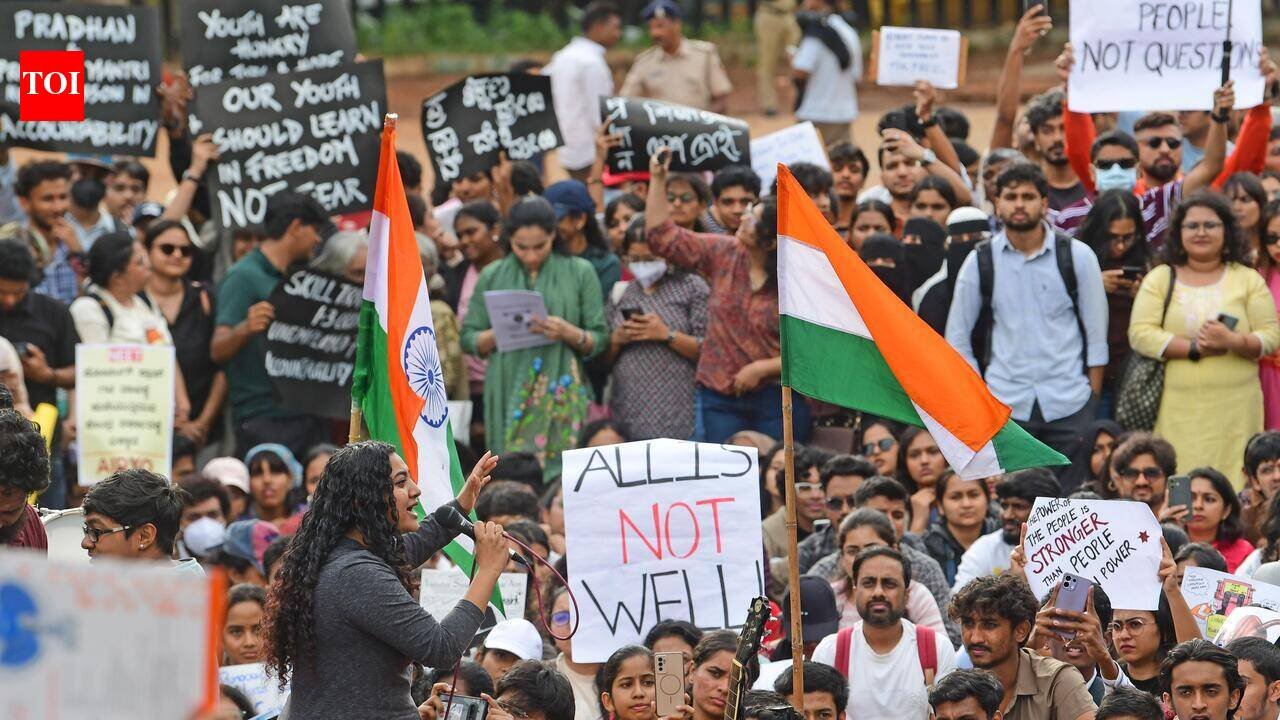
New Delhi: Delhi govt’s amnesty from prosecution for those booked and arrested in connection with the recent protests is in line with Centre’s promise to CJP.But it carries an important caveat, citing Supreme Court’s recent directions.Earlier this week, the apex court restrained states, including Delhi, from taking any coercive action against protesters in the recent student-led agitation and directed them to release those under 18, unless they have criminal antecedents.While an explanation of what constitutes “criminal antecedents” is not specifically mentioned in law, over the course of time and by interpretation, the courts have usually held it to be the pendency of a criminal case against a person.Sunil Gupta, former legal adviser at Tihar jail, cited the Identification of Prisoner’s Act to explain that anyone facing an FIR, unless discharged or acquitted in the matter, will be viewed as having a criminal past.“Usually, those booked previously under what we call heinous offences, such as murder, dacoity, robbery, sexual crimes or NDPS cases are seen as having a proclivity to commit crime again. If an accused has been acquitted or discharged, govt doesn’t see them as having criminal antecedents. Also, if an appeal is pending and there’s no stay on acquittal or discharge by a higher court, it will be seen as clean antecedent,” Gupta elaborated.In effect, each FIR will now be examined by a “screening committee” of Delhi govt that deals with withdrawal of prosecution and usually comprises senior officers from home and law departments, besides the director (prosecution) and a special commissioner of police as members.“The panel will sift through the cases and role of the accused. If any of them is found to have previous involvement in any serious crime, he will be prosecuted in the matter,” a govt source said, adding that the screening process will now start, before the concerned public prosecutor moves court seeking its nod to end the case.According to BNSS, an FIR cannot be cancelled or withdrawn only by a police station, but requires the prosecutor in charge of the case to file an application in court seeking its permission to withdraw prosecution, on instructions from govt.Senior advocate Rajat Kumar flagged the lack of clarity “on whether only convictions will be counted as criminal antecedents” and pointed out that “any pending case, including an FIR registered even 10 years ago, could be treated as a criminal antecedent. Of the 13 FIRs registered so far, the authorities will prepare a list of people, and if you have a case against you, this order won’t protect you. As a result, people may have to seek anticipatory bail or regular bail.”Advocate Shivangi Sharma concurred. “Under this notification, criminal antecedents include any FIR, preventive order, ongoing trial or previous conviction. This covers matters ranging from something as minor as proceedings under Section 144 to more serious offences like hate speech,” she told TOI.


