



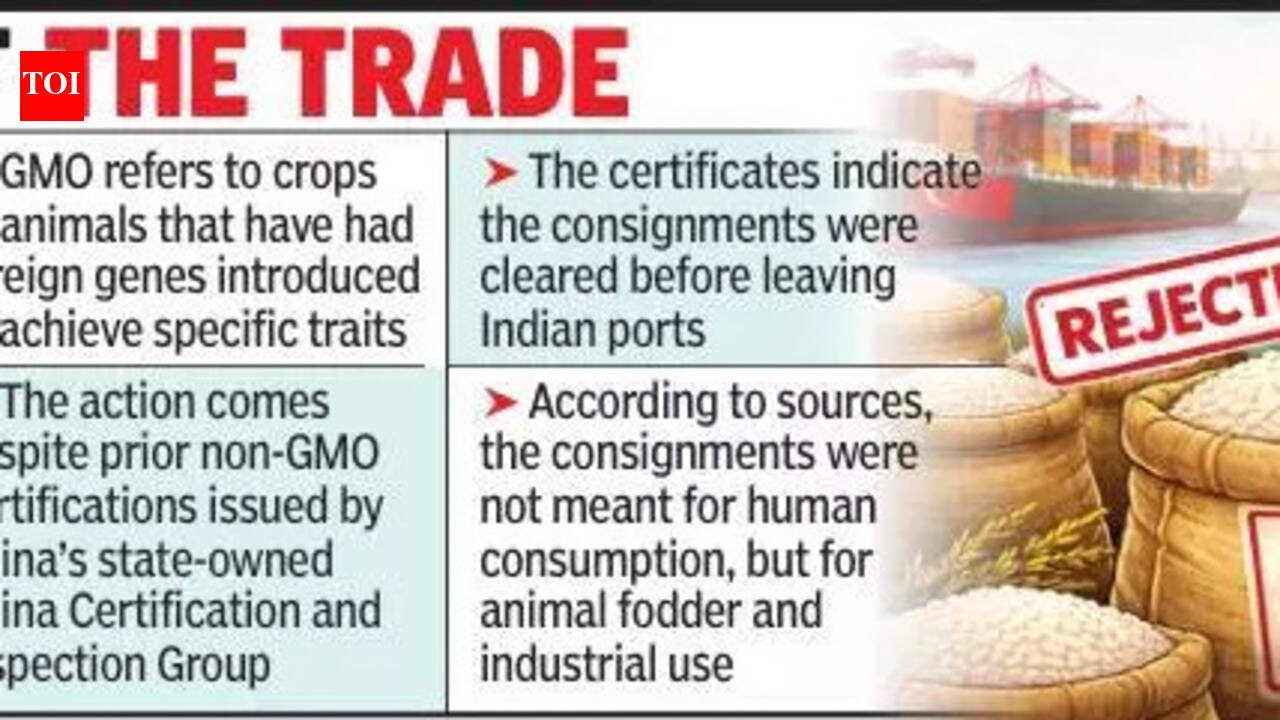
Nagpur: China has rejected rice consignments by three companies, including Nagpur-based Shriram Food Industries, on the grounds that traces of genetically modified organisms (GMO) were found in grains, a move that could have a cascading impact on Indian exports.The rejection comes despite prior non-GMO certifications issued by China’s state-owned China Certification and Inspection Group (CCIC), which also maintains an office in India. Copies of these certificates, accessed by TOI, indicate the consignments were cleared before leaving Indian ports. The consignments were not meant for human consumption, but for animal fodder and industrial use, said sources.GMO refers to crops or animals that have had foreign genes introduced to achieve specific traits. In India, only Bt Cotton, which is resistant to bollworm, is legally approved for commercial cultivation.The other two companies affected by China’s rejection are in Delhi and Raipur. As the companies are now looking forward to a clarification from Indian authorities like the Indian Council of Agriculture Research (ICAR), sources say the move can be part of a larger trade game.Of the total requirement of 16 million tonne rice in China each year, as much as 3 million tonne rice goes from India, which has emerged as a major player in the global market. Other countries that export rice to China are — Vietnam, Thailand and even Pakistan. However, the non-GMO certification is only insisted for Indian consignments, said a trade source here.The rejection on the grounds that India is selling GMO rice can affect exports to other countries too. India also exports rice to African countries, Russia and the US. The GMO tag by China can affect deals with other countries also, said sources involved in the business.The rejected consignments were of non-basmati broken rice, which has a major demand in China. Indian imports or non-basmati rice were banned in China till 2016. However, a diplomatic initiative opened the market, leading to big trade, said sources.In India, cultivation of GMO crops needs approval by the genetic engineering appraisal committee (GEAC). So far only Bt cotton, that is genetically modified to be resistant to bollworm, is allowed.India has introduced DRR Dan and Pusan DST — two varieties of genome-edited high-yielding rice. These are also billed to have 20% lower methane emission. Indian authorities have maintained that genome editing is not genetic engineering of GMO. The former involves altering the existing DNA and the latter involves adding a foreign gene.


