



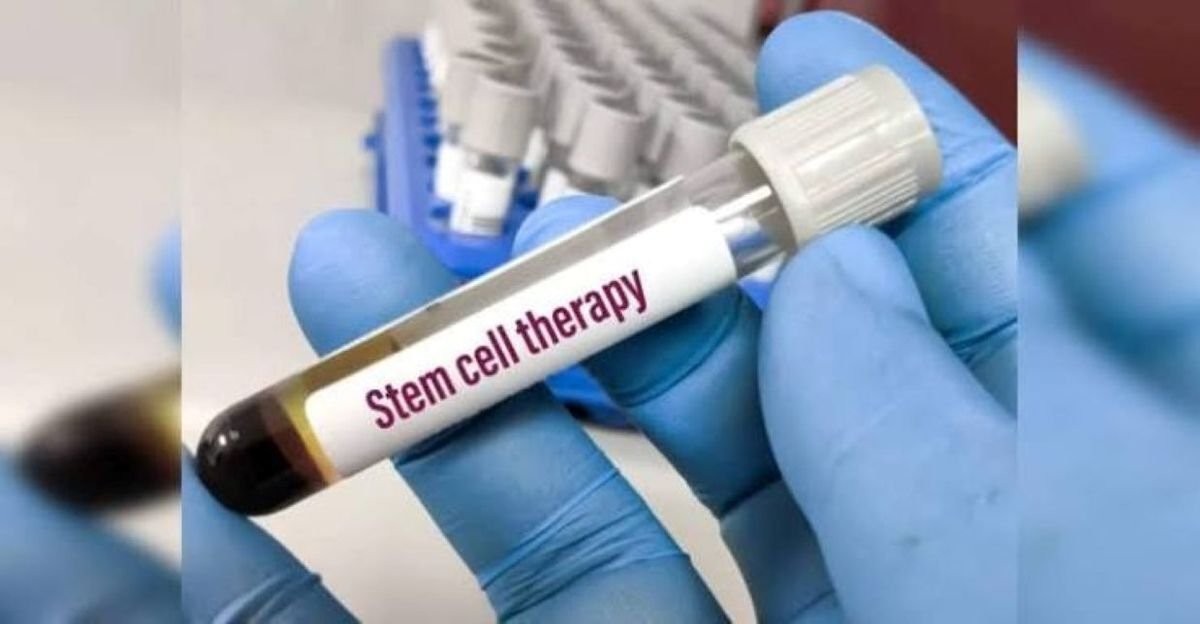
Srinagar, Sep 18: The Ministry of Health and Family Welfare has issued an advisory to States and Union Territories that have adopted the Clinical Establishments (Registration and Regulation) Act, 2010, reiterating the regulatory framework governing stem cell therapy and restricting its use as routine clinical care to approved disease conditions and indications.
The advisory has been issued in view of the Supreme Court judgment dated January 30, 2026, in Yash Charitable Trust & Ors. v. Union of India & Ors., W.P. (C) No. 369 of 2022 [2026 INSC 96], concerning the use of stem cell therapy for Autism Spectrum Disorder (ASD).
It states that stem cell therapy may be offered as standard care in routine clinical practice only for disease conditions or indications included in the list approved by the Health Ministry.
With regard to ASD, the therapeutic use of stem cells is restricted to duly approved clinical trials and cannot be offered as routine commercial medical treatment outside the regulatory framework governing clinical research.
Notably, the National Medical Commission (NMC) has on Sep 5 reiterated that stem cell therapy may be offered as standard clinical care only for approved indications listed under applicable ICMR, Department of Health Research (DHR) and MoHFW guidelines.
The NMC advisory states that unauthorised administration, prescription, promotion or advertisement of stem cell therapy beyond the approved indications would constitute professional misconduct.
State Medical Councils have been directed to examine allegations of such violations and, where professional misconduct by a Registered Medical Practitioner is established after due process, take appropriate disciplinary action.
The regulatory framework further provides that stem cell therapy outside the approved indications is permissible only in the context of research.
According to the ICMR/DHR communication enclosed with the NMC advisory, where stem cells undergo more than minimal manipulation, the research is regulated by the Central Drugs Standard Control Organisation (CDSCO), while research involving less than minimal manipulation falls under DHR, subject to the applicable approvals.
Such stem cell research is required to form part of an approved clinical trial and comply with ICMR ethical requirements, including written informed consent, treatment at no cost to the patient and provision for compensation in case of injury or death.
The MoHFW-approved list enclosed with the documents specifies that only safely and appropriately performed haematopoietic stem cell transplantation is recommended as standard care for the listed indications.
The list covers 18 conditions among adults and 14 among paediatric patients, including various leukaemias, lymphomas, multiple myeloma, aplastic anaemia, certain inherited disorders and selected other conditions.
Importantly, the approved list states that mesenchymal stem cell transplantation is not recommended for any disease condition.
The NMC has also referred to provisions of the Indian Medical Council (Professional Conduct, Etiquette and Ethics) Regulations, 2002, relating to compliance with laws and research involving patients. It states that violation of applicable ICMR guidelines in research involving patients would constitute misconduct.
The Ministry has asked States and Union Territories to disseminate the Supreme Court’s directions to State and District Regulatory Authorities as well as government and private clinical establishments involved in stem cell research, treatment, promotion etc.
The NMC has separately circulated its advisory to Registered Medical Practitioners, medical institutions and State Medical Councils, directing them to ensure compliance with the regulatory framework.
