



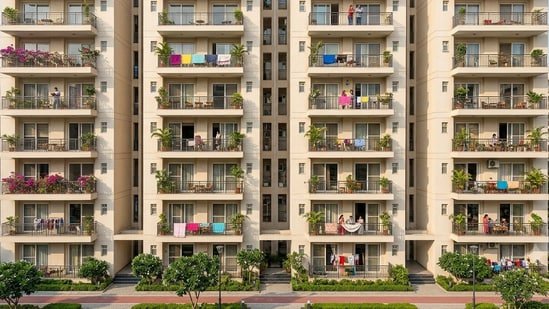
In many apartment complexes, residents often justify alterations by pointing to what others have already done. “Everyone has enclosed their balcony,” or “Several neighbours have extended their bedrooms,” are common arguments during renovation disputes. Legally, however, one unauthorised alteration does not justify another.

If a flat owner erects a permanent shade over a balcony, encloses it to create additional living space, or demolishes partition walls to enlarge a bedroom without obtaining the approvals required under the sanctioned building plan or municipal laws, those changes remain unauthorised, even if several other residents have carried out similar works.
Recognising the confusion faced by homeowners, the Bombay High Court has directed the Maharashtra government to formulate a comprehensive policy clearly specifying the types of alterations flat owners can undertake within their apartments without obtaining prior permission from municipal authorities.
The move is expected to bring much-needed clarity for lakhs of apartment owners who routinely undertake minor renovations but are often unsure whether civic approvals are required.
What prompted the Bombay High Court’s direction?
According to media reports, a Bombay High Court bench observed that homeowners commonly install safety grills, lightweight protective sheds over open terraces, create partitions using gypsum or wooden panels, or reconfigure utility spaces to suit their needs. While these are often viewed as minor modifications, the absence of clear, uniform guidelines has led to confusion, disputes with housing societies and builders, and inconsistent action by municipal authorities.
The judges noted that the open-to-sky terraces, as originally constructed by the developer, had been unauthoritatively enclosed by the neighbour. They held that the continued existence of such unauthorised constructions could not be countenanced and deserved to be removed forthwith, LiveLaw reported.
Also Read: Mumbai real estate: Should you buy an apartment in an old building set for redevelopment?
According to a LiveLaw report, flat owners commonly install safety grills, lightweight sheds over balconies or terraces, or modify internal partition walls using wooden or gypsum panels to suit their requirements. While such alterations are often carried out after an Occupation Certificate (OC) is obtained, similar changes made before the OC is issued can delay the grant of the certificate, preventing the developer from completing the project and often leading to disputes and litigation.
The Bombay High Court observed that there is no clear, affordable or easily accessible procedure for obtaining permission for such alterations. In the absence of well-defined guidelines, many residents undertake these modifications without approaching the municipal corporation.
What will the policy entail?
The proposed framework is expected to reduce disputes while helping homeowners understand what they can legally modify within their apartments without violating municipal regulations.
According to media reports, the proposed policy will address common alterations frequently undertaken in residential buildings, including whether residents can install safety grills, enclose balconies, or add lightweight coverings over balconies and terraces, erect or remove non-load-bearing partition walls, amalgamate or divide rooms using temporary materials, or reallocate utility areas within their flats. Clear guidance on such issues would help both homeowners and municipal authorities avoid unnecessary disputes.
Also Read: Frame guidelines on permissible alterations in flats, HC tells state
The High Court also stressed the need for civic bodies to adopt a uniform approach when dealing with unauthorised alterations, rather than following varying practices across jurisdictions. While the state has been directed to formulate the policy, the court made it clear that until such guidelines are notified, unauthorised constructions will continue to be governed by the existing legal framework and can attract action from the concerned municipal authorities.


