



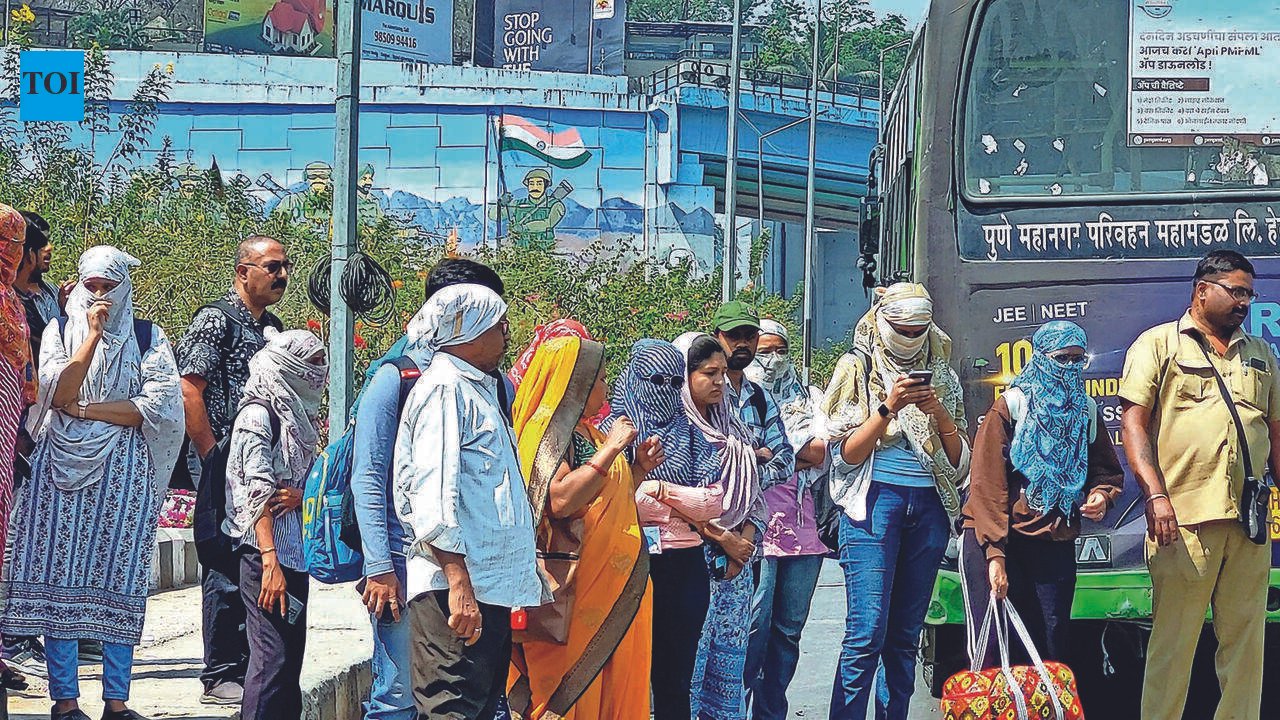
Pune: The state has approved Rs 2.1 crore for an NIT-Bhopal research project on how to make the city cooler and more resilient to extreme heat.Instead of treating the entire city as a uniform entity, the study will explore its small pockets because of the difference in density of trees, concrete structures and water bodies in each neighbourhood and suggest solutions accordingly. The study, Building Heat Resilience Through Blue-Green and Gray Infrastructure — A Hyperlocal Approach for the City of Pune, is expected to guide the city’s heat action plan and become a guide for the state.The city experienced its warmest May nights in at least 12 years this May. Daytime temperatures were elevated too. The city recorded an average maximum of 37.9°C in May — the highest for the month since 2020.Project incharge Surabhi Mehrotra, assistant professor, department of architecture and planning, Maulana Azad National Institute Technology (MANIT), Bhopal, said, “In this project, I have proposed how to optimally use a combination of blue, green and gray infrastructure to bring down the heat in the city.”Blue infrastructure consists of water bodies like lakes, ponds, streams, rainwater harvesting, green means trees, parks, green belts, and green roofs, and gray infrastructure comprises built infrastructure designed to reduce heat, such as cool roofs, permeable pavements, climate-sensitive roads and drainage systems.According to Mehrotra, while green and blue Infrastructure are universally known to help keep cities cooler, building design is also important. “Buildings provide shade and they can be designed to make cities heat resilient. One example is how traditional Indian city planning had compact built forms that mutually shade the streets,” she said.Mehrotra would select pockets in the city for the project using tools like GIS mapping, satellite images, weather data, field surveys and computer models. “Once we receive the work order and funding, we will complete the project within two years,” she said.A GR to this effect was issued by the state relief and rehabilitation department on Monday. It states that the project is not to immediately build infrastructure, but a research and planning exercise to identify where Pune gets dangerously hot and recommend solutions. According to the GR, climate change, rapid urbanisation, more concrete buildings and roads, loss of trees and green spaces, and increasing vehicle pollution are the reasons for the increasing temperature of the city.


