






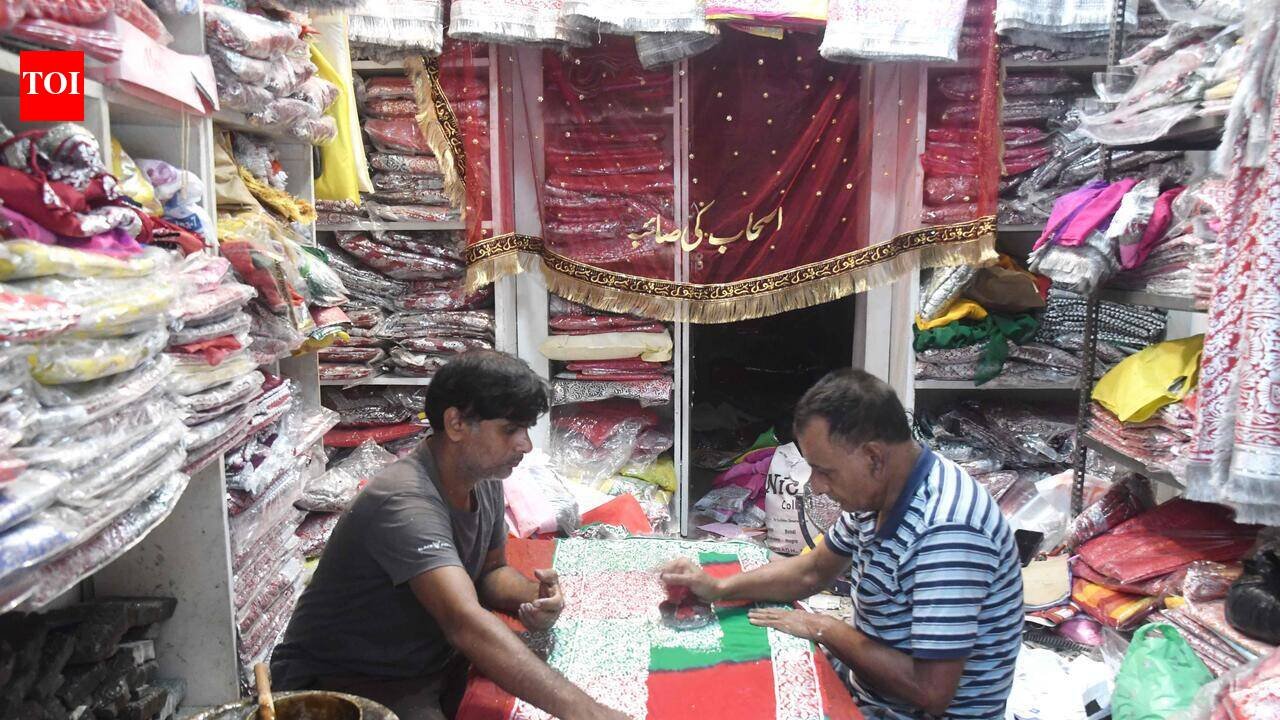
Patna: For Chaapa, one of Bihar’s distinctive textile traditions, survival is no longer simply about preserving an old craft. It is about making handmade work relevant in a market accustomed to speed, consistency and machine-made alternatives. The challenge lies in protecting the character of the craft while improving its quality, durability, design and appeal to a new generation.Though Chaapa is strongly associated with wedding wear in Bihar, particularly among Muslim families in the Magadh region, the craft itself belongs to the state’s wider handmade textile tradition. Its distinctive metallic patterns are created using blocks and fine aluminium foil, known as tabak, rather than conventional dye-based block printing.Today, however, the skill faces a difficult economic reality. Machine-made versions can reproduce similar patterns at a fraction of the cost, while power-loom alternatives are increasingly attractive to consumers because of their durability. Handcrafted Chaapa can lose its adhesive and sheen after repeated washing, making it difficult for artisans to compete on both price and longevity.“The focus should be on creating good-quality and value-based products. At the initial stage, the Government needs to provide handholding and ensure access to raw materials that can guarantee quality. Merely providing a platform to sell products does not address the other challenges,” said Sumati Jalan, owner of Bihart, who has been working with Bihar’s weavers and experimenting with niche products based on the state’s traditional crafts.For Jalan, the answer begins well before a product reaches the marketplace. “Training artisans in the latest techniques, hiring design professionals and helping them understand changing market trends would go a long way in ensuring that these crafts survive and stand the test of time,” she said.The problem is also one of livelihoods. Chaapa remains largely seasonal, with demand peaking around wedding months. For artisans, irregular work and modest returns make it difficult to sustain a family through the craft alone. With older practitioners leaving the profession and younger people looking elsewhere for work, the transmission of skills is becoming increasingly fragile.What is at risk, therefore, is more than a particular style of sari. It is a body of knowledge: how blocks are designed and handled, how adhesive is applied, how delicate metallic foil is placed and how an ordinary piece of fabric is transformed into festive wear.Arts, culture and youth affairs minister Pramod Kumar said Chaapa weaving was an important part of Bihar’s rich textile heritage and assured support to artisans working to preserve the traditional craft. He pointed to initiatives like the Guru Shishya Hastshilp Prashikshan Programme, National Handloom Development Programme, Chief Minister Integrated Weavers Development Scheme, Bunkar MUDRA Yojana and Cluster Development Programme.These initiatives, he said, were aimed at strengthening the handloom sector by improving skills, enhancing productivity and providing better access to raw materials and other resources. Sustained support, he stressed, would be essential to ensure traditional crafts survive and remain relevant to future generations.Yet, govt support alone cannot decide Chaapa’s future. Its revival will ultimately depend on whether artisans can find buyers willing to value handmade work and whether designers can introduce new colours, patterns, fabrics and products without stripping the craft of its identity.That balance may hold the key. Chaapa does not have to remain frozen in the past to remain authentic. Better materials could improve durability; design intervention could broaden its appeal; professional marketing could connect artisans directly with consumers; and newer products could take the craft beyond its traditional wedding market.


