



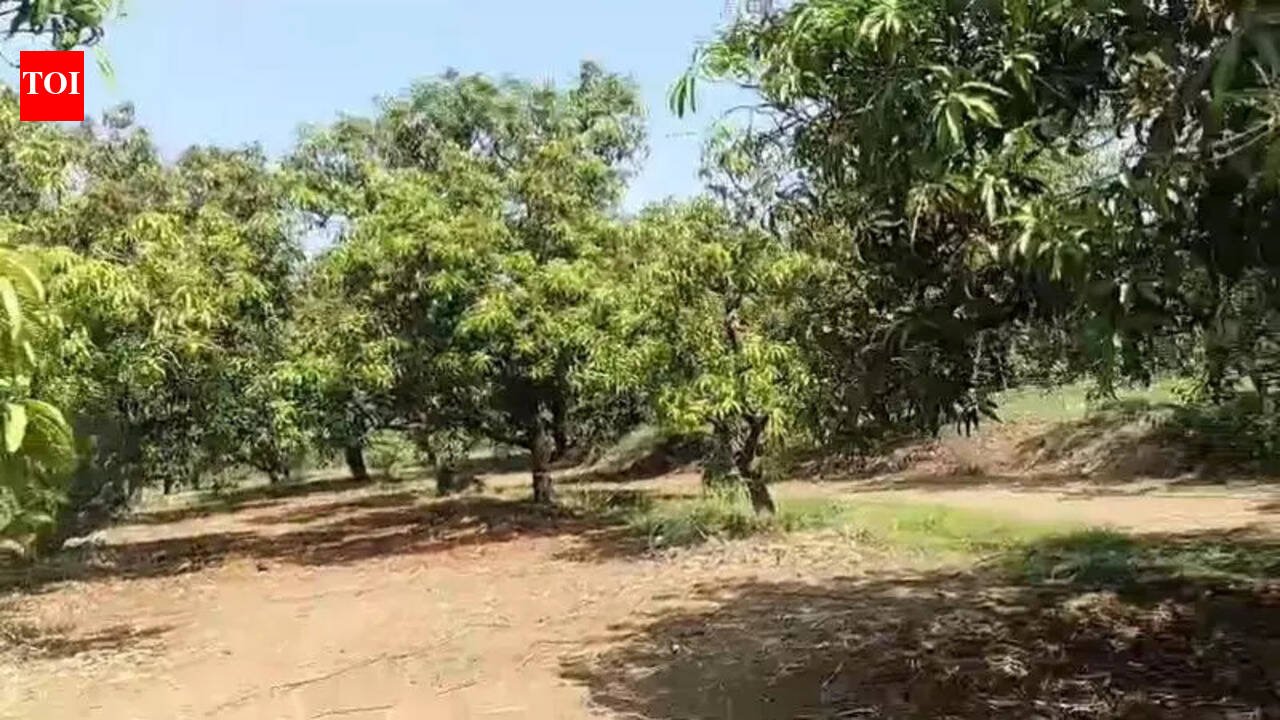
Surat/Rajkot: In a season that began with promise, growers of the delectable Valsadi Hafoos (alphonso) are now staring at a disappointing harvest, with orchards showing far fewer fruits despite initial bumper flowering.Farmers across Gujarat say adverse weather – the most recent unseasonal wet spell – vegetative flush and a severe thrips infestation have collectively reduced fruit retention, with many expecting barely half their usual yield.Ashok Naik, who owns a 5,000-tree mango orchard in Sonwadi village of Navsari, said the past few years of erratic weather have steadily eroded crop reliability. “This year, prolonged cloudy conditions led to a heavy thrips attack. Though flowering was abundant, most fruits dropped at the setting stage. Those who used plant growth regulators managed to save some crop, but many suffered heavy losses. Also, flowering was largely male, which reduced fruit formation,” he said. Naik, who typically harvests around 2 lakh kg, now expects barely 60,000 kg.Sudip Naik from Ichhapore village echoed the concern, noting a shift in long-standing crop cycles. “We earlier saw bumper crops every alternate year, but that pattern has broken over the past 7–8 years due to changing weather conditions. Even when flowering and initial fruiting look promising in Dec, the final yield often drops to around 25%. This year, mangoes are hardly visible on trees, and farmers are reluctant to even discuss prices,” he said, adding that many cultivators have been forced to modify their farming practices.Officials, too, acknowledge the scale of the problem. DK Paladiya, deputy director of horticulture for the Navsari-Tapi region, said a severe thrips infestation during early Feb caused widespread fruit drop. “The pest attack during the crucial fruit-setting stage led to significant losses. While some farmers managed it with timely interventions, most could not prevent the damage,” he said.In the Saurashtra region, particularly in the Kesar mango belt, the outlook remains mixed. While some orchards are reporting satisfactory yields, others have suffered due to irregular flowering and fresh vegetative growth.Tushar Dhameliya, director of a Farmer Producer Organisation (FPO) in the Gir area, said new shoots in several orchards will not bear fruit this season. “In such orchards, there may be little to no yield this year,” he said. However, he added that an expansion in the total cultivation area could partly offset these losses, keeping overall production near average.Kesar mango is cultivated across nearly 40,000 hectares in 11 districts of Saurashtra — including Gir Somnath, Junagadh, Amreli and Bhavnagar — with an average annual output of about 2.8 lakh metric tonnes.


