






India’s ambition to emerge as a global innovation and R&D powerhouse will depend on more than its vast talent pool, digital scale and growing technology capabilities. It will require regulatory certainty, stronger governance, greater ownership of intellectual property and a policy ecosystem capable of keeping pace with innovation.
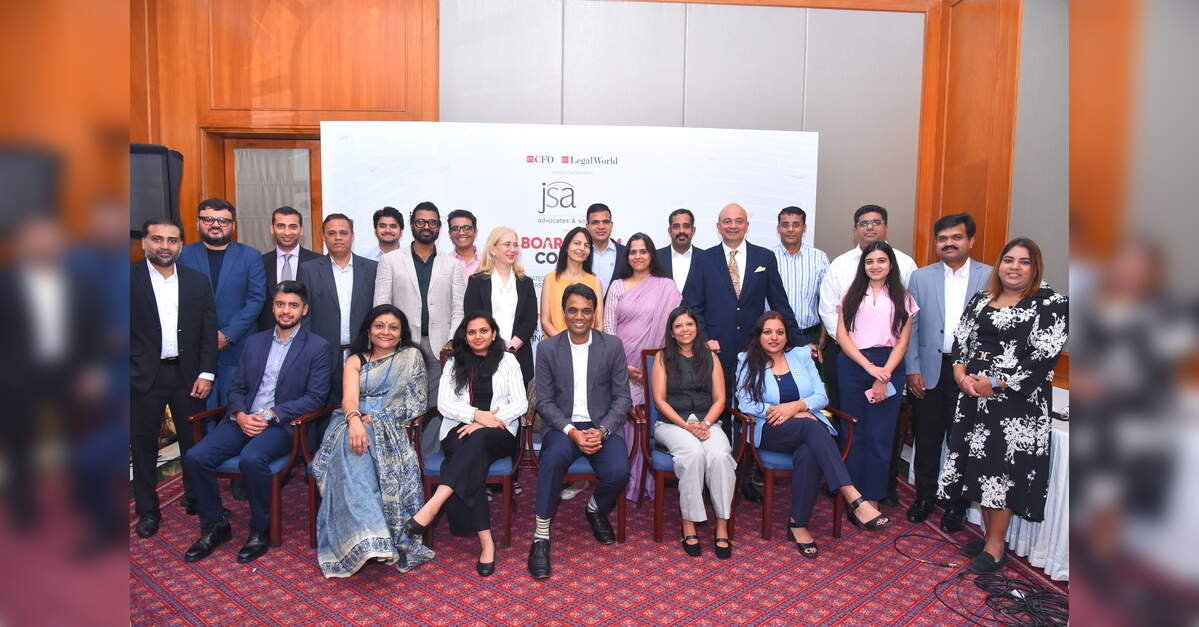
This was the central takeaway from the Executive Roundtable, “Unlocking Innovation, Investment and Strategic Growth: Driving Cutting-Edge Technology through Legal & Policy Enablers”, hosted by ETLegalWorld and ETCFO, in association with JSA Advocates & Solicitors, under the JSA Boardroom Connect platform in Bengaluru on September 3.
The discussion brought together senior leaders from technology, manufacturing, finance, legal and consumer businesses to examine whether India can move beyond its traditional position as a delivery and cost-arbitrage hub and assume a larger role in global innovation, R&D and strategic decision-making.
A key theme was the changing role of India’s Global Capability Centres. While GCCs have expanded well beyond back-office operations and are increasingly taking on product engineering, AI, automation and research responsibilities, the next stage of the transition will be defined by ownership. The real test, participants indicated, will be the extent to which Indian operations influence product roadmaps, own intellectual property, generate patents and participate in global risk and business decisions.
The discussion also turned to the regulatory environment, with participants highlighting how complex approvals, fragmented processes and delays can influence global investment and expansion decisions. As companies increasingly evaluate alternative locations for strategic capabilities, ease of doing business and regulatory predictability are becoming as important as India’s talent advantage.
Governance, too, emerged as a critical boardroom priority. The growing use of AI is pushing leadership teams to move beyond viewing technology governance as a compliance exercise. Boards and executive teams will increasingly need to understand how AI is being deployed, the data being used, the risks involved, the tools approved for use and the safeguards required for responsible adoption.
The broader message was that governance cannot simply translate into additional layers of approval. Its role must be to provide clarity, accountability and guardrails that enable businesses to innovate with confidence and speed.
Another important thread was the role of legal teams in business strategy. Rather than entering the conversation after an investment or innovation decision has been made, legal functions need to be involved earlier to help businesses design the right legal architecture, anticipate regulatory challenges and navigate risk without slowing commercial decision-making.
The roundtable also examined the capital challenge facing Indian innovation. Participants discussed the need for deeper pools of risk capital to support early-stage experimentation, alongside stronger availability of late-stage funding for companies seeking to scale globally. Without adequate capital across the growth cycle, India’s ability to convert ideas and technological capability into globally competitive businesses could remain constrained.
Geopolitics added another dimension to the conversation. Sanctions, tariffs, trade tensions and shifting global alliances are increasingly influencing where companies invest, manufacture and locate strategic capabilities. This makes India’s domestic policy and regulatory environment even more significant as businesses weigh opportunity against execution and compliance risks.
The Bengaluru discussion was part of the JSA Boardroom Connect series, following earlier editions in New Delhi, Pune and Chennai. The platform will next travel to Hyderabad and Mumbai, continuing the conversation around the legal, policy and governance frameworks shaping India’s next phase of business and economic growth.
The roundtable featured participation from Probir Roy Chowdhury, Sajai Singh, Rashi Saraf, Prakashan Manikoth, Bankesh Dhingra, Denise Gardner, Swati Biswas, Udaya Ragavan, Lakshmi Menon, Panduranga Acharya, Sudha Hooda, Anupriya Garg, Priya Lohani, Hiranmai Rallabandi, Kartikeya Rawal and Ramesh Bafna.
India, the discussion underlined, already has many of the ingredients needed to become a major global innovation centre: talent, scale, a large market and growing technological capability. The bigger challenge now is converting those advantages into deeper R&D, greater IP ownership, stronger strategic decision-making and globally competitive enterprises.
The question for India’s boardrooms and policymakers is therefore no longer whether the country can innovate. It is whether its legal, regulatory and governance frameworks can evolve quickly enough to support the innovation already underway.
[Opinions are personal]


