


The rise of C Joseph Vijay, 51, known by his mononym Vijay, to the office of the chief minister (CM) in Chennai on Sunday marks a rupture in Tamil Nadu politics. Since CN Annadurai took the oath as CM in 1967, ending the Congress monopoly over power in Madras state, only politicians associated with the Dravidian Movement have occupied Fort St George, the seat of government in Tamil Nadu. And all of them ran single-party governments. The Tamilaga Vettri Kazhagam (TVK) government is set to change these patterns that have distinguished Tamil politics from the rest of India. A coalition government that includes a national party and a CM from a non-Dravidian outfit is as radical as the term can mean in Chennai.
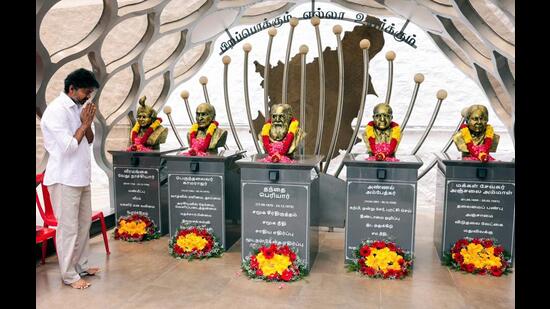
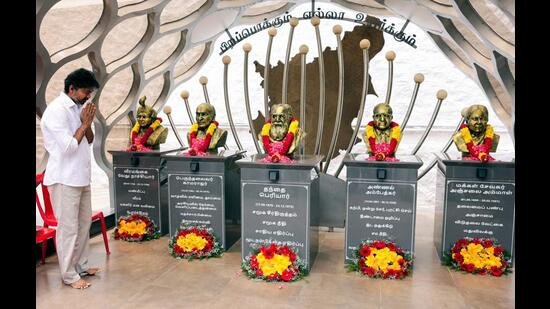
The TVK is a two-year-old political start-up centred on Vijay’s stardom. Vijay has claimed allegiance to the inheritance of Periyar EV Ramaswamy and K Kamaraj, titans who defined Tamil politics in the last century as ideologue and CM, respectively. This combination of two distinct political lineages suggests that he is likely to adopt a political path that combines the Dravidian movement’s social justice agenda and the Congress’s centrist politics. He may be less strident in espousing federal impulses, including linguistic sub-nationalism, that guided state politics all these years. The TVK coalition includes the Congress, Communist parties, the Indian Union Muslim League, and the Viduthalai Chiruthaigal Katchi, and Vijay has sought their representation in his ministry. A coalition government is welcome because it makes the government more representative and accountable. The necessity to heed other players can work as a check against any leader or party wielding absolute power. It can help the inexperienced CM to seek counsel from leaders of established parties and ensure the stability of his government — its majority is a precarious two MLAs at this moment.
CM Vijay’s challenges are multifold. One, he needs to guide his young party and government through a minefield of competing interests and clashing ambitions, especially of the political elite yet to reconcile with the loss of power and the emergence of a new political force. Two, Vijay has to translate the hope his party has triggered, especially among the youth and women, into actionable policy. Over the decades, Tamil Nadu has built itself as an industrial power house and a model welfare state. It must stay the course. These are uneasy times for Tamil Nadu as the state manages the transition. However, the fact that the member of a faith, which comprises just 6% of the state’s population, won a popular mandate on a secular agenda in these polarising times is a comment on the character of India’s polity and the surprises its electoral democracy can serve up.
