



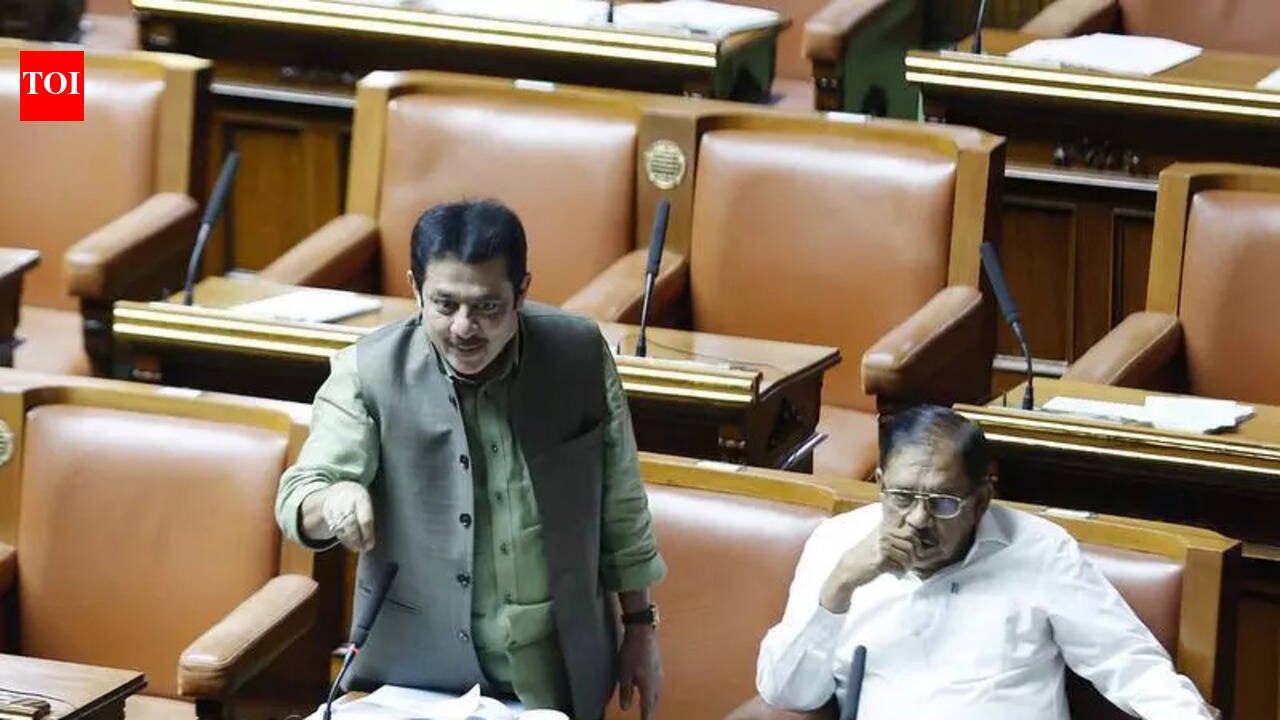
Bengaluru: Amid noisy protests and a walkout by the opposition, the legislative assembly Monday passed the Gram Swaraj and Panchayat Raj (Amendment) Bill, 2026, allowing the use of ballot paper instead of electronic voting machines (EVMs) in local body elections. Rural development and panchayat raj minister Priyank Kharge, who tabled the bill, said concerns over the reliability of EVMs were increasing and the bill introduced six changes to election processes. Referring to data from the Maharashtra assembly elections, he alleged discrepancies in voter turnout figures, claiming there was a sharp rise in votes between 5pm and 9pm on polling day. He also pointed to similar concerns in Haryana and Madhya Pradesh, adding that several organisations had raised questions but responses from the Election Commission of India were inadequate. BJP strongly criticised the move with opposition leader R Ashoka calling it a “Tughlaq-like decision”. He accused Congress of contradicting its own legacy, pointing out EVMs were introduced when Rajiv Gandhi’s was PM and argued that the Supreme Court had upheld their use. He questioned the govt’s sudden shift. BJP’s Sunil Kumar alleged the bill benefited only Congress and not the public, warning of possible misuse and a return to booth capturing. He said the move contradicted the state’s ‘Brand Bengaluru’ image and raised concerns about electoral integrity. Suresh Kumar, also of BJP, opposed the bill, alleging it was driven by political interests rather than public benefit, and called for “introspection” instead of blaming electoral systems. But Priyank defended the bill, saying ballot papers ensured greater transparency and argued that irregularities in EVMs were harder to detect. The debate led to repeated disruptions, with the opposition accusing the govt of taking the state “back to the stone age,” while Congress insisted the change was necessary to restore trust in the electoral process. Ashoka said if Congress had no trust in EVMs, they had no right to sit in the assembly. This triggered uproar in the House, with BJP members staging a walkout. The assembly passed three other bills, including Karnataka Freedom of Choice in Marriage and Prevention and Prohibition of Honour and Tradition Bill, 2026, also known as the Eva Nammava bill, aimed at curbing honour killings and caste-based violence linked to inter-caste and interfaith marriages. Law and parliamentary affairs minister HK Patil, who introduced the bill, said it sought to address crimes beyond murder arising from “so-called” honour linked to marriages. BJP members, including Suresh Kumar and Sunil Kumar, opposed the move, arguing that existing laws were sufficient. Patil said the govt would consider suggestions from all members while framing the rules. The House also cleared the Karnataka Tax on Profession, Trades, Callings and Employments (Amendment) Bill and the Karnataka Jnana Bhandar Manuscripts and Digitisation Bill. Patil said the govt would set up an authority for manuscripts, which would conduct surveys and digitise at least five lakh pages every year.


