






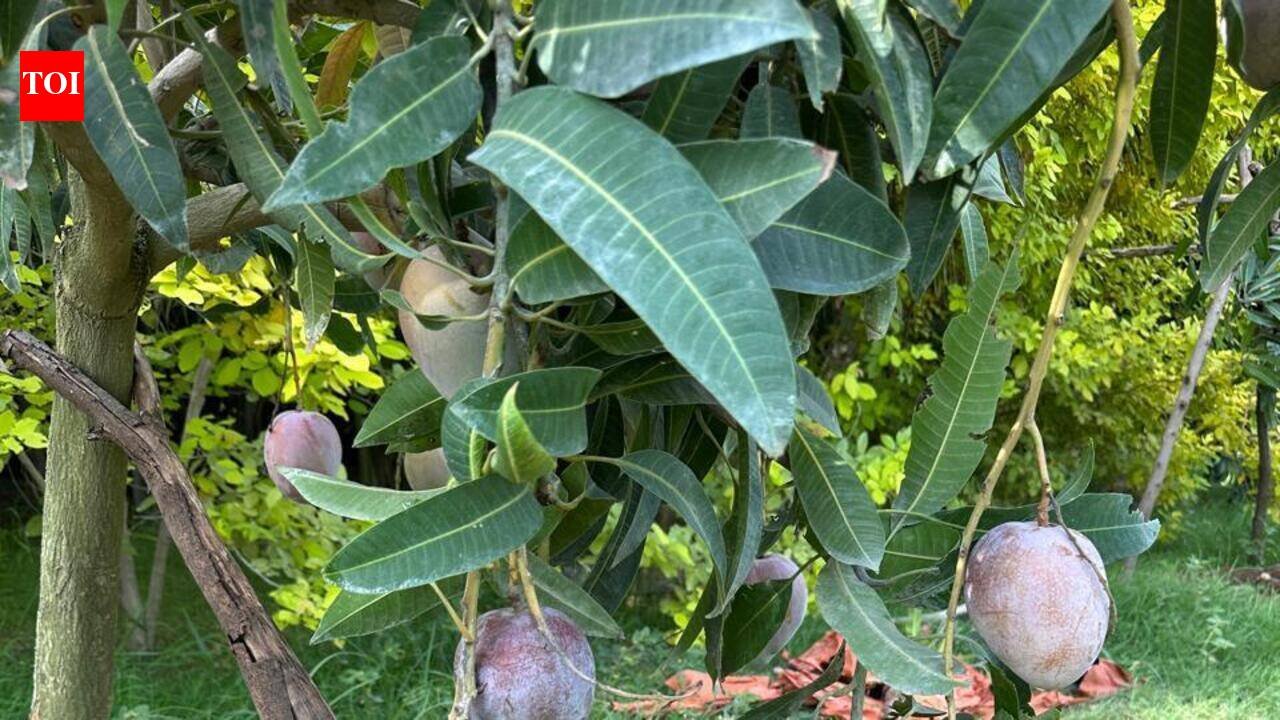
Rajkot: For decades, Gujarat’s mango orchards have been synonymous with kesar and alphonso. Their rich sweetness and strong market demand have made them the state’s flagship varieties. But a handful of farmers are now looking beyond traditional favourites, experimenting with premium mangoes from US and Japan in the hope of creating a niche market for consumers.Among the latest arrivals is the lemon zest mango, a variety that originated in Florida. Unlike conventional Indian mangoes, which are prized for their straightforward sweetness, lemon zest offers an unusual flavour profile. It begins with intense sweetness before ending with a distinct citrus-like finish.“The taste is difficult to describe in words. As soon as you put the fruit in your mouth, you experience intense sweetness, but towards the end you get a citrus flavour similar to lime,” said Sumeet Jariya, a farmer from Sasan in Gir. Jariya sourced saplings from US and Thailand and has planted 35 trees of lemon zest variety within his kesar orchard over the past three years. The variety ripens around mid-June and produces a creamy, fibreless pulp with a rich yellow-orange colour.He plans to position the fruit as a premium offering, selling it directly to consumers in metropolitan cities through small gift boxes. The mango is expected to retail at around Rs 1,000 per kg.However, Jariya says it is too early to judge its commercial success.“We still need to calculate the yield per tree, cultivation costs, the price farmers receive and market demand. But based on our experience so far, we believe this mango has strong commercial potential,” he said.Another exotic variety attracting attention is Japan’s famous Miyazaki mango, regarded as one of the world’s most expensive fruits. While authentic Japanese-grown Miyazaki mangoes can fetch around Rs 2.5 lakh per kg, fruits cultivated in India sell for Rs 1,000 to Rs 5,000 per kg.A few farmers across Saurashtra and north Gujarat have begun experimenting with the variety. Among them is Hasmukh Patel from Idar taluka in Sabarkantha district, who has planted six Miyazaki trees.“We obviously won’t get Japanese prices in India, but I believe the fruit will gradually gain popularity,” Patel said.Unlike most mangoes, Miyazaki does not turn yellow when ripe. Instead, it develops a striking purplish-red skin. The fruit is juicy, completely fibreless and offers sweetness comparable to kesar.While Japanese growers cultivate Miyazaki under highly controlled conditions, Gujarat’s farmers are adapting it to local climatic conditions with additional care.


