



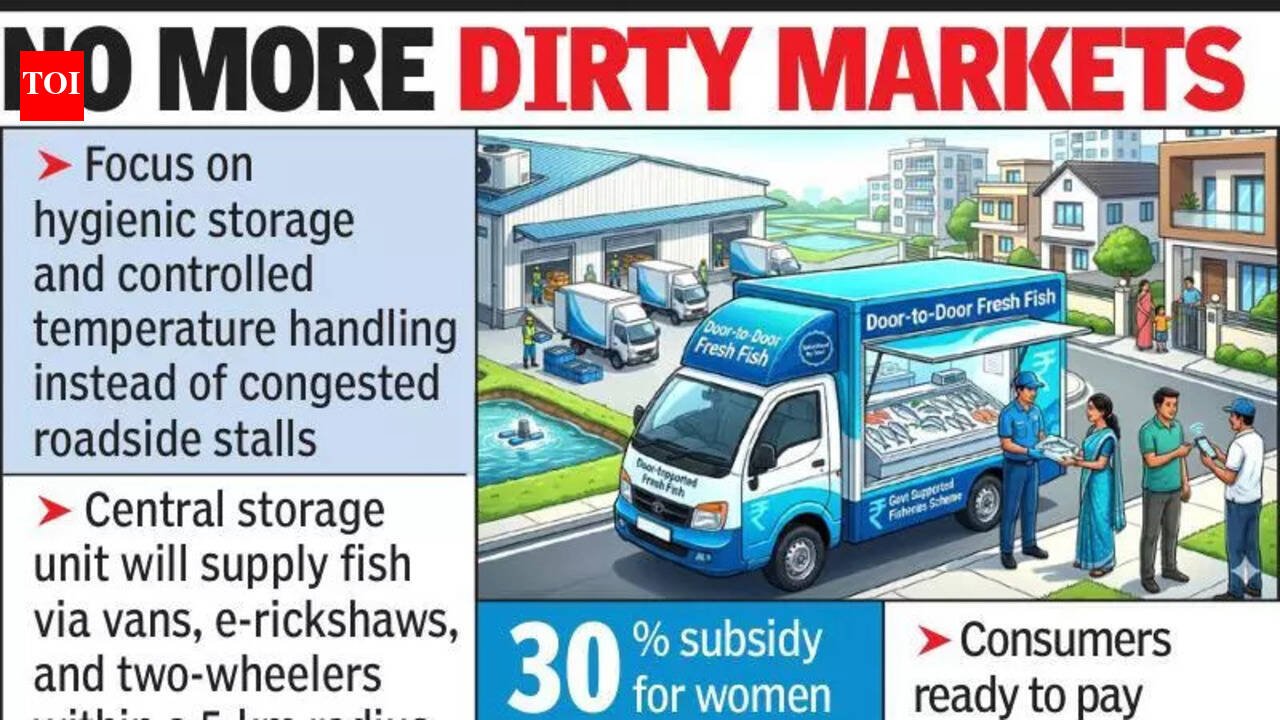
Nagpur: Imagine standing in the sun, jostling through a heavy crowd at Gokulpeth and Itwari on a Sunday, only to find stale fish being sold in dirty, murky shops. This can soon transform, with Besa at the centre of this change. Cited as one of the city’s fastest-growing residential pockets, Besa-Pipla is being viewed as an ideal location to pilot a structured warehouse-backed, doorstep fish delivery system — a model that could redefine seafood retail in city.Sources from the fisheries department point out that poor hygiene and overcrowding in traditional fish markets remain key reasons for comparatively low fish consumption in Nagpur. Many residents are reluctant to visit congested markets due to cleanliness concerns. The proposed solution shifts the focus from open stalls to organised storage centres that ensure better handling and freshness.The concept revolves around setting up a warehouse or storage unit equipped with proper icing systems. Authorities clarify that this does not necessarily mean selling frozen fish; rather, the emphasis is on maintaining fresh stock at controlled temperatures throughout the day using high-quality ice. From this central unit, fish can be transported directly to customers via vans, e-rickshaws or two-wheelers, ensuring hygienic doorstep delivery.Under the Maharashtra Fisheries Development Board’s entrepreneurship development scheme, financial support is available to encourage small businesses. Women-led ventures are eligible for a 30% subsidy, while enterprises registered in men’s names can avail 25%. Project proposals of up to Rs5 crore qualify under the scheme. Experts advised that applicants should invest a portion of their own capital and raise the remainder through bank loans, with officials indicating that returns in this sector can be substantial if operations are managed efficiently.Residents in gated communities are often willing to pay a premium for quality and convenience. While fish may retail at around Rs200 per kg in conventional markets, customers in such neighbourhoods are prepared to pay up to Rs400 per kg if assured of hygiene and freshness. A warehouse set up near Besa Square or Manewada Square could effectively cater to a dense residential population within a 5-km radius.“Consumer behaviour patterns further strengthen the feasibility of the model. Demand for fish is typically higher during weekday evenings and weekend late lunches, allowing entrepreneurs to plan supply cycles strategically and even introduce pre-order systems to minimise waste,” said assistant commissioner Shubham Komrewar. In 2018, the state government rolled out a joint scheme for Vidarbha and Marathwada, where 22 vehicles each were distributed to beneficiaries to help them out in fish retail. Out of these 22, 8 were refrigerated vehicles, 6 were insulated vehicles, and 8 were live fish vending machines. Sources say that the scheme may be revived again, although there are no confirmed reports about it yet.The model has already shown success in Mumbai and has been replicated in Pune and Hyderabad, suggesting scalability for Nagpur. Those interested in exploring this opportunity can approach the Fisheries Department office in Civil Lines for guidance on project reports, subsidies and operational planning.


