





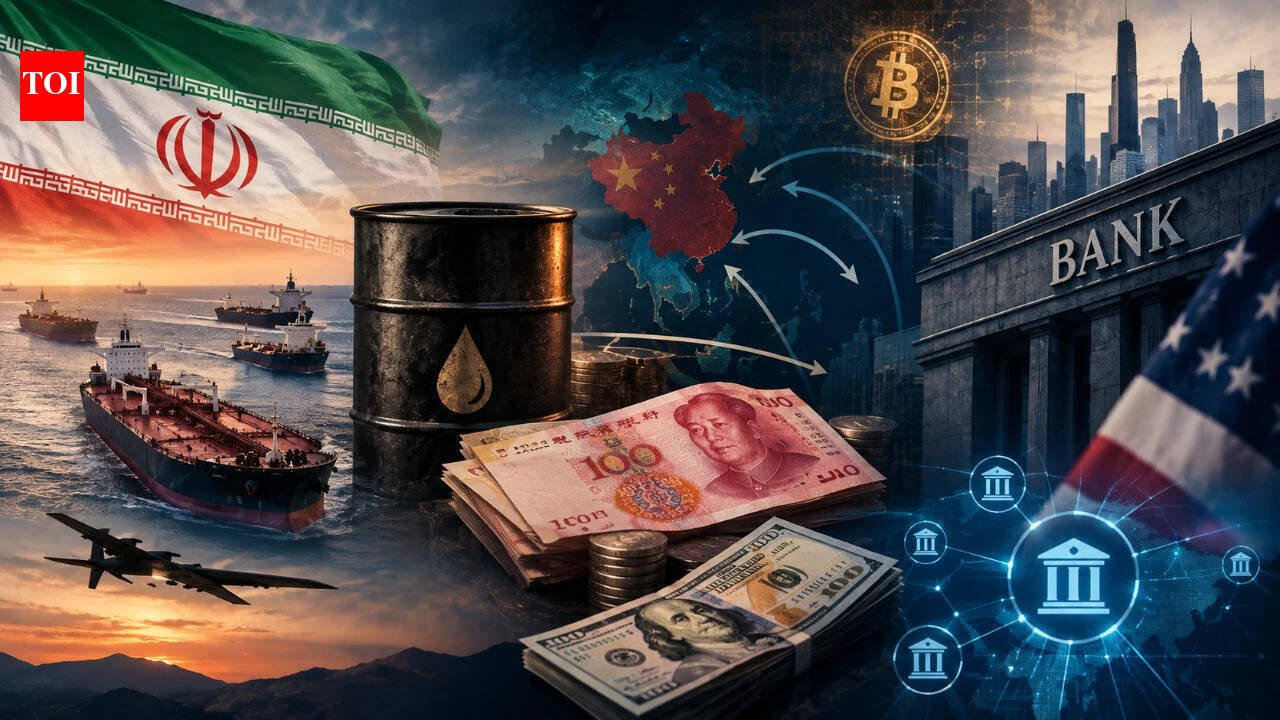
The US is trying to squeeze Iran out of the global financial system. But a Wall Street Journal investigation has found that billions of dollars linked to Iran still pass through US banks each year, exposing a striking weakness in Washington’s sanctions campaign.Iranian funds can reach American banks indirectly through foreign financial institutions that maintain correspondent-banking relationships with US lenders. Front companies and currency exchanges can disguise the Iranian connection before dollar transactions reach US banks for settlement, the report said.The scale is significant. The US Treasury identified about $9 billion in Iranian funds that passed through American banks in 2024, according to the WSJ report.The revelation comes as President Donald Trump’s administration escalates its financial pressure on Tehran through “Operation Economic Outcast”, warning companies and countries against doing business with Iran and threatening to cut offenders off from the US financial system.
Oil stored at sea acts as a lifeline
Tehran has spent years developing alternative channels to keep money moving.The US blockade has pushed Iran’s oil exports, its main source of revenue, close to zero. But the country still has millions of barrels of crude stored aboard tankers, particularly in waters near Malaysia.China remains Iran’s biggest oil customer, accounting for more than 80% of its exports. Despite the blockade, China imported more than 500,000 barrels of Iranian oil a day in August, according to Kpler data cited by the WSJ.Iranian crude can be moved through ship-to-ship transfers in international waters, making its origin harder to trace. Sanctioned tankers unload oil onto other vessels, which then transport the crude to China, where it can be recorded as coming from elsewhere.Vortexa estimates that around 80 million barrels of Iranian crude are currently sitting in floating storage in Asian waters, potentially representing billions of dollars in revenue for Tehran.
Yuan helps Tehran bypass the dollar
Iran has also increasingly moved away from the US dollar in its trade with China.The WSJ reported that Iranian oil transactions with China are increasingly settled in Chinese yuan, allowing Tehran to avoid parts of the US-controlled financial system. Iran can then use the yuan to purchase Chinese goods and services or barter oil in exchange for Chinese companies building infrastructure inside Iran.That creates another channel through which Iran can keep trading even as Washington tries to restrict its access to the dollar.
Crypto and shell open other routes
Cryptocurrency has become another tool for Tehran as sanctions have restricted its access to conventional currencies.Researchers cited by the WSJ said Iran has used billions of dollars worth of cryptocurrency for trade and to acquire weapons and commodities. The IRGC has also used crypto exchanges to receive payments for oil, particularly from Chinese buyers.Washington has responded by sanctioning Iranian crypto exchanges and seizing more than $1 billion in digital currency linked to Iran.But enforcement remains difficult because large parts of the crypto industry operate outside traditional regulation and transactions can be difficult to trace.Despite its efforts to avoid the dollar, Iran still needs access to US currency and other major currencies for imports, weapons purchases and funding regional allies, according to Western officials cited by the report.Tehran has therefore developed a network of shell companies and exchange houses in financial hubs including Hong Kong and Dubai.These companies can move Iranian oil proceeds and other export earnings into dollars, euros and UAE dirhams while obscuring their links to Tehran.
Washington’s sanctions face a whack-a-mole problem
The US Treasury has increasingly targeted banks, companies and individuals involved in the network. But shutting down individual entities does not necessarily dismantle the system.A recent example is Banque Misr’s UAE operations. The Treasury said the bank’s UAE branch had processed about $1.8 billion in transactions potentially linked to Iranian shadow-banking networks and moved to restrict its access to US correspondent accounts.The same international banking infrastructure that gives the US enormous financial leverage can also provide indirect routes for Iranian money to reach the dollar system.Correspondent banking allows foreign banks to settle dollar transactions through US banks without maintaining their own full US banking operations. That makes the system indispensable to global commerce, but also creates potential openings for sanctioned money to move through it.
Iran’s shadow network also feeds its weapons industry
The financial system is not only helping Iran keep its economy afloat. It is also helping Tehran obtain components used in its military programmes.According to the report, Iranian buyers can source materials for drones, ballistic missiles and other weapons from Chinese companies. Some suppliers may not know the ultimate destination of the goods, while others are small enough or sufficiently disconnected from the global financial system to be less vulnerable to US sanctions.The WSJ cited Iran’s Shahed attack drone as an example of a weapons system containing Chinese components that has been used to threaten US allies.Experts cited by the WSJ warned that Washington faces a difficult balancing act. Tightening controls could make it harder for Tehran to move money, but aggressively restricting correspondent banking could also push countries towards alternatives such as the yuan and weaken the dollar’s central role in global finance.


