






Conversation Highlights
|
Artificial intelligence is not simply introducing another technology into higher education; it is beginning to challenge one of its most fundamental assumptions — the centrality of classroom-based learning.
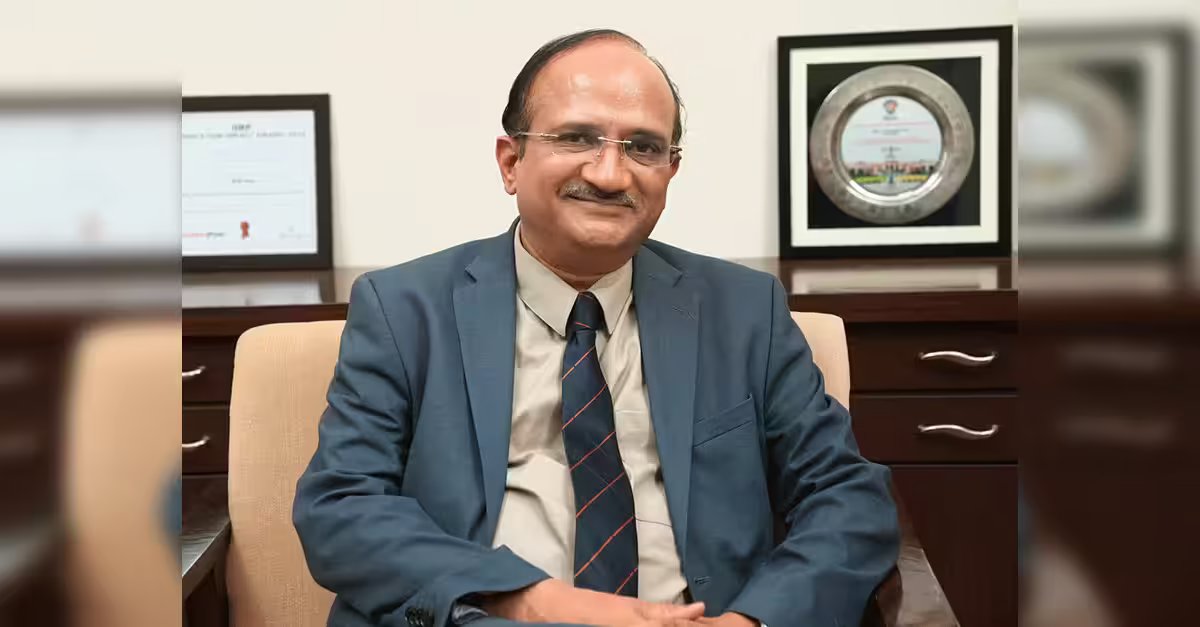
As AI tools become capable of delivering increasingly personalised learning experiences, explaining concepts in a learner’s preferred language and adapting to individual learning styles, universities will have to rethink how teaching and learning are designed. For Prof V Ramgopal Rao, Group Vice Chancellor, BITS Pilani, this disruption should not be viewed merely as a threat. It is an opportunity to redesign the university experience.
But AI is only one part of a much larger institutional equation. For Indian higher education, the more difficult questions lie at the intersection of expansion, equity and excellence. How can institutions increase capacity without diluting academic standards? How can education become more accessible while remaining financially sustainable? And how can universities make the long-term investments required for research excellence when their financial models remain heavily dependent on tuition fees or government funding?
Rao believes these questions need far more attention from university leaders and policymakers. He also argues that the future of higher education will increasingly be shaped by a fourth consideration: student return on investment.
As BITS Pilani embarks on significant expansion and investment, including a new campus in Amaravati and expansion of its existing campuses, Rao outlines his perspective on the forces that will shape Indian higher education over the next decade. Here is an edited excerpt:
Q: Looking five to ten years ahead, what do you see as the single biggest challenge for Indian higher education?
I would not necessarily call AI and technological disruption a challenge. I see it as an opportunity, although it will certainly disrupt education.
The entire university system has traditionally been built around classroom learning. But if students can increasingly learn through AI tools and the vast amount of information available online, and if AI can provide personalised learning — teaching students in the way they want to learn, explaining concepts in their preferred language and adapting to how they learn — then the role of classroom learning will inevitably have to evolve.
The interesting question for universities is: how do we manage classroom learning in this new environment?
How do we embed AI into our teaching and learning processes? That is one of the major questions we need to address.
The disruption is inevitable, but I see a significant opportunity in it.
Q: What are the three issues occupying most of your attention today, and what is the larger institutional challenge behind them?
I often describe it as managing the three Es — expansion, equity and excellence.
Expansion is important because institutions cannot remain static. At the same time, if you want to make education accessible and affordable to a larger section of students, equity becomes critical.
But excellence requires investment.
That creates a difficult equation. If you want to increase access and make education more affordable, financial sustainability becomes an issue. If you increase tuition fees to strengthen financial sustainability, affordability and merit can be affected. And once merit is affected, excellence can suffer.
So the real challenge is managing expansion, equity and excellence simultaneously.
Institutions have to plan this strategically. Growth cannot come at the expense of academic standards, while excellence cannot become a reason to restrict access indefinitely.
Q: BITS Pilani is itself going through a significant phase of expansion. What are the institution’s key investment priorities over the next three to five years?
BITS Pilani is fortunate to be in a strong position, with the support of the Birlas and the Aditya Birla Group. It is also a 60-year-old institution with considerable legacy and significant investments made over the years.
So, investment is not something we see as a constraint.
Over the next two to two-and-a-half years, we are investing approximately ₹2,300 crore.
Around ₹1,300 crore is being invested in building a new campus in Amaravati, while another approximately ₹1,000 crore is being invested in expanding our existing campuses in Pilani, Goa and Hyderabad.
So there is significant growth and expansion currently taking place at BITS Pilani.
Q: AI is likely to influence almost every layer of a university. Where do you believe its impact will be most significant?
Teaching and learning will definitely be transformed. But research is another major area where AI can make a significant difference.
In a university such as BITS Pilani, research is one of the major activities of a faculty member. AI can therefore significantly strengthen research productivity as well as teaching and learning outcomes.
I see these two areas — research and teaching-learning — as particularly important.
Q: India is positioning itself as a global higher education destination, while international universities are also exploring campuses in India. What are the biggest opportunities and barriers?
India has a huge requirement for more institutions and greater capacity.
Our gross enrolment ratio in higher education is still relatively low compared with countries such as China and the US. As per the NEP vision, India needs to significantly expand its higher education capacity by 2035.
That will require enormous investment.
But resources are limited, and therefore international partnerships and foreign universities establishing campuses in India could become one avenue for expanding capacity.
I see a substantial requirement for foreign investment in the Indian education sector, particularly in higher education.
The opportunity is significant, but we will need to see how this model develops and what kind of long-term ecosystem it creates.
Q: Looking ten years ahead, which leadership decisions taken today will matter most to an institution’s legacy?
Employability outcomes have become extremely important.
Students are increasingly looking at education through the lens of return on investment. If a student is paying a certain amount as fees, what is the institution providing in return — both in the short term and in the long term?
At BITS Pilani, median salaries today are in the range of ₹20–22 lakh, and students naturally expect those outcomes to improve over time.
So, when institutions charge a certain fee, the question of what returns they can provide to students becomes very important.
But students today also have very diverse expectations.
Some want to become entrepreneurs. Some want to become professors. Others want to pursue public service, including the UPSC route, while many are looking for conventional industry careers.
The defining challenge for institutions will therefore be to manage these diverse aspirations and create meaningful pathways for different kinds of students.
Everything else — excellence, entrepreneurship opportunities and institutional development — has to be viewed in that broader context.
Q: If you were designing the agenda for a gathering of India’s leading university leaders, which conversations would you want to see at the table?
There are several important questions that higher education needs to confront.
AI is one.
The financial model of higher education is another.
In India, particularly, we have a situation where many institutions operate within a not-for-profit framework. The question then becomes: how do we attract greater investment into a not-for-profit sector?
Managing student expectations and measuring return on investment is another important area.
Then there is research excellence.
Research does not necessarily generate immediate returns, but it requires significant investment. So how do institutions invest in research and build research excellence when the returns may take years to materialise?
At the bottom of all these questions is a larger issue:
What is the financial model required to build a world-class university in India?
Do we have that model today? Are our policies supportive of building world-class institutions? Are our tax laws and broader regulatory frameworks conducive to creating institutions that can compete globally? These are conversations that university leaders need to have.
Q: Is there a conversation that India’s university leaders are still not having enough — but should be?
Many of the questions I have mentioned are not being discussed as much as they should be.
I have written about several of these issues in my op-eds, but there is a need for a much broader institutional and policy conversation.
We need to ask fundamental questions about the financial models of universities.
Public universities are heavily dependent on government funding, while private universities are heavily dependent on tuition fees. Both models have limitations.
So we need to examine alternative models.
For example, how does an institution such as MIT structure its revenues? How do IITs generate their revenues? These are important questions to study.
If India wants to build world-class universities, we need to understand what makes their financial models sustainable and capable of supporting long-term investments in research, infrastructure and academic excellence.
That discussion is still missing at the scale that it needs to happen.
Q: If you had to identify the most important strategic priorities for Indian higher education today, which areas would you put at the top?
I would highlight five priorities:
- Financial sustainability
- Research and innovation
- Governance and leadership
- Employability and industry alignment
- Faculty development
These priorities are interconnected.
Financial sustainability enables institutions to invest. Research and innovation strengthen academic capability. Governance and leadership determine how institutions navigate change. Employability and industry alignment connect education with student aspirations and outcomes. And faculty development remains fundamental to the quality of teaching and research.
The larger question: Can India build universities that scale without compromising excellence?
Rao’s observations point to a fundamental tension confronting Indian higher education: growth is no longer simply about adding seats, campuses or programmes.
Expansion has to be accompanied by quality. Access has to be balanced with financial sustainability. Research ambitions have to be supported by patient capital. And institutional success is increasingly being viewed through the outcomes students receive in return for their investment.
AI adds another layer to this transformation.
Rather than simply automating existing university processes, AI could force institutions to reconsider how learning itself is delivered. If technology can personalise instruction at scale, the university’s value proposition may increasingly shift towards what technology cannot easily replicate — research environments, mentorship, peer learning, interdisciplinary experiences, networks, entrepreneurship and pathways into professional and public life.
For university leaders, therefore, the challenge is not simply whether to adopt AI.
It is whether institutions can redesign themselves around a new definition of value.
And for India, the larger question is even more consequential: can the country build the financial, policy and institutional architecture required to create world-class universities at scale?


