



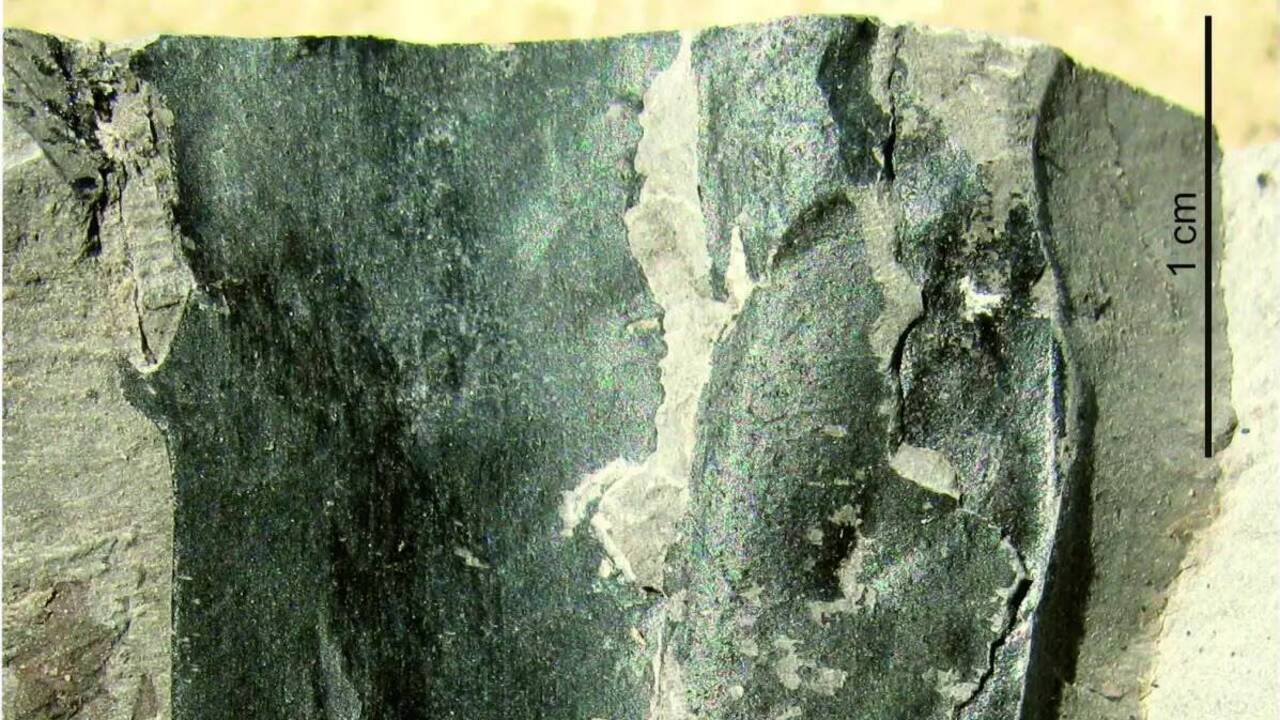
Guwahati: In a discovery that opens a window into the region’s ancient tropical past, scientists have found a 24-million-year-old fossil of the Kewra plant (Pandanus) in Assam’s Tinsukia district. The rare fossil traces how this plant lineage reached India millions of years ago and also highlights Assam’s role as a refuge for species that vanished elsewhere as global climates cooled.Assam CM Himanta Biswa Sarma shared the discovery on X, saying, “Assam just unlocked a 24-million-year-old fossil, shedding light on the ancient floral ecosystem of the region. The Kewra fossil discovered in Makum reflects how this 85-million-year-old plant reached the Indian subcontinent 24 million years ago and since then has made Assam its home. Beneath Assam’s surface lie many such untold stories.”The fossil was recovered from the Tikak Parbat Formation in the Makum coalfield and has been described in the journal Geobis by researchers Harshita Bhatia and Gaurav Srivastava of the Birbal Sahni Institute of Palaeosciences, Lucknow.According to the researchers, the fossil leaves are long and narrow, with a distinctive M-shaped cross-section, a strong central vein, evenly spaced parallel veins, fine cross veins and tiny prickles along the margins.The department of science and technology noted that Pandanus is now largely confined to tropical and subtropical regions, though fossil records from Europe and North America (85-66 million years old) suggest its ancestors once had a broader Northern Hemisphere range. As climates cooled after about 34 million years ago, the group declined across many regions and became largely restricted to the tropics.The Assam fossils indicate India acted as a refuge where this ancient lineage survived even as it disappeared from other parts of the world. The study reports that the leaf architecture confirms Pandanaceae in humid, lowland tropical environments on the Indian subcontinent during the late Oligocene, with supporting sedimentological, palynological and palaeoclimatic evidence pointing to warm, humid, swamp-dominated conditions.
Frozen in time


