



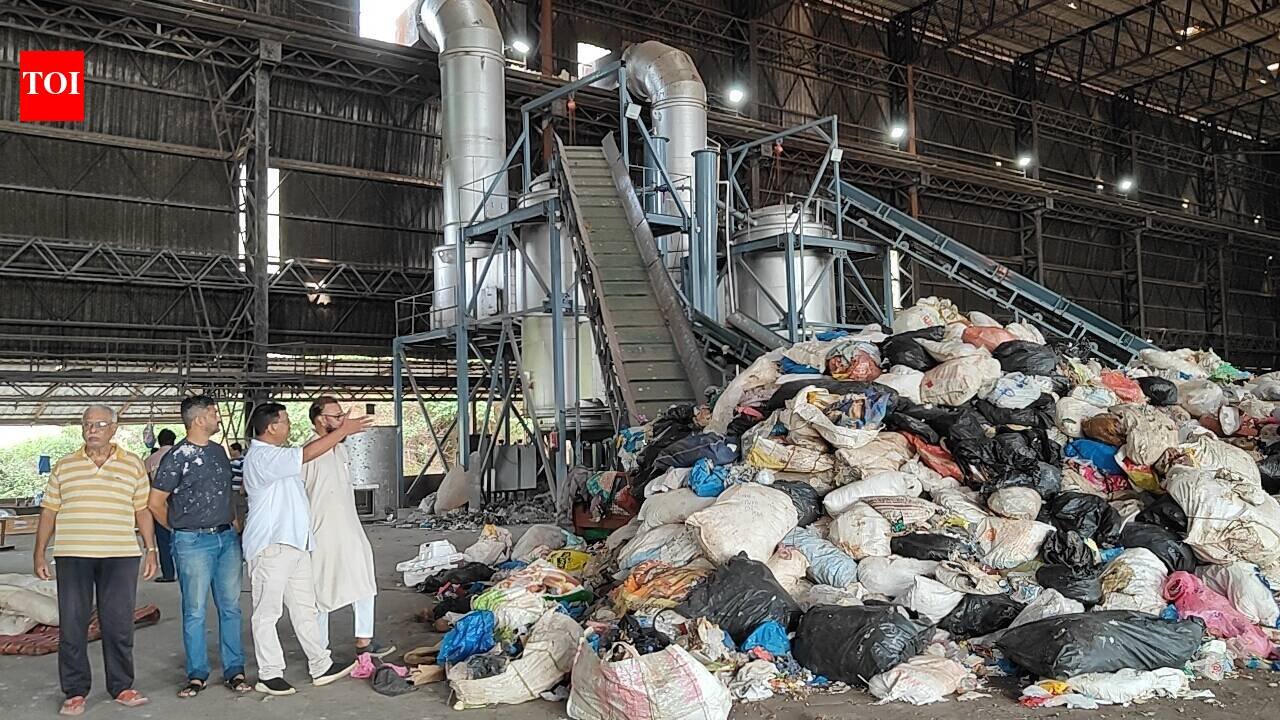
Margao: Three years after the Margao Municipal Council (MMC) sat housing societies down to talk decentralised composting, and two months after it inaugurated a Rs 7.5-crore gasification plant, one basic question remains unanswered: why can’t Goa’s second-largest municipality get its residents to segregate garbage at source — and why has the council never cracked down against those who won’t?The numbers explain the scale of the problem. By the MMC’s own count in 2023, Margao generates roughly 35 tonnes of wet waste and 15 tonnes of dry waste every day — a total of about 55 tonnes per day (TPD). Municipal sources had then claimed that 90% of the wet waste arrived “segregated”, with 20TPD going to the Cacora municipal solid waste management plant, 5TPD to the SGPDA market’s biomethanation unit, which has since been defunct, and the remaining 10TPD treated at Sonsoddo itself. Disposal of dry waste amounting to 15TPD, meanwhile, was split between Sonsoddo and a shed at the Margao industrial estate in Nessai.Those figures were never independently verified, and the gap between claim and ground reality has now come out in the open. A Congress clock delegation that inspected the newly-commissioned Sonsoddo gasification plant — designed for a modest 10TPD capacity, a fraction of the town’s daily load — reported tonnes of waste piled up on conveyor belts, half-burnt plastic in the fly ash, and uncharred coconut husk emerging from the pyrolysis unit. Those are, in effect, symptoms of unsegregated waste being fed into the system. Savio Coutinho, convener of the Congress Margao block, accused the MMC of having never been serious about enforcing consequences for non-segregation of waste.In Jan 2021, the then MMC chief officer Agnelo Fernandes announced that the council had met representatives of housing cooperative societies across Margao and Fatorda to push a decentralised, source-level treatment model — biogas units, organic waste converters, drum composting — with societies bearing responsibility for the maintenance of the facilities. Fernandes spoke of cash awards to reward segregation of recyclable dry waste, and of half-yearly compliance reports from societies on the quantum of waste generated and treated. Soon after, he received marching orders, and the plan failed to materialise.In 2023, MMC identified 85 bulk generators, including hotels, hospitals and food processing units, and said it would direct them to treat their own waste rather than send it to Sonsoddo. Whether all 85 units now actually treat their waste on-site — or whether more have been identified and directed since — remains unclear, with MMC officials admitting they have no updated data.“We have reason to believe that the entire wet waste that Margao and Fatorda generate is being sent to Cacora, which makes MMC’s figure of 20 tonnes dispatched seem misleading. Now even garden waste – which used to be disposed of by shredding – is being sent to the Saligao waste treatment plant since the shredders (at Sonsoddo) are out of order,” Coutinho said, and demanded a joint inspection of the Sonsoddo facility by all the authorities concerned, including the Goa State Pollution Control Board and the Goa Waste Management Corporation.MMC administrator Srinet Kotwale, meanwhile, said that MMC will ensure that solid waste management rules and the directions of the Goa State Pollution Control Board pertaining to segregation of waste at source are strictly followed.


