



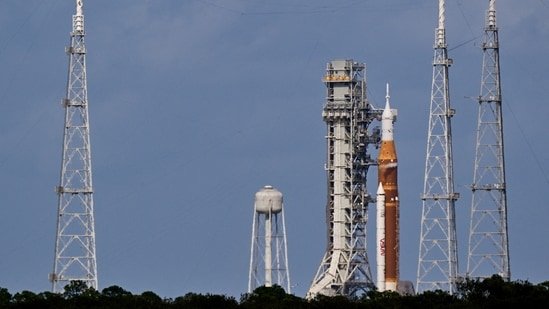
Artemis II launch update: Just about an hour before Artemis II’s launch, NASA issued a statement about an issue with communication to the flight termination system. Derrol Nail, a NASA commentator who is also in the control room, meanwhile added that engineers are trying to address an issue with the Space Launch System rocket’s flight termination system. In case, they are not able to solve the problem, the launch abort system will lift the Orion capsule and the astronauts to safety. The flight termination system would then destroy the rocket.


“Pretty unique situation here,” Nail explained.
“At this moment the range is no-go, but that is not stopping us from moving forward in the countdown,” he added.
Read More: Artemis 2 weather forecast: NASA gives latest update on moon mission hours before Florida launch
Positive update from NASA
Meanwhile, BBC reported that the NASA team is continuing through the final steps despite the issue. The hatch to the Orion spacecraft has been closed, the publication added.
It appears that the countdown will start on time.
NASA’s launch team loaded more than 700,000 gallons of fuel into the 32-story Space Launch System rocket early Wednesday, setting the stage for blast off in the evening, with a two-hour launch window beginning at 6:24 PM EDT at Kennedy Space Center in Florida.
Artemis astronauts Reid Wiseman, Victor Glover, Christina Koch and Jeremy Hansen will be on board. They’ll hurtle several thousand miles beyond the moon, hang a U-turn and then come straight back. No circling around the moon, no stopping for a moonwalk, just a quick out-and-back lasting less than 10 days. NASA promises more boot prints in the gray lunar dust, but not before a couple practice missions.
Read More: Artemis 2 cost explained: How much did NASA spend on latest Moon mission? Who is paying for it?
Astronauts last flew to the moon during Apollo 17 in 1972.
Artemis II is the opening shot of NASA’s grand plans for a permanent moon base. The space program is aiming for a moon landing near the lunar south pole in 2028.
“The next era of exploration begins,” NASA Administrator Jared Isaacman posted on X, platform formerly known as Twitter.
(With inputs from The Associated Press)


