



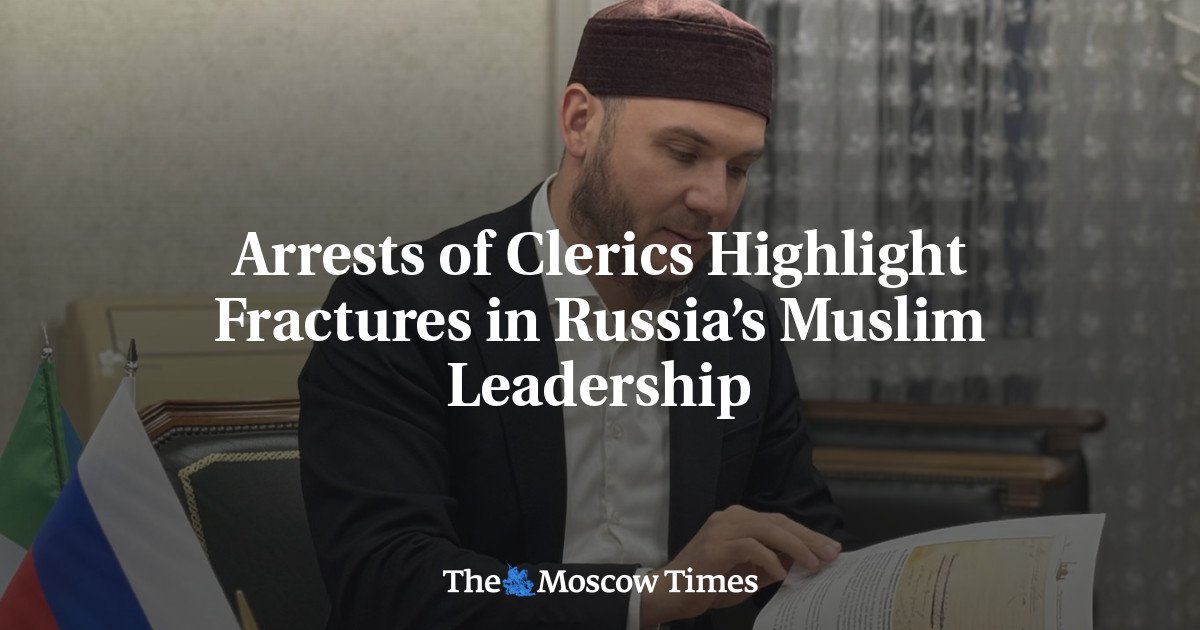
A handful of senior Muslim clerics were arrested across Russia this week, according to reports circulating in pro-government blogs and media outlets.
Among the targeted clerics were Rail Asainov, head mufti of the Volga republic of Mordovia, and Wisam Ali Bardwil, chairman of the Union of Islamic Organizations of Russia.
Both men are affiliated with Russia’s Council of Muftis, an organization headed by Grand Mufti Ravil Gaynutdin, known for his rivalry with Russia’s other Grand Mufti, Talgat Tadzhuddin.
Gaynutdin and Tadzhuddin head Russia’s two competing central authorities of Muslims. Tadzhuddin’s Central Spiritual Administration of Muslims of Russia is generally seen as more closely aligned with the Kremlin.
Mordovia’s Head Mufti Asainov was reportedly arrested on suspicion of bribery on Tuesday and released from custody two days later.
“According to investigators, he allegedly offered a bribe to the director of the Islamic Economics and Finance Master’s program at Mordovia State University,” Asainov’s deputy Rashit Abdrashitov said in a statement Wednesday.
“I am certain there was some misunderstanding,” Abdrashitov added.
In a separate incident on Wednesday, Moscow’s Tagansky District Court sentenced Bardwil, who previously led the Muslim community in the northern republic of Karelia, to 15 days of arrest on charges of disobeying police orders.
Authorities claimed that Bardwil refused a police request to show his ID at Moscow’s Sheremetyevo Airport last week before attempting to flee the scene.
“He actively resisted police while being transported to a police vehicle,” the court’s press service said, without clarifying whether Bardwil was traveling.
Bloggers and Kremlin-aligned media also reported arrests of prominent Muslim community leaders in St. Petersburg and the southwestern city of Saratov, though these could not be verified.
Tatar journalist and expert on Islamic politics Ruslan Aysin believes the arrests are part of “a pre-planned operation” aimed at “instilling fear in the Muslim community” and smearing the reputation of structures led by Grand Mufti Gaynutdin.
Aysin also linked the incidents to the Council of Muftis’ opposition to a bill banning religious gatherings and services in residential buildings that is currently being considered in the State Duma.
“This law means that any ritual ceremonies…related to wedding services, [religious] namings or funerals must be held in mosques,” Aysin told The Moscow Times, noting that this change would be impossible to realize both logistically and due to the sheer scarcity of mosques in Russia.
While Grand Mufti Tadzhuddin backed the change, Gaynutdin urged President Vladimir Putin not to sign the bill into law, warning that the proposed restrictions “could become a factor in religious radicalization.”


