



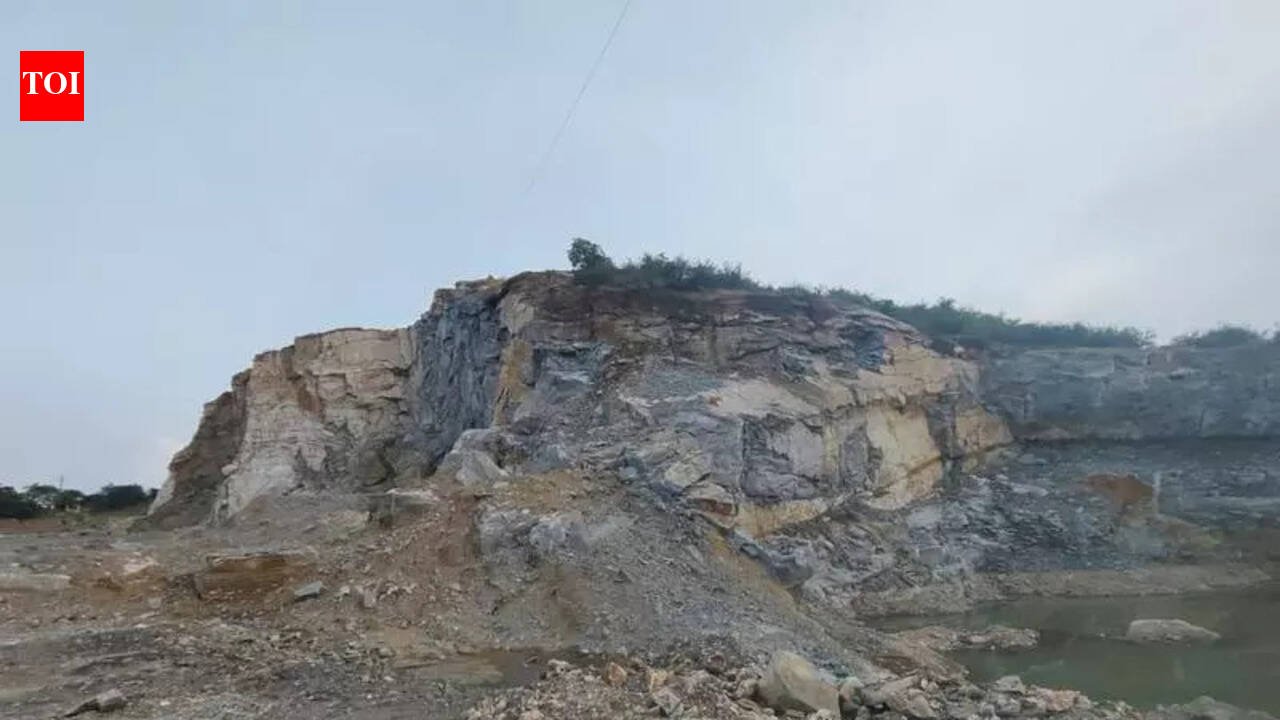
Jaipur: A large-scale drive to restore degraded landscapes in the Aravalli region will begin soon in Udaipur district, identified as the worst-affected area in the Aravalli buffer zone, officials said.Rajasthan accounts for the largest share of degraded land identified under the restoration initiative, making it the focus of the first phase.The plan covers a five-kilometre buffer zone along the Aravalli range from Gujarat to Delhi. The buffer spans 6.31 million hectares, of which about 2.70 million hectares, or 42.8%, was identified as degraded through satellite analysis. Of this, around 81% lies in Rajasthan, underlining the scale of ecological stress in the state.In Rajasthan, the programme covers 19 districts. Udaipur recorded the highest degradation at nearly 6.7 lakh hectares, or 27.87% of the degraded land in the Aravalli buffer area. Rajsamand followed with 2.98 lakh hectares, or 12.32%, and Pali with 2.78 lakh hectares, or 11.49%. Dungarpur, Ajmer, Sirohi, Alwar, Nagaur and Sikar also reported significant degraded landscapes.“Udaipur has emerged as the priority district because the extent of degradation here is the highest. The district alone has more degraded land than the combined degraded area in the Aravalli buffer of Haryana, Delhi and Gujarat,” a senior forest department official said.Data showed forest areas made up nearly 36% of Rajasthan’s degraded landscape, with all 19 districts showing signs of forest degradation. The problem was especially severe in Udaipur, Rajsamand and Sirohi, where vegetation loss and soil erosion have significantly weakened the ecosystem.“The restoration strategy will focus on soil moisture conservation, treatment of degraded forest patches and improving tree cover in agricultural landscapes. Agroforestry and plantation on farm bunds will be encouraged to reduce wind erosion and improve soil stability,” another official involved in the programme said.Across Rajasthan, Udaipur, Nagaur, Alwar, Rajsamand, Sikar, Pali and Ajmer together accounted for more than 5 lakh hectares of degraded land requiring intervention. The state also has over 2.43 lakh hectares of rocky terrain that may not be suitable for ecological restoration but requires regulation because of mining pressure.The study also identified nearly 4 lakh hectares of degraded agricultural land affected by wind and water erosion. Restoration there will focus on better water management and strengthening the farm ecosystem.Officials said the programme will follow a village-level participatory approach, with detailed assessments of land use, water resources, agriculture and forests. District proposals will be prepared under the supervision of district collectors and interdepartmental committees, while the forest department will oversee work in recorded forest areas.“Local communities will play a central role in the restoration effort, from planning to monitoring. The aim is to revive the ecological health of the Aravalli landscape while also improving water availability, pasture and livelihoods in the region,” an official said.


