


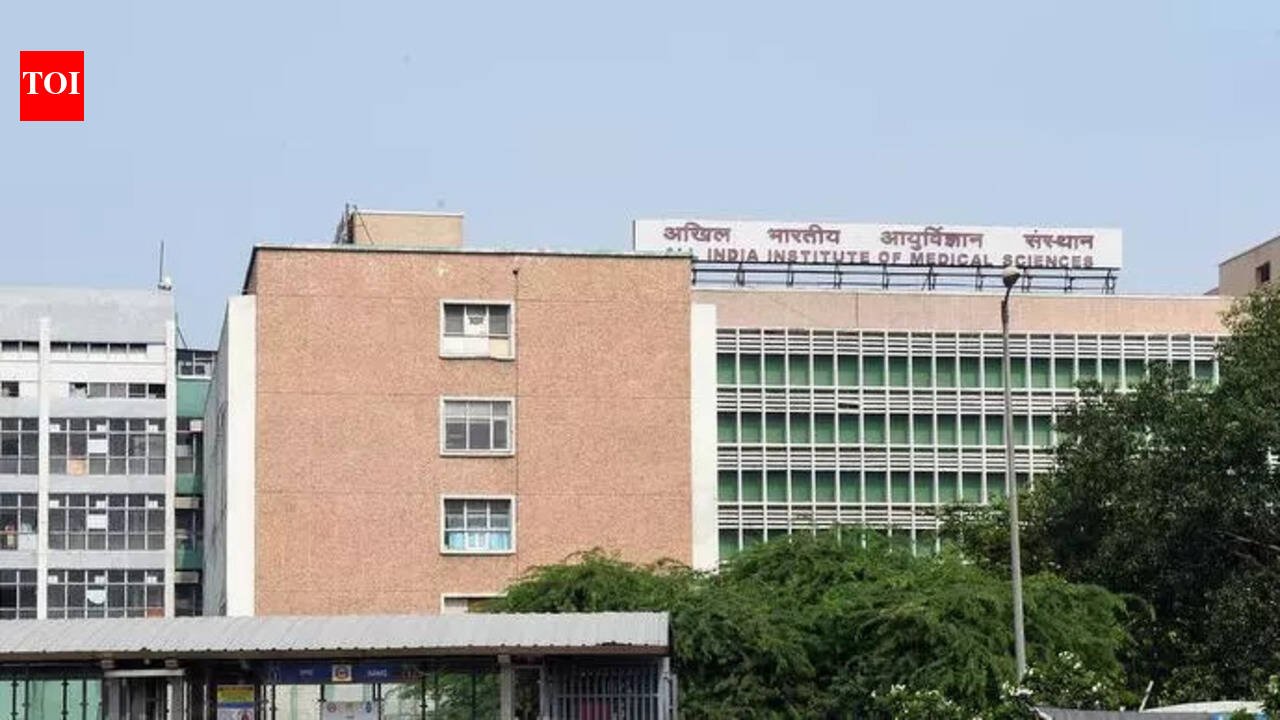
New Delhi: A radical new option may soon be available for patients who have to live with horrific facial deformities even after enduring 10 to 12 reconstructive surgeries.AIIMS Delhi has formally launched India’s first face transplant programme and is preparing to perform the country’s first such surgery within a year, subject to regulatory clearances.
A face transplant involves replacing part of or the entire face with tissue from a deceased donor. It is not just a cosmetic surgery. The goal is to restore essential functions, such as speech, breathing, eating, eyelid closure and facial expression in patients whose injuries are beyond the reach of conventional reconstruction.In many cases, such patients struggle not only with physical disability but also with severe social stigma and resultant isolation.“Many suffer devastating facial deformities due to acid attacks, gunshot injuries and burns. Identifying the right candidate for the transplant and counselling him or her is essential. Unmotivated or unstable patients — those with active infections or cancers — are not suitable. That said, face transplantation is no longer experimental, it is the need of the hour,” said Dr Maneesh Singhal, head of plastic, reconstructive and burns surgery at AIIMS.The surgery can last 14 to 16 hours and requires meticulous reconnection of blood vessels and nerves under a microscope. Even after a successful operation, patients must take lifelong immunosuppressive drugs to prevent rejection and require close monitoring for complications.Dr Dipankar Bhowmick, head of nephrology at AIIMS, said the institute has the necessary systems in place to carry out such transplants. “Immunosuppression plays a critical role, and all infrastructure and facilities are available at AIIMS. I am excited and will provide the best possible support for this initiative,” he said.Donor matching remains the biggest challenge. Unlike solid organ transplants, a face transplant requires visible compatibility. The donor and recipient must be of the same sex, and skin tone should be broadly similar. Securing family consent within hours of a donor’s brain death, while ensuring ethical clearance and transplant coordination, adds to the complexity. The new initiative at the burns and plastic surgery block, which was established in 2021, brings together a multidisciplinary team of surgeons, transplant physicians, nephrologists, anaesthesiologists, psychiatrists and rehabilitation experts. Dr Preethy K from the department of psychiatry said psychological screening and long-term counselling will be mandatory throughout the course of treatment.International expert Dr Indranil Sinha of Brigham and Women’s Hospital, Harvard Medical School, said the skill set and infrastructure at AIIMS are on a par with international standards, and pledged his support to the programme.AIIMS performs over 8,000 procedures in burns and plastic surgery each year and handles numerous acid-attack survivors and severe trauma patients. For many of them, repeated reconstruction merely restores limited function and appearance.Globally, face transplant is performed in only a handful of countries under strict regulation. With this programme, India is poised to join that select group.For patients living with severe disfigurement, the move represents more than a surgical milestone — it offers the possibility of them reclaiming their identities, expression and dignity.


