



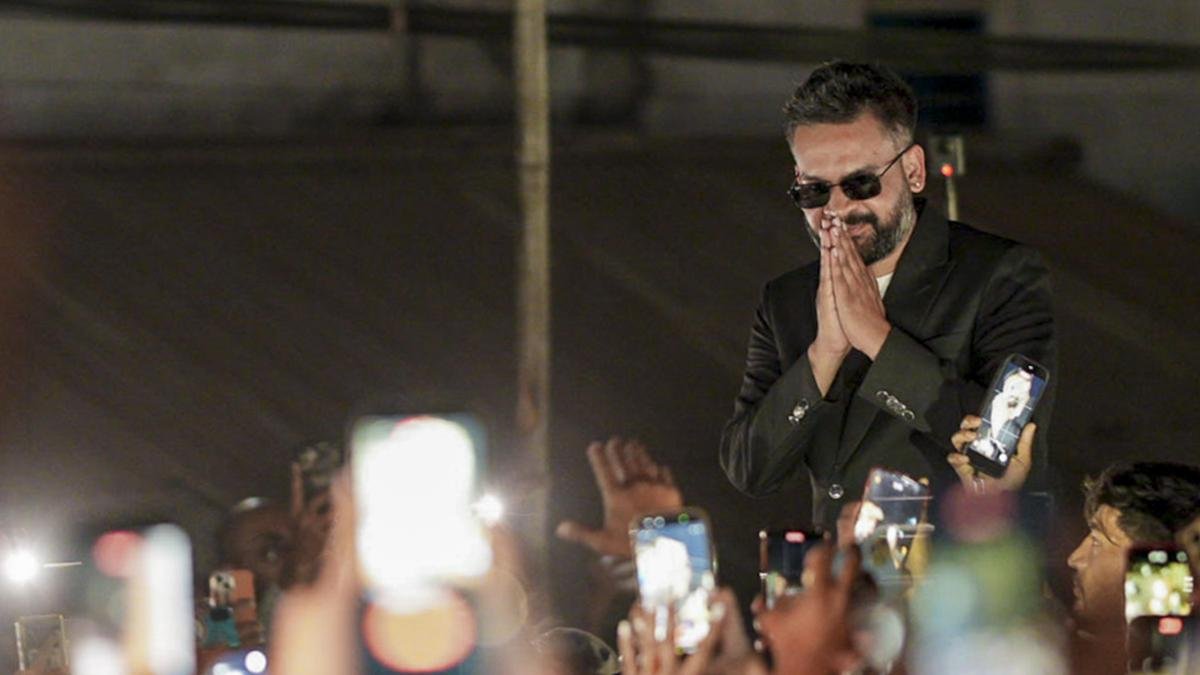
The 2026 general election finally awarded Nepalis what they have long desired: a single-party majority government and an end to the ghouls of fragile ruling coalitions – a root cause of constant horse trading and political instability. It also buried deep the three large parties that have taken turns in government. No thanks to the politics of the past.
This election has been stunningly different. Young and new faces have dominated the political landscape, not least Rastriya Swatantra Party’s (RSP) prime ministerial candidate Balen Shah, 35, himself. RSP itself is a party formed only in 2022, when it secured 20 seats in the House of Representatives.
RSP’s climb to the top this election has been nothing short of spectacular. The September 8 and 9 Gen Z movement against rampant political corruption and nepotism in Nepal, which also paved the way for the March 5 election by toppling the incumbent government headed by Prime Minister KP Oli, represents a unique phenomenon. It is potentially the first grassroots movement to have evolved entirely online before manifesting in nationwide physical demonstrations to bring down a regime.
This article is a part of The Hindu’s e-book: Nepal’s new political moment
Nepal’s groundswell was distinctive in that it was led by only an estimated 30,000 to 50,000 participants across the nation. The heaviest footfall was in the capital city of Kathmandu, where young citizens marched towards the Parliament building. To the Gen Zers, this was the venue for petty political machinations that exerted minimal influence on the lives and livelihoods of individuals beyond the precincts of the hall. The September 8 protests were manifestations of profound disenchantment, indifference, or even hostility towards the charade of traditional parties, who were engaged in a game of musical chairs in the form of multi-party coalitions that had been in office for a good part since 1990.
On September 8, the parliament, alongside Singha Durbar – the seat of the government – and the Supreme Court, was set ablaze by protestors, leaving the most dominant forces of Nepal’s politics – the Nepali Congress, the Communist Party of Nepal-Unified Marxist Leninist (CPN-UML), and the Communist Party of Nepal (Maoist Centre) – wondering about their long-term future. The movement, however, was not ideologically uniform. Segments of Gen Z also advocated for the reinstatement of the monarchy, framing it as part of a broader dissatisfaction with political instability and as one among several alternatives to reset the system. These voices gained traction after September 2025, when debates intensified over who governs Nepal and whether Nepal’s Constitution 2015 – in its current form – should be suspended to allow the entire governance architecture to reset. Although the RSP had emerged as the alternative to the old guard of Nepali politics, only a few had foreseen that it would be just two seats shy of two thirds in the 275-member House of Representatives.
A history etched with instability
In Nepal, voters cast two separate ballots. One elects 165 members from single-member constituencies, and the other elects the remaining 110 members from a single nationwide constituency through proportional representation, where voters choose a party of their choice. Over 18.9 million voters were registered for this election, in which more than 3,400 candidates from 68 parties were in the race.
In the absence of an outright majority, Nepalis over the years have watched with horror (and indifference) the same scene play out repeatedly in Kathmandu: the political parties left out of the government would start scheming to piece together an alternative government. Since 1990, Nepal has seen 35 governments, 15 of them after the abolition of the monarchy in 2008. RSP’s sweep has left voters with a sigh of relief, at least for now.
Only once in Nepal’s electoral history has any party fared better in elections. That was decades ago, in 1959, when the Nepali Congress (NC) secured over two-thirds of seats in what was the country’s first experiment with parliamentary democracy.
In the aftermath of the September protests, many had suspected that the old-school parties would fare poorly in the election, and many expected the seasoned leaders to get wiped out by massive margins at the hands of RSP’s little-known candidates. In a keenly followed contest in Kathmandu-5, Sasmit Pokhrel, 29, beat ‘heavyweights’ – former deputy prime ministers Ishwor Pokharel of CPN-UML and Kamal Thapa, a veteran monarchist, and Pradeep Poudel, the sitting lawmaker and General Secretary from NC. RSP ended up taking all 15 seats in Kathmandu Valley – 10 in Kathmandu, three in Lalitpur, and two in Bhaktapur.
The Nepali Congress (NC) suffered the worst loss in its electoral history. NC’s party president, Gagan Thapa, who had filed his candidacy from a Terai district, lost too. In all probability, the thinking was that the Terai constituency was safer than Kathmandu, his traditional constituency. Kathmandu has remained Balen’s stronghold, though he did not contest the last election in 2022. RSP was expected to fare well in urban constituencies. Yet, out of the 32 constituencies in Madhesh Province, 30 went to RSP. Regional parties that once had a stronghold across the Madhesh are no longer in the picture. The CPN (Unified Socialist), led by former Prime Minister Madhav Kumar Nepal, and the emerging Janamat Party, led by the Cambridge alumnus CK Raut, also have very little to show.
NC has now been limited to 38 seats, down from 89 in the last House, and UML to 25, down from 78 in the House where they were the largest and the second-largest party after the 2022 general election. In 1990, the two parties had joined forces to topple the absolute monarchy and emerged as the leading forces in Nepali politics. Any speculation about the rise of the pro-monarchy Rastriya Prajatantra Party (RPP) has been put to rest for now, as its seats came down further – from 14 to five. The decline is all the more striking given that RPP organised a major pro-monarchy protest as recently as March 2025, calling for a directly elected Prime Minister and the restoration of a ceremonial monarchy. Its only consolation is that it is the sixth party among six parties that have crossed a 3% vote threshold to qualify as a national party, as required by the Election Commission. The party, led by Rajendra Lingden (who also lost), won just five seats and 3.05% of the vote. The relevance of the monarchy may have faded electorally, but as calls from newer parties and segments of civil society to rethink the governance architecture grow, the possibility of institutional restructuring remains open for debate, though there’s no such possibility in the foreseeable future.
Nepal’s former King Gyanendra Bir Bikram Shah Dev waves as he arrives at Tribhuwan International Airport in Kathmandu on March 9, 2025.
| Photo Credit:
AFP
Among the grandees, coordinator of the Nepali Communist Party – previously the CPN (Maoist Center) – Pushpa Kamal Dahal ‘Prachanda’ remains the only survivor. He cleverly moved to contest from a remote mountainous constituency; Rukum is also where the Maoists launched their anti-establishment ‘people’s war’ in 1996, until they came above ground via a United Nations-brokered peace process in 2006.
A woman reads a newspaper carrying reports on the landslide victory of Balendra Shah in general elections, in Damak, Jhapa, Nepal, Sunday, March 8, 2026. Shah defeated four-time former prime minister KP Sharma Oli by a margin of about 50,000 votes in the Jhapa-5 constituency.
| Photo Credit:
PTI
On the other hand, RSP’s proportional vote share of 47.8% is the highest recorded since the system was introduced in 2008 after the underground Maoists joined mainstream politics. The Nepali Congress won 19.1% of the proportional vote.
A surprise winner in the eastern Nepal hills was the Shram Sanskriti Party, led by former mayor of Dharan, Harka Sampang. It is one of the six parties to qualify as a national party, winning seven seats and 3.56% of the PR votes.
But it will surely be former Prime Minister and CPN-UML supremo Khadga Prasad Sharma Oli whose loss will be discussed and dissected for a long time. Jhapa-5 is Oli’s home turf, and Balen, the ex-mayor of Kathmandu, had filed his candidacy from a place that was unknown to him. But Balen ended up defeating Oli by a margin of 49,614 votes. The margin of the loss for the CPN-UML Chairman in his home constituency is one of the largest in Nepal’s parliamentary election history.
What changed?
When, on 12 September, the transitional government under Sushila Karki announced that the next election would take place on March 5, there were a huge number of doubters. The election afforded the government and the Election Commission a considerably more constrained timeframe for preparations, party registrations, candidate nominations, ballot printing, and transporting them to distant booths, some of which are situated in remote regions of the Himalayan mountains.
Following the reopening of registration of the voter roll on September 26, a significant proportion of the electorate were first-time voters. This surge in interest can be attributed to a resurgence of political engagement in the aftermath of the September uprising. Another factor that has increasingly influenced Nepal’s election trend is its diaspora. Though attempts were on to make a provision for absentee ballots, members of the diaspora, spread across India, the Gulf, Malaysia, Europe, Australia, and Japan, among other places, told their family members whom to vote for with great effect. Comprising over 3.5 million citizens residing abroad — proportionally more sizeable than the diaspora in Nepal — the Nepali diaspora constitutes a significant political constituency.
Days ahead
As much as the euphoria over RSP’s win is justified, the people’s expectations – from the lawmakers’ personal conduct to how they carry themselves in the public sphere – are sky-high. RSP’s number-one slogan during the campaign was the fight against corruption. It is a tall order, given that corruption is deeply entrenched in Nepal’s public life and has been for generations of governance. Employment generation is another difficult task. Millions of Nepalis work overseas, and remittances contribute 20% to the GDP. Nepal’s heavy dependence on remittances puts the economy in trouble each time the labour market faces problems. It happened during the Covid pandemic and could happen again if the Iran-US-Israel war continues. Nepal ranks 19th among the top remittance-receiving countries and ranks fourth when remittance is compared as a percentage of GDP.
RSP had pledged to double Nepal’s economy to 100 billion dollars within five to seven years. This goal aims to transition Nepal from a low-income to a middle-income country, with its per capita income doubling and crossing 3,000 dollars.
After the election win, at RSP’s first orientation programme on March 13, party president Rabi Lamichhane, who pulled together much of RSP’s electoral crowd – both in 2022 and 2026 – seemed anxious to convey the price of political failure: “If we don’t deliver, it’s on us. Nepali people have given us a clear mandate.” Party Vice President Dr. Swarnin Wagle intoned: “We must feel the weight of this historic public mandate.” Wagle, who has a strong technocratic background and understands the nuances of governance, is also a Harvard scholar.
Like Lamichhane and Wagle, only 13 of RSP’s 182 parliamentarians are second-time MPs. The rest may have had some political experience, but, like Balen, have never held national office before. Although Balen’s star value – much of which he accumulated as Kathmandu’s Mayor between 2022 and 2026, and after he joined forces with RSP in recent weeks – attracted a massive number of voters in favour of RSP, he remains untested in national-level challenges, not least in navigating Nepal’s delicate foreign policy challenges and striking a fine balance with China and India.
Like him, much of RSP will have to quickly learn the tricks of the trade – raising issues about their constituencies on the one hand and also learning to legislate on the other. On both counts, public expectations are very high: that they should do better than the old guard. Beyond corruption and employment, RSP will also have to navigate deeper structural questions – whether federalism in its current form is working, and whether the 2015 Constitution needs revisiting.
Akhilesh Upadhyay is a senior journalist, formerly editor of Kathmandu Post


