






Picture this: A 78 year old woman in Delhi no longer recognises her son. He walks in every evening after work and she looks at him like a stranger. But when her phone rings in the morning and she hears his voice say “Amma, kaisi ho”, she smiles. She knows that voice. She has known it for decades.
That voice is not him. It is Smriti.
Smriti is a voice companion built for dementia patients. It clones the voice of a loved one and uses it to hold real, warm daily conversations with the patient over WhatsApp. No new app. No complicated setup. Just the most familiar sound in the world, showing up every morning.
In a clinical study of over 400 patients, Smriti reduced agitation, anxiety and aggression by 32 percent, measured through NPI, a globally recognised Non-Pharmaceutical Intervention scale. It holds a provisional patent with the Government of India.
What made you build Smriti?
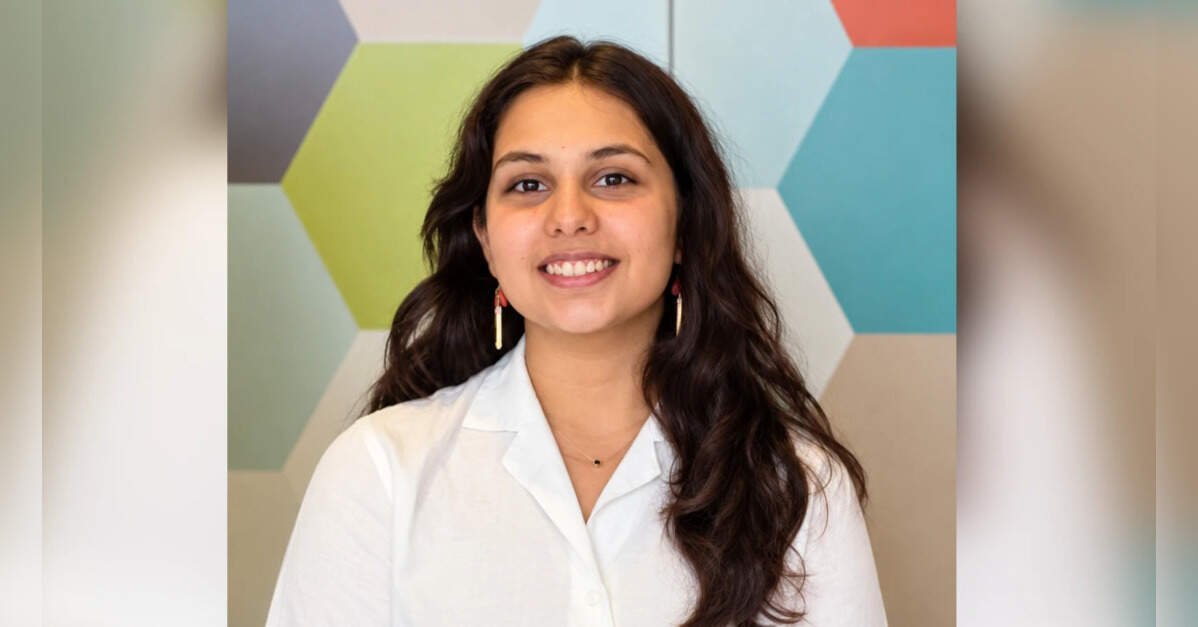
“I kept coming back to the same image,” says Aahana Gupta, Founder & Creator of Smriti.. “A family member standing in a room, completely present, and their parent looking straight through them. That moment of not being recognised by someone who loves you, I could not stop thinking about what that does to a person. Smriti came from that.”
Built for the Family Too
India has over 8 million dementia patients. Most are cared for by their own children, people in their 40s and 50s, holding down jobs, raising their own kids, and watching their parents disappear one memory at a time. Researchers call them the Sandwich Generation. They cannot be there every hour. They carry that guilt every single day.
“The caregiver is the forgotten patient,” says Aahana. “Nobody talks about their exhaustion, their grief, their guilt. Smriti is as much for them as it is for the person with dementia.”
When something changes in a patient’s responses, Smriti flags it to the family. It is a companion and an early warning system at once.
How did you make the technology feel human?
“The hardest part was not the voice cloning,” says Yash Wardhan Saraf, co-founder and the engineer behind Smriti. “It was making that voice feel warm and present to someone whose world has shrunk to a few familiar things. Every word, every pause had to feel real.”
The Research Behind It
Aahana has spent years studying cognitive decline. Her work on ADAS-Cog, the global standard for measuring cognitive deterioration, is published in Bioinformation journal. She has authored The Wrong Words, a book on dementia and cultural bias in assessment, available on Amazon. The research shaped every design decision in Smriti, from how conversations are structured to how behavioural changes are detected.
How to Try Smriti
Getting started takes minutes. A family member reaches out through the Smriti website, records a short voice sample and the team handles the rest. Within days the patient is receiving daily conversations in the voice they know best. For families who have felt helpless watching a loved one drift away, it is a place to start.
“Smriti is not a cure,” says Aahana. “It is a promise that even when memory fades, the people we love most will still feel close.”
To learn more or get started, visit smriti-dementia-care.netlify.app
Disclaimer: The above content is non-editorial, and TIL hereby disclaims any and all warranties, expressed or implied, relating to it, and does not guarantee, vouch for or necessarily endorse any of the content.


