



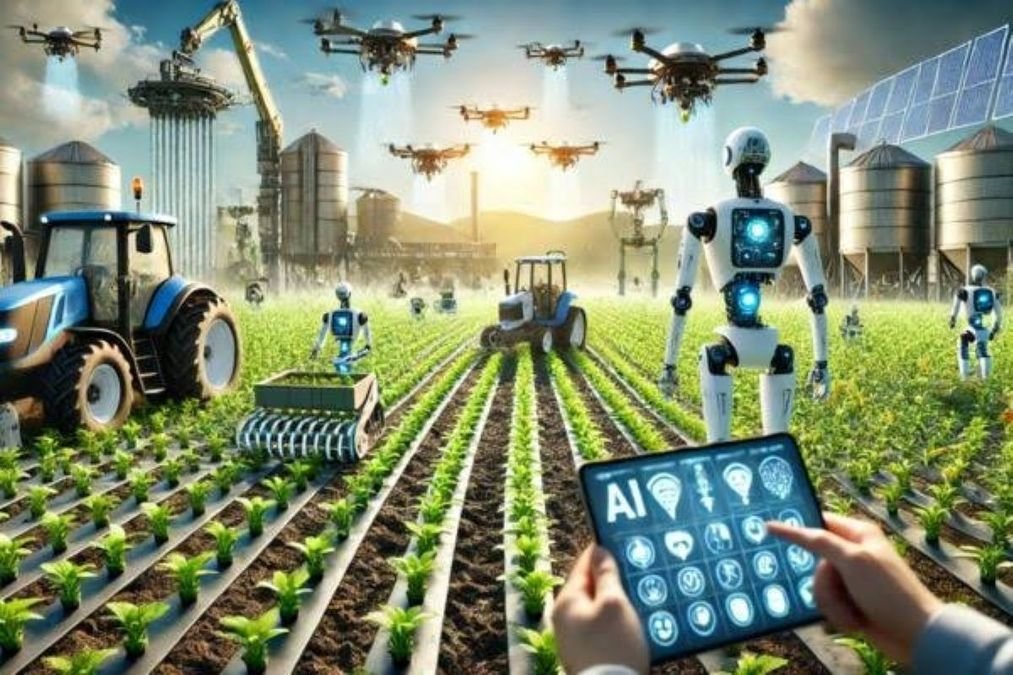
Artificial intelligence is rapidly changing the way the world understands agriculture. From predicting weather patterns and detecting crop diseases to improving irrigation and estimating yields, AI is opening new possibilities for farmers. For a region like Kashmir, where agriculture remains closely tied to livelihoods, food security and rural stability, this technology could offer important support. But its promise will be meaningful only if it reaches the farmer in the field, not merely the conference hall or policy document. Kashmir’s agriculture faces several challenges. Erratic weather, changing snowfall patterns, water stress, pest attacks, fragmented landholdings and weak market access continue to affect farm incomes. Apple growers, vegetable producers, saffron cultivators and paddy farmers often make crucial decisions with limited and delayed information. A sudden spell of rain, an unfamiliar disease or a shift in temperature can damage an entire season’s effort. AI-based tools can help reduce this uncertainty by analysing large amounts of data and providing timely guidance. For instance, weather-linked advisories can help farmers decide when to sow, spray, irrigate or harvest. Image-based applications can identify early signs of disease in apple orchards and recommend appropriate treatment. Sensors can monitor soil moisture and reduce unnecessary use of water and fertilisers. Yield forecasting can help growers and policymakers prepare for storage, transport and market requirements. Such interventions can improve productivity while lowering costs and reducing waste. Yet technology is not a substitute for agricultural extension services. An application cannot replace the trust built by a trained field officer who understands local soil, climate and farming practices. AI systems are only as reliable as the data on which they are trained. If the data does not reflect Kashmir’s geography, crops and small farms, the advice may be inaccurate or unsuitable. Local institutions must therefore work with scientists, farmers and technology providers to create region-specific datasets. The digital divide is another concern. Many farmers may not possess smartphones, stable internet connections or the confidence to use complex applications. Information provided only in English will exclude a large section of the farming community. AI tools must be available in local languages, simple to operate and supported through village-level centres, cooperatives and agricultural offices. Training should be treated as seriously as software development. There are also questions of data ownership and privacy. Farmers should know who collects information about their land, crops and production, and how that data will be used. Technology companies must not turn farmers into passive suppliers of data while retaining all the benefits. Public policy must ensure transparency, accountability and fair access. The government should begin with pilot projects in selected districts, focusing on clearly defined problems such as apple disease, saffron productivity, irrigation management and weather alerts. Their results must be independently evaluated and openly shared. AI can strengthen Kashmir’s agricultural economy, but only if it serves farmers rather than replacing their knowledge. The future of farming will not be built by machines alone. It will depend on a partnership between technology, science and the wisdom of those who work the land.
