






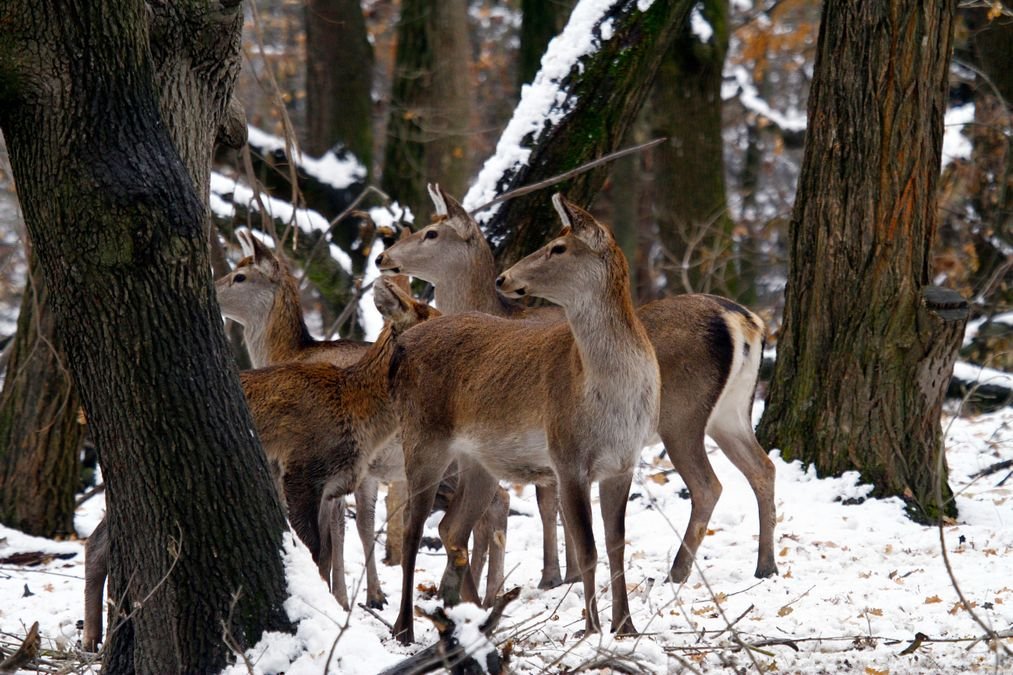
Srinagar, Oct 08: As the mountains of Dachigam echo with the calls of the endangered Hangul, Kashmir’s iconic stag has been given a month of quiet to mate, breed and replenish one of the region’s most fragile wildlife populations.
The Department of Wildlife Protection has temporarily closed Dachigam National Park to visitors throughout October, coinciding with the annual rutting season of the Hangul, or Kashmir stag. The closure, effective from October 1 to October 31, is aimed at ensuring that human activity does not disturb the animals during one of the most critical phases of their annual cycle.
The restriction has been imposed under Section 33 (b) and (c) of the Wildlife Protection Act, 1972, as amended up to 2022, following recommendations from the Wildlife Warden, Central Division, Srinagar, and the Regional Wildlife Warden, Kashmir Region.
Officials said the month-long closure is primarily a conservation measure, as Hangul become particularly sensitive to disturbance during the breeding period. Limiting tourist and public movement is intended to provide the animals with an undisturbed environment for courtship, mating and other breeding activities.
The order bars all visitors, tourists and unauthorised persons from entering the national park during the closure period. Entry will, however, remain permissible for essential departmental duties, wildlife protection and management operations, emergencies, and persons specifically authorised by the competent authority.
The Wildlife Warden, Central Division, Srinagar, has been directed to brief personnel deployed at all entry gates, checkpoints and field locations and ensure strict implementation of the order.
The temporary closure also underlines the delicate balance between tourism and conservation in Dachigam, one of Kashmir’s most important wildlife habitats and the principal stronghold of the Hangul.
With the species facing continuing ecological pressures, conservationists have repeatedly stressed the importance of protecting its breeding grounds and minimising avoidable human interference. For the Hangul, the October rut is not merely a seasonal spectacle—it is a critical window for the survival of a species that has become synonymous with Kashmir’s natural heritage.
For visitors, Dachigam may remain silent for a month. For the Hangul, however, the closure is intended to make the forests louder with the sounds of survival.


