



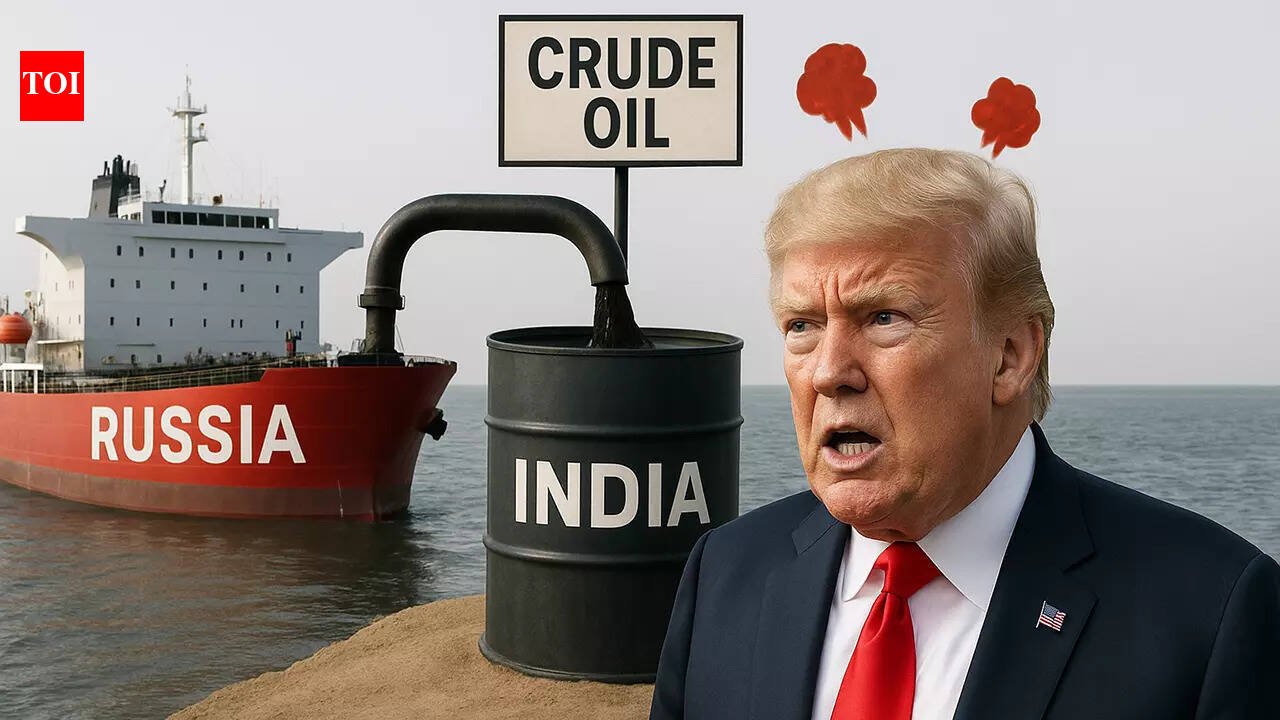
US President Donald Trump on Friday signed the Lindsey O Graham Sanctioning Russia and Iran Act of 2026 into law, giving his administration additional powers to impose sanctions and levy tariffs of up to 100% on goods from countries that continue to buy Russian oil and gas. Though the legislation does not automatically impose tariffs on any specific country, it is significant for India, which has been among the top buyers of Russian crude since the Ukraine war.India made record purchases from Russia after the West Asia conflict broke out, with its share reaching 55% in July. China, Turkiye and Egypt are among the other largest buyers of Russian crude.China criticised the law, saying it has “consistently opposed” unilateral sanctions and so-called secondary sanctions. The law threatens to disrupt India’s Russian crude supplies at a time when geopolitical tensions have already constrained alternative sources.Crude supplies through Strait of Hormuz and Bab el-Mandeb are disrupted, while a drone attack that damaged Saudi Arabia’s crucial East-West pipeline last week has further squeezed supplies. This has made replacing Russian barrels more challenging for Indian refiners. According to commerce department data, Russia, UAE and Saudi Arabia accounted for more than half of India’s oil imports during first quarter of FY27.The impact of earlier US sanctions shows how quickly India’s crude import patterns can change. The country sourced nearly 30-35% of its crude requirement from Russia through 2025, but imports fell considerably after US imposed sanctions on Russian oil majors Rosneft and Lukoil. Washington also made a reduction in Russian oil imports a prerequisite for removing the additional 25% penal tariff on India, though New Delhi never said it had accepted the condition.Russian crude imports fell from 2 mbd in 2025 to 1 mbd in Feb this year. They picked up again in March after US issued a two-month waiver on sanctions to increase global crude supplies during the West Asia war.
Amount of oil India buys from Russia
India’s experience with Iranian and Venezuelan oil also highlights the impact of US sanctions on its sourcing options. Iran was among the top five oil exporters to India until March 2019, accounting for nearly 12% of annual imports, before New Delhi stopped buying from Tehran following US sanctions. India purchased 5.9 million barrels of oil from Iran in April-May this year after US temporarily lifted sanctions.Venezuelan oil’s share of India’s imports fell from over 6% to 1% in 2020-21 and subsequently to zero for two years after US widened sanctions to include oil and gas. Imports resumed in 2023-24, with the share returning to around 6% since April this year.A senior executive at an oil refining company said replacing Russian barrels would be difficult under the current geopolitical circumstances. The company would have to increase imports from Africa, Latin America and US, if required.“Buying from geographies spread afield will add to costs due to higher spot prices and increased freight and insurance premiums,” the senior executive added.India has diversified its crude imports across nearly 40 countries in the last few years, but sourcing additional volumes from alternative suppliers could increase costs amid tight global supplies.Indian basket of crude, which averaged less than $70 per barrel before the conflict, has already risen 80% to over $125 due to renewed hostilities in West Asia. India’s crude import bill during April-Aug this fiscal rose nearly 50% from corresponding period last year, from $50.4 billion to $74.8 billion.The foreign ministry earlier this week said India was in touch with US over the legislation and would take necessary measures to protect its trade and economic interests. “This issue has been discussed at high levels in recent months with various US interlocutors. Its potential implications for not just the bilateral relationship but also the international energy market have been very clearly articulated by Indian side.“
