


When people believe they are being left out, stress and emotional discomfort can emerge, despite there being no real danger
DR. IQRA SHAFI BHAT
There was a time when being unavailable meant exactly what it was. Oh my my! Evenings disappeared into hearty and insightful conversations, unfinished books, idle walks, or simply doing nothing at all. Missing an event was not a personal crisis – it was part of life, a cherished one. Today, however, absence feels visible, and exclusion weighs heavy.
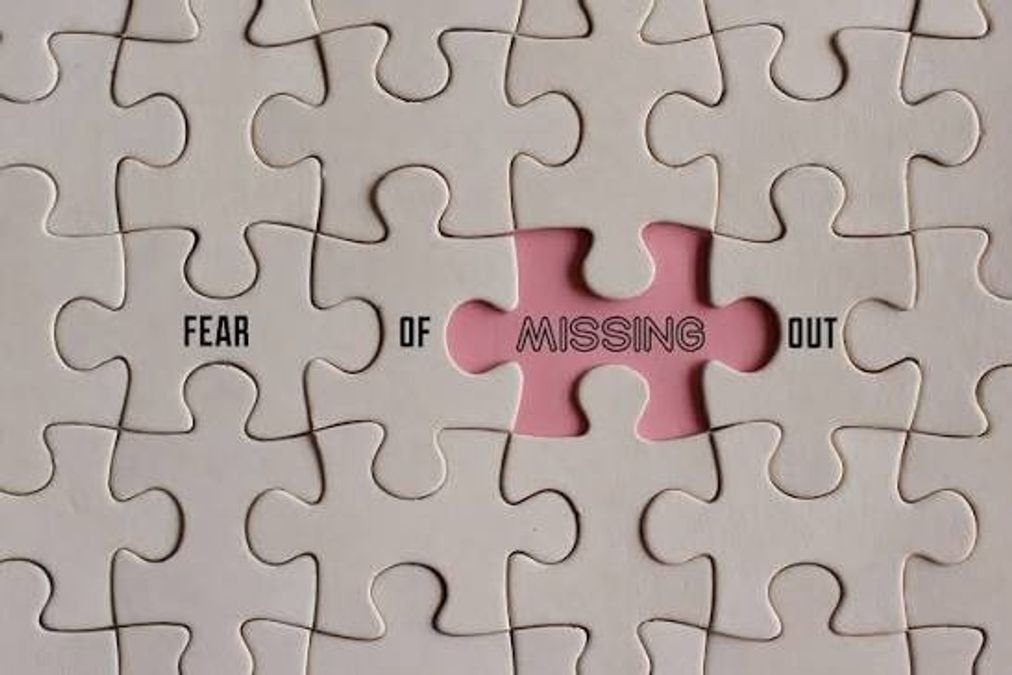
Open any social media platform, and within minutes, the world appears to be moving at a faster pace than you. Someone is celebrating a milestone, someone is travelling, someone is attending an event that seems enticing. In contrast, ordinary moments begin to feel disappointingly ordinary. Slowly, a question slips into the mind: Am I living enough? This feeling and lived phenomenon has become quite common and is readily relatable – it’s called FoMO, the “Fear of Missing Out”.
FoMO is often mistaken for a mild concomitant effect of modern technology and marketing science, but its influence reaches deeper than casual curiosity. It touches one of the oldest human instincts: the need to belong… Human beings are social by design. Throughout history, inclusion meant safety and exclusion carried consequences. Although life has changed dramatically, our minds still respond strongly to signs of being left behind. The twist in the contemporary times is that the threat is no longer physical—it is psychological.
A missed invitation, a photo from a gathering, or a stream of celebrations online can create a sense of distance that feels larger than reality itself. What makes this experience powerful is that the brain does not always distinguish between actual isolation and perceived exclusion. Lest we forget, perceptions are as important and sometimes, more important than reality!
When people believe they are being left out, stress and emotional discomfort can emerge despite there being no real danger. The experience may begin with a glance at a screen but end with self-doubt, restlessness, or loneliness.
Technology did not invent this fear—but it gave it unprecedented reach.
Previous generations had fewer windows into the lives of others. There were moments of comparison, certainly, but there were also long stretches of silence. People could disappear into their own lives without constantly measuring them against everyone else’s. Now, comparison arrives instantly. Social platforms offer a nonstop exhibition of celebrations, achievements, friendships, and milestones.
Yet what appears online is rarely a complete portrait. Difficult conversations, failures, insecurity, boredom—these moments usually remain outside the frame. The result is a strange imbalance: people compare their behind-the-scenes reality with everyone else’s edited highlights. Eventually, the pressure extends beyond screens.
People begin saying yes to plans they do not enjoy. They remain available at all times. They attend gatherings out of obligation rather than desire. Being seen has become more important than being present.
And beneath this behaviour often sits an uncomfortable fear—not merely of missing out, but….of losing significance.
Questions emerge quietly:
Will people forget about me? Do I matter if I am not included?
Such questions unveil that FoMO is rarely about entertainment. Sadly, the irony of FoMO is impossible to ignore.
The pursuit of belonging has turned into performance. Approval has become addictive. Personal time begins to feel undeserved unless it is shared, posted, or validated. More often, it reflects deeper fears and uncertainty about identity, connection, and self-worth. When people become disconnected from their own values, they become vulnerable to living according to everyone else’s priorities.
In trying to experience everything, people often fail to experience anything completely.
I believe that the antidote to FOMO is not escaping the modern world but changing our relationship with it.
Choosing to step away occasionally is not withdrawal; it is intention. Limiting digital noise, protecting quiet time, and resisting the urge to constantly compare can create opportunities and space to rediscover what genuinely matters. There is also value in rejoicing in something many have forgotten: boredom. Unfilled time leaves room for reflection, creativity, and self-discovery. Not every evening needs plans. Not every experience needs documentation.
Most importantly, we must learn to ask a different question.
Instead of wondering, What am I missing? Perhaps we should ask, What am I choosing?
Because a meaningful life cannot be built by chasing every invitation or witnessing every moment. It is shaped by presence, not participation; by intention, not visibility.
In a culture that constantly whispers that something better is happening elsewhere, perhaps the most radical act is to stay where you are—and discover that your own life is already enough.
Reclaim yourselves- embrace the “Joy of Missing Out”.
