


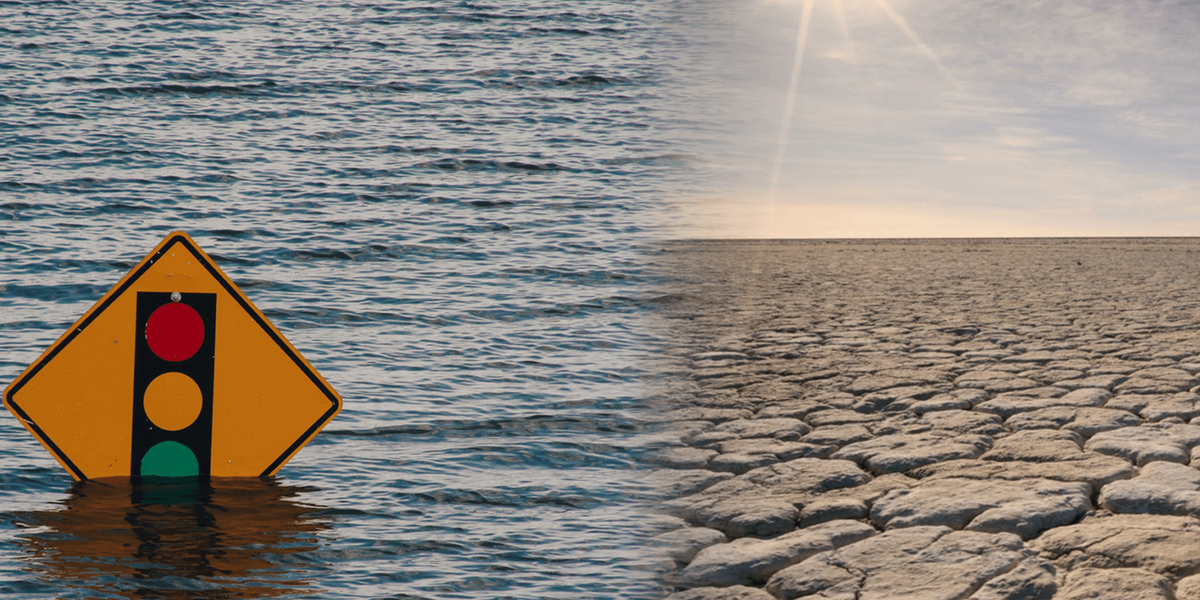
The India Meteorological Department (IMD) has already projected a below-normal monsoon for 2026, with a 60% chance of a deficit or deficient monsoon
DR TANVEER ALI DAR
Thousands of kilometres away from India, in the tropical Pacific Ocean, sea surface temperatures are rising. Yet this distant warming has the potential to influence rainfall over Indian farms, reservoir levels across the country, groundwater recharge beneath our feet, and even snowfall in the Himalayas. This phenomenon, known as El Niño, has officially returned in 2026, prompting scientists and weather agencies around the world to closely monitor its possible impacts. While El Nino develops in the Pacific, its consequences can extend from the drought-prone regions of central India to the snow-fed mountains of Jammu and Kashmir.
Recent assessments by the World Meteorological Organization (WMO), the United States National Oceanic and Atmospheric Administration (NOAA), and other climate agencies indicate a high probability that El Niño conditions will strengthen during the coming months. Forecasts suggest that the event could reach moderate to strong intensity, raising concerns about its influence on global weather patterns. The India Meteorological Department (IMD) has already projected a below-normal monsoon for 2026, with a 60% chance of a deficit or deficient monsoon. Government agencies have reportedly identified nearly 150 to 200 districts across India as potentially vulnerable to rainfall deficits and associated agricultural stress.
For many people, El Niño remains a technical scientific term. Yet its influence on India has been recognized for more than a century. El Niño is characterized by unusually warm sea surface temperatures in the central and eastern tropical Pacific Ocean. These temperature changes alter atmospheric circulation patterns across the globe, affecting the movement of winds, moisture, and storm systems. Historically, several drought years in India have coincided with El Nino conditions, leading to concerns whenever a strong event develops. However, the relationship between El Nino and the Indian monsoon is no longer as straightforward as it once appeared. In the past, a strong El Niño often meant a weak monsoon.
Today, climate scientists recognize that other factors, including Indian Ocean temperatures, western disturbances, regional circulation patterns, and long-term climate warming, can modify or even counteract El Nino’s influence. Some strong El Nino years have produced severe rainfall deficits, while others have resulted in near-normal monsoons. This increasing complexity is one of the defining challenges of climate science in the twenty-first century. What remains undeniable, however, is India’s continuing dependence on rainfall.
Despite decades of economic growth and technological advancement, the monsoon remains the foundation of India’s water and food security. Nearly half of India’s agricultural land is still rain-fed. Groundwater supports a large share of irrigation and supplies drinking water to hundreds of millions of people. Reservoirs sustain agriculture, hydropower generation, industries, and urban water supply systems. Even modest changes in rainfall patterns can therefore have significant economic and social consequences.
The concern today extends beyond simply receiving less rainfall. Climate change is altering the way precipitation occurs. Across India, rainfall is increasingly becoming concentrated into shorter and more intense events. Long dry spells are often interrupted by episodes of extreme rainfall that can trigger floods, landslides, and urban inundation. As a result, regions may simultaneously experience drought conditions and destructive flooding within the same season. This growing variability means that the impacts of El Nino can no longer be assessed solely through seasonal rainfall totals.
Agriculture remains particularly vulnerable. A weak monsoon can affect sowing schedules, reduce soil moisture, increase irrigation demand, and expose crops to heat stress during critical growth stages. Pulses, oilseeds, and several rain-fed crops are especially sensitive to rainfall variability. Even if national food production remains stable, localized droughts can severely affect farming communities and rural livelihoods. Rising temperatures further compound these challenges by increasing evapotranspiration and reducing soil moisture availability.
Water resources face similar pressures. Reservoir storage levels, groundwater recharge, and river flows are all closely linked to seasonal rainfall patterns. Consecutive years of rainfall deficits can place significant stress on water supplies, particularly in regions already experiencing groundwater depletion. The effects may not always be immediate. In many cases, the hydrological consequences of a weak monsoon emerge months later through declining groundwater levels, reduced streamflow, and increasing competition for water resources.
For Jammu and Kashmir, the implications of El Nino are somewhat different but equally important. Unlike much of peninsular India, the region relies heavily on winter precipitation delivered by western disturbances. Snowfall, glaciers, springs, rivers, and groundwater collectively sustain water availability across the Himalayan landscape. Although El Nino does not directly control Kashmir’s weather, it can influence large-scale atmospheric circulation patterns that interact with regional climate systems.
Recent years have highlighted the growing vulnerability of the Himalayan region to climate variability. Snow-deficit winters, earlier snowmelt, retreating glaciers, damaging hailstorms, flash floods, and prolonged dry spells have become increasingly common topics of discussion. Several studies have suggested that changes in atmospheric circulation can influence the position and behaviour of the subtropical jet stream over the Himalayas, which plays a crucial role in guiding western disturbances and winter precipitation. Scientific research indicates that El Nino events can shift the Himalayan jet stream southward and alter storm tracks affecting South Asia, potentially influencing snowfall and precipitation patterns across the region.
For a region whose rivers, springs, and groundwater systems depend on seasonal snow accumulation, such changes are far from trivial. Snow functions as a natural water reservoir, storing winter precipitation and releasing it gradually during spring and summer. Variations in snowfall therefore affect not only mountain ecosystems but also agriculture, hydropower generation, drinking water supplies, and downstream river systems. Yet perhaps the most important lesson from El Niño 2026 is not about rainfall totals or drought forecasts. It is about uncertainty.
Climate systems are becoming increasingly interconnected and complex. The traditional assumptions that once guided seasonal climate expectations are being challenged by rising global temperatures and changing ocean-atmosphere interactions. Weather patterns that were once considered unusual are becoming more frequent, while historical relationships between climate drivers and local weather are evolving.
The developing El Nino of 2026 is therefore more than a seasonal weather event. It is a reminder that India’s climate is connected to processes occurring across the globe. A warming Pacific Ocean can influence agricultural productivity in the Deccan Plateau, groundwater recharge in northern India, reservoir storage in central India, and potentially even snowfall in the Himalayas. As climate variability increases and extremes become more common, understanding these connections will become increasingly important for science, policy, and society alike.
The Pacific Ocean may seem distant from India’s shores, but its influence reaches far beyond geography. In an era of climate uncertainty, what happens in one part of the planet can no longer be viewed in isolation from another. The story of El Nino is ultimately a reminder that our climate, our water resources, and our future are more interconnected than ever before.
(The Author is a Postdoctoral Researcher and hydrogeologist whose research focuses on groundwater systems, climate variability, and water resources in mountain environments, particularly the Himalayan region)
