



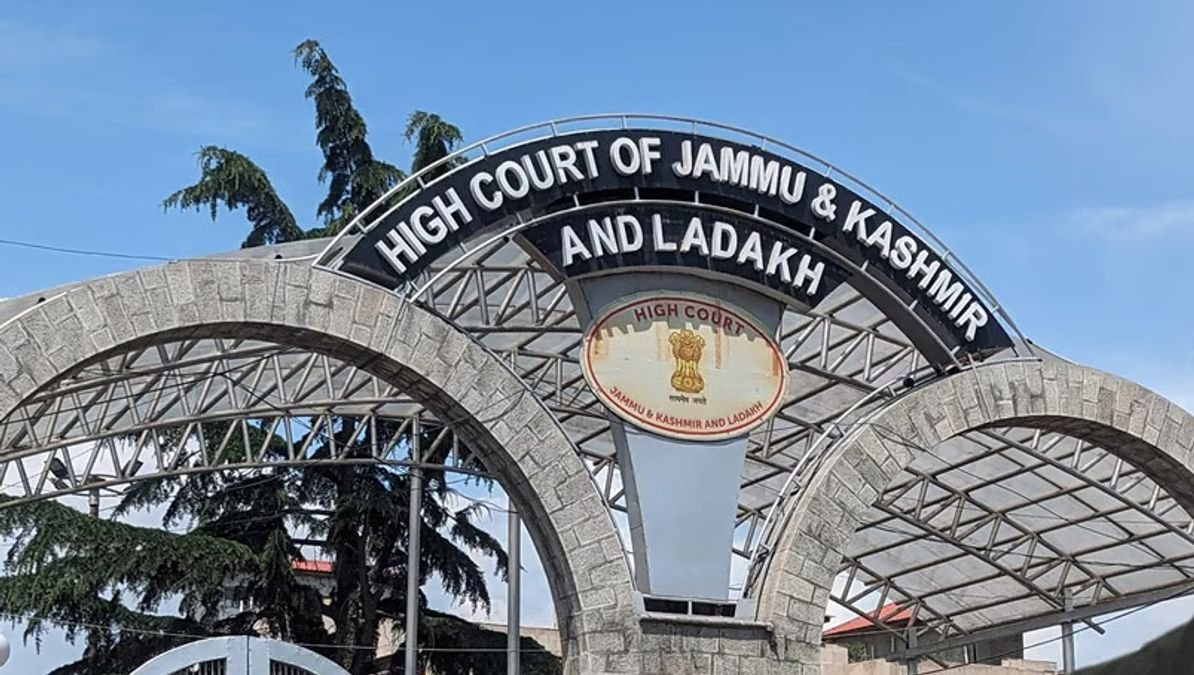
Srinagar, Aug 07: A total of 44,551 cases are pending before the High Court of Jammu & Kashmir and Ladakh, while 3,65,191 cases are pending in the subordinate courts of Jammu & Kashmir and 1,748 cases in the subordinate courts of the Union Territory of Ladakh, according to data tabled in Parliament by the Union Government.
Replying to a question raised by Members of Parliament Sanjay Haribhau Jadhav and Sanjay Uttamrao Deshmukh, Minister of State for Law and Justice and Parliamentary Affairs Arjun Ram Meghwal informed the Lok Sabha that 44,551 cases were pending before the High Court of Jammu & Kashmir and Ladakh as on July 28, 2026.
The data showed that pendency in the High Court stood at 47,371 cases in 2021, 43,575 in 2022, 42,934 in 2023, 43,296 in 2024, 43,039 in 2025, and 44,551 cases as on July 28, 2026.
According to the reply, the number of pending cases in the subordinate courts of Jammu & Kashmir has increased steadily over the years. The pendency rose from 2,16,245 cases in 2021 to 2,72,543 in 2022, 3,10,486 in 2023, 3,11,925 in 2024, 3,45,785 in 2025, and 3,65,191 cases as on July 28, 2026.
For the Union Territory of Ladakh, the subordinate courts had 1,244 pending cases in 2023, which increased to 1,407 in 2024, 1,583 in 2025, and 1,748 cases as on July 28, 2026.
The minister also informed Parliament that, at the national level, 92,755 cases were pending before the Supreme Court of India, 64,67,391 cases were pending across the country’s 26 High Courts, and 4,99,16,653 cases were pending in subordinate courts as on July 28, 2026.
Meghwal said the disposal of cases lies within the domain of the judiciary and depends on several factors, including the availability of judges and judicial officers, adequate supporting staff and court infrastructure, the complexity of cases, the nature of evidence, and the cooperation of stakeholders such as the Bar, investigating agencies, witnesses, and litigants.
He said the government remains committed to reducing pendency and ensuring the speedy disposal of cases through a series of initiatives. These include the implementation of the e-Courts Mission Mode Project to enhance access to justice and transparency, strengthening court infrastructure, policy and legislative measures to curb excessive litigation, implementation of the new criminal laws, establishment of Fast Track Special Courts, promotion of Alternate Dispute Resolution (ADR) mechanisms, and focused development of judicial human resources to improve the justice delivery system.


