



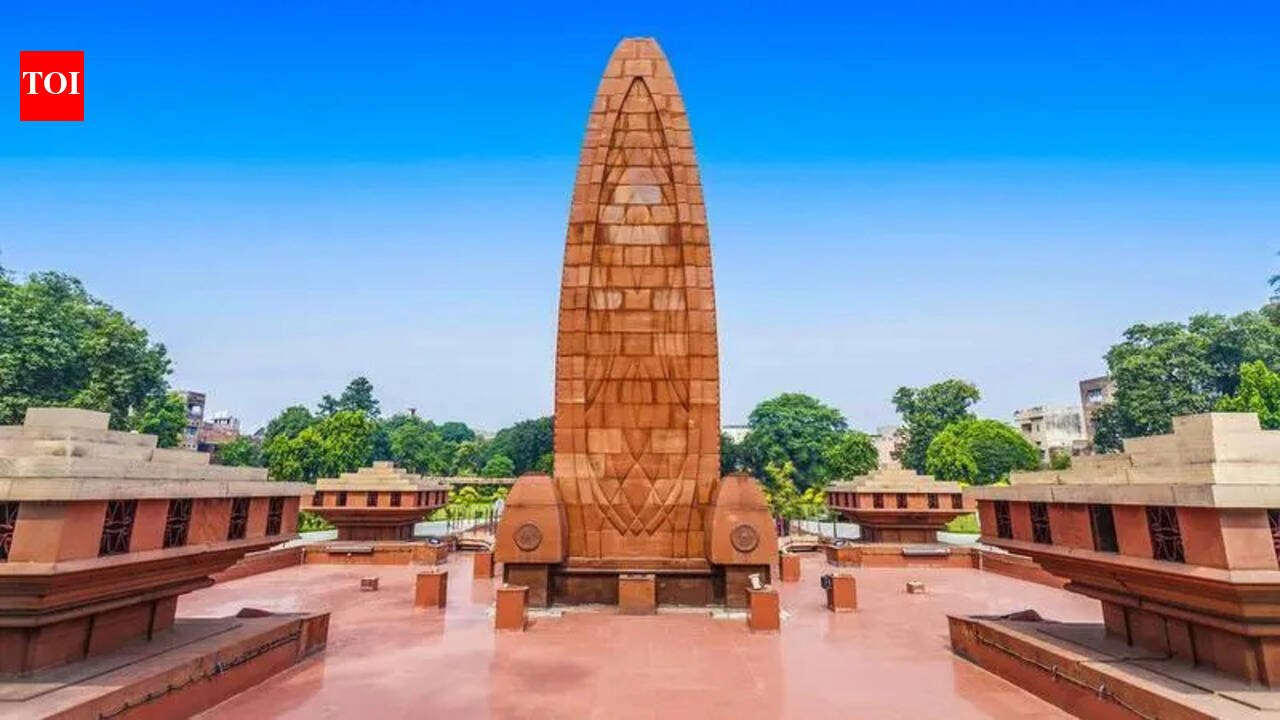
Amritsar: As the nation prepares to mark the Jallianwala Bagh massacre anniversary on April 13, a century-old question has returned to the spotlight: how many people were actually killed in one of colonial India’s darkest chapters. With the martyr count still officially unsettled even after 107 years, former Rajya Sabha MP and Jallianwala Bagh National Memorial Trust trustee Tarlochan Singh has renewed the demand for an authenticated, government-verified list of martyrs to be publicly displayed at the historic site.On April 13, 1919, thousands of men, women and children had gathered at Jallianwala Bagh to celebrate Baisakhi and to protest peacefully against the repressive Rowlatt Act. The Act empowered the British administration to arrest and detain Indians without trial, triggering nationwide outrage. In Amritsar, tensions had escalated after the arrest of prominent leaders Dr Saifuddin Kitchlew and Dr Satyapal on April 10, 1919. As protests erupted, the administration imposed martial law, banning public gatherings. Unaware of these restrictions, thousands assembled at Jallianwala Bagh on Baisakhi. Viewing the gathering as defiance, British General Reginald Dyer marched in with troops, blocked the narrow entrance and ordered firing without any warning. The shooting lasted about 10 minutes, leaving hundreds dead and many more injured.Estimates on those killed at the site have varied widely — from around 500 to 800 to over 1,200 — creating confusion and debate among historians, officials and descendants of victims. Tarlochan has urged the Punjab govt to prepare a verified list of martyrs which should be authenticated by deputy commissioner, Amritsar, adding that the present list displayed is allegedly disputed.“The display of an authenticated list at Jallianwala Bagh will bring clarity and closure to this long-standing uncertainty,” Tarlochan Singh said, adding that families of martyrs have repeatedly raised grievances over the absence of official recognition. He also pointed out that although the trust managing the memorial is headed by the Prime Minister, the tenure of its office-bearers expired in 2023 and the body is yet to be reconstituted.In Jan 2021, the Amritsar deputy commissioner’s office prepared a list of 492 martyrs, which is currently displayed at a separate memorial developed in Ranjit Avenue during the tenure of former chief minister Capt Amarinder Singh. However, this list failed to resolve the controversy.Mahesh Behal, president of the Jallianwala Bagh Shaheed Parivar Samiti, said no list so far has gained universal acceptance. “People still approach us seeking inclusion of their ancestors’ names,” he said. “But without official validation, we can only record claims.”BOX“We will gather at Jallianwala Bagh on Monday, April 13, to pay tribute to the memory of the hundreds of innocent martyrs who were killed in General Dyer’s firing on Baisakhi day in 1919,” said Tarlochan Singh. He added that as a member of the Jallianwala Bagh Trust, headed by Prime Minister Narendra Modi, he has repeatedly requested the Punjab government to provide an officially approved list of martyrs so that their names can be displayed within the Jallianwala Bagh complex. “Despite several reminders, we are still waiting for the list. Families of the martyrs have a genuine grievance against us as we have not been able to fulfil their long-standing demand to see the names of their ancestors, who laid down their lives for India’s freedom,” he said.BOXThe Jallianwala Bagh Shaheed Parivar Samiti has expanded its activities by forming a women’s wing, appointing Rashmi Behl—herself from a martyr’s family—as its president. The appointment was made unanimously in the presence of Mahesh Kumar and general secretary Nainish Behl. Nainish said Rashmi Behl belongs to the family of Lala Hariram Behl, who was martyred in the Jallianwala Bagh massacre on April 13, 1919. A member of the teaching profession, she joins the committee’s nearly 36-year-long effort to secure recognition for martyr families, ensure display of their names at the Bagh, and seek representation in the trust managing the memorial.


