



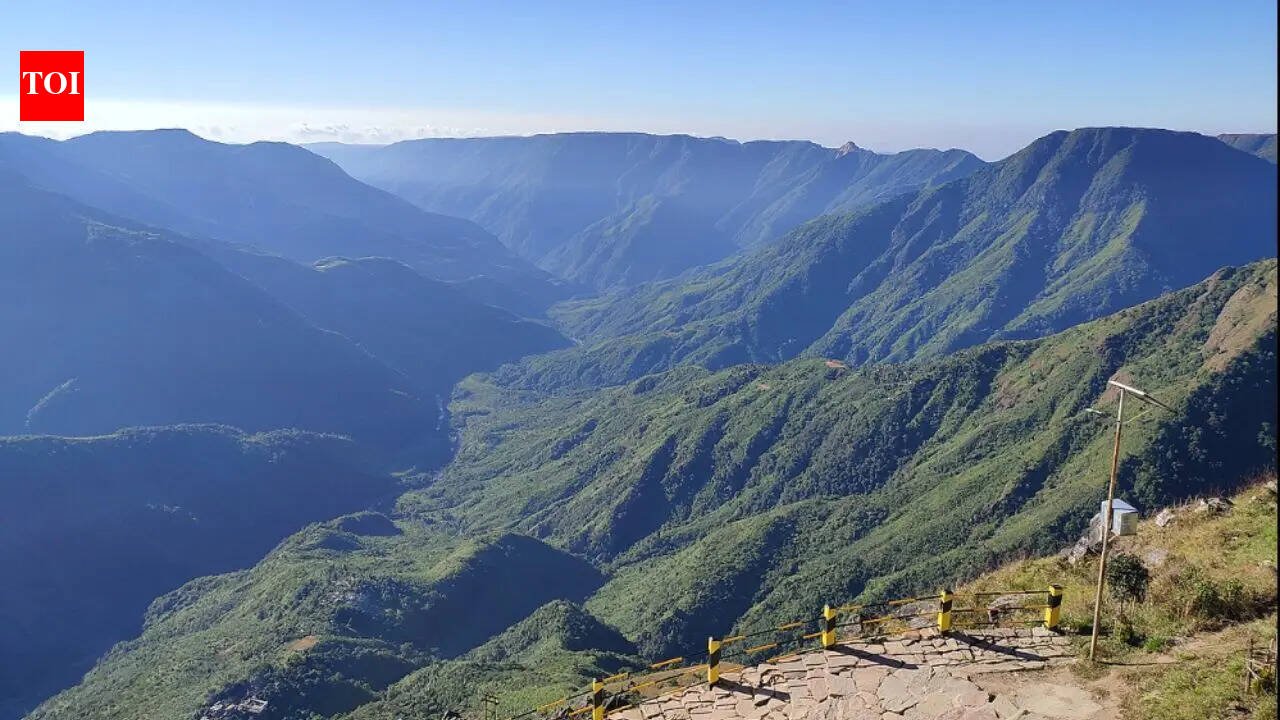
Hill travel in north-east India has always existed slightly outside the country’s louder tourism circuits. The distances are longer, the weather shifts quickly, and many of the towns remain shaped more by local rhythms than by visitor infrastructure. That separation is part of the appeal. Summer arrives differently here as well. Mist replaces heatwaves, roads cut through pine forests and tea slopes, and evenings cool down long before midnight.The region’s tourism economy has expanded steadily over the past decade, though much of that growth still revolves around smaller eco-sensitive destinations rather than large commercial resorts. The landscape itself remains the primary attraction, with biodiversity, cultural diversity and mountain ecosystems forming the core of visitor interest. The quieter hill stations often reflect that balance most clearly.
10 best hill stations in North East India to visit this summer
1. Shillong, Meghalaya
pc: wikipedia
Shillong still carries traces of its colonial hill-station history, though the city feels more layered now than preserved. Pine-lined roads sit beside crowded markets and music cafés, while sudden rain tends to interrupt afternoons without warning. Summer temperatures remain moderate, which partly explains why the city continues to attract visitors escaping the plains each year.Meghalaya’s tourism model increasingly relies on nature-linked travel rather than large-scale commercial expansion. Around Shillong, that becomes visible through forest walks, waterfalls and nearby villages where tourism remains community-managed in parts. The slower pace outside the city centre often leaves a stronger impression than the city itself.
2. Gangtok, Sikkim
pc: wikipedia
Gangtok operates differently from many hill towns in India. Roads are cleaner, public spaces are more regulated, and tourism feels more controlled than improvised. The city rises sharply across hillsides, with monasteries, cafés and viewpoints layered into narrow roads that disappear into fog by evening.Sikkim’s tourism policies have frequently been cited in discussions around environmentally conscious travel in mountain regions. Restrictions on plastic use, regulated trekking zones and controlled tourism around ecologically sensitive areas have shaped how visitors move through the state. That framework has helped Gangtok remain busy without entirely losing its environmental balance.
3. Tawang, Arunachal Pradesh
pc: wikipedia
Reaching Tawang still requires patience. Long mountain roads, changing weather and occasional landslides remain part of the journey. Yet the remoteness is inseparable from the experience itself. Large sections of the route pass through high-altitude valleys where settlements appear scattered and temporary against the landscape.The region’s tourism potential has been discussed in studies focused on sustainable development across north-east India, particularly because of its fragile ecology and cultural significance. Destinations tied closely to monasteries, indigenous communities and mountain ecosystems tend to attract travellers looking for experiences beyond conventional sightseeing. Tawang fits that pattern closely. The monastery dominates the town visually, but the surrounding silence often leaves a deeper memory.
4. Ziro, Arunachal Pradesh
pc: wikipedia
Ziro feels less like a hill station and more like a valley settlement that gradually became part of travel itineraries. Paddy fields spread across the basin while pine forests frame the surrounding hills. Even during tourist season, movement remains relatively slow.The area is frequently associated with community-led tourism discussions because of the Apatani cultural landscape and traditional ecological practices. Smaller destinations where local communities remain directly connected to tourism activities often retain stronger environmental stability compared to heavily commercialised hill centres. Ziro reflects that tension between growing popularity and preservation. Visitor numbers increase during festival periods, but much of the valley still operates independently of tourism demand.
5. Cherrapunji, Meghalaya
pc: wikipedia
Cherrapunji’s reputation has long been tied to rainfall, though summer reveals a different side of the plateau. Clouds move quickly across limestone cliffs, root bridges sit partially hidden inside forests, and the landscape shifts colour several times a day depending on the weather.Tourism research focused on Meghalaya frequently points toward nature-based travel as the state’s strongest long-term asset. Ecological sensitivity in high-rainfall regions requires tourism growth to remain carefully managed. In Cherrapunji, that concern feels practical rather than theoretical. Heavy visitor movement affects trails, forests and water systems quite quickly. Parts of the region have already introduced locally monitored tourism practices around living root bridge routes.
6. Haflong, Assam
pc: wikipedia
Haflong rarely appears first in mainstream travel lists, partly because Assam is usually associated more with wildlife tourism and tea estates than hill travel. Yet the town remains one of the few recognised hill stations in the state. The surrounding landscape feels softer than the sharper Himalayan terrain further north, with lakes, rolling hills, and forest stretches shaping the region instead.Less-publicised destinations often face a different challenge from overtourism: limited infrastructure despite growing interest. Haflong reflects that uneven development. The scenery draws travellers looking for quieter routes through the region, though transport and accommodation networks still remain relatively modest compared to larger hill destinations.
7. Pelling, Sikkim
pc: wikipedia
Pelling stays quieter than Gangtok even during the summer months. Mornings usually revolve around mountain visibility. If the skies remain clear, Kanchenjunga dominates almost every viewpoint in town before clouds gradually cover the range later in the day.Sikkim’s hill destinations continue to receive attention for balancing tourism growth with environmental regulation. Smaller towns such as Pelling have benefited from that approach because construction and tourism activity remain somewhat restrained compared to heavily commercialised mountain resorts elsewhere in India. The result is not untouched isolation, but a place where tourism still feels secondary to the landscape around it.
8. Kalimpong, West Bengal
pc: wikipedia
Kalimpong feels quieter and less commercial than neighbouring Darjeeling, though the town still carries traces of its colonial past through old monasteries, churches and hillside schools. Summer usually brings mild weather and clearer mountain views, while flower nurseries and local markets give the town a slower rhythm than larger tourist centres.
9. Aizawl, Mizoram
pc: wikipedia
Aizawl spreads across steep ridges where houses appear stacked directly into the hillsides. The city remains less explored compared with many north-eastern destinations, which often makes travel feel calmer and more local. Summer temperatures stay moderate, and the surrounding hills tend to remain covered in mist through much of the day.
10. Darjeeling, West Bengal
pc: wikipedia
Darjeeling continues to remain one of the most recognised hill stations in eastern India because of its tea estates, toy train routes and Himalayan views. Even with heavy tourist movement during summer, the town still draws visitors looking for cooler weather and mountain scenery. Early mornings around the tea gardens and viewpoints usually feel far quieter than the crowded town centre later in the day.


