


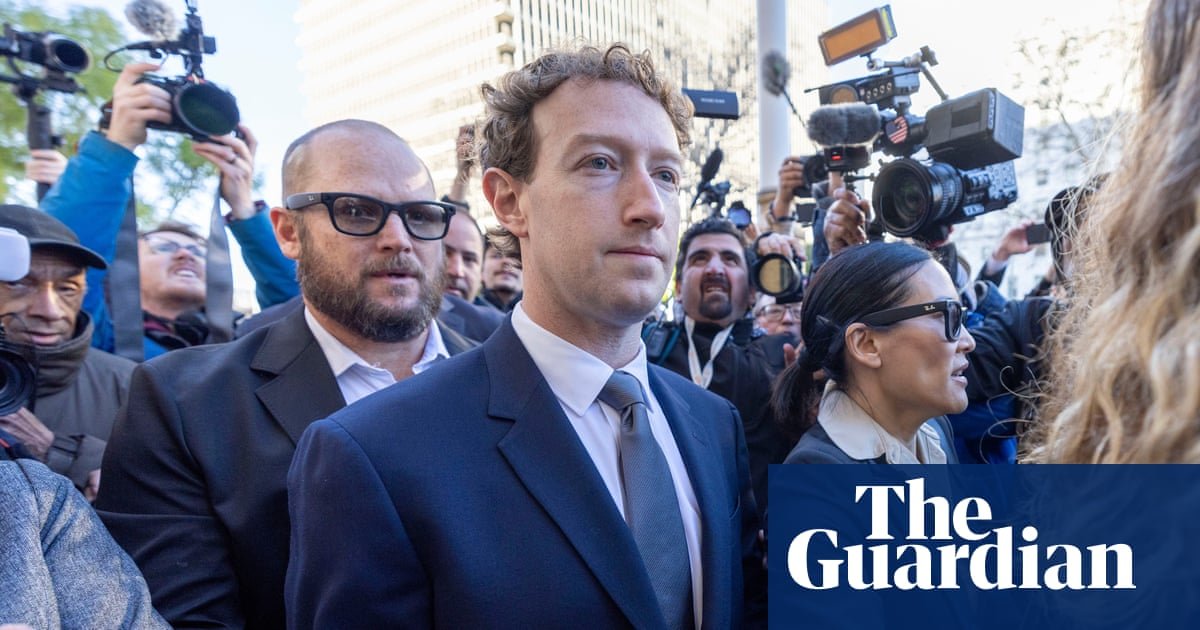
The Meta CEO, Mark Zuckerberg, testified at a landmark trial of social media companies on Wednesday. Plaintiffs’ lawyers grilled Zuckerberg about internal complaints that not enough was being done to verify whether children under 13 were using the platform.
Zuckerberg claimed Meta had improved in identifying underage users but also said: “I always wish that we could have gotten there sooner.”
Zuckerberg also said some users lie about their age when joining Instagram and that the company removes those it identifies as underage, according to CNBC. The plaintiffs’ lawyers hit back at those claims: “You expect a nine-year-old to read all of the fine print … that’s your basis for swearing under oath that children under 13 are not allowed?” CNBC reported.
He was also flanked by people wearing the Meta Ray-Ban artificial intelligence glasses, and the judge in the courtroom threatened to hold anyone recording with the devices in contempt, CNBC reported.
After arriving at the courthouse, Zuckerberg was asked by a security guard at a metal detector if he had any metal on him. “I have a gold chain on,” he responded, according to the New York Post.
Lawyers for the plaintiffs, who argue that Meta intentionally designed its social media platforms to be addictive, questioned Zuckerberg about whether he knew of harms his company’s products could inflict on young people’s mental health. The plaintiffs have already made public internal documents they say prove their point.
This is the first time Zuckerberg has addressed concerns about child safety before a jury at trial. Tech companies have long relied on a federal law that shields them from liability for content posted by users, but the plaintiffs’ novel argument – which is focused on harmful design and not individual actors – has so far sidestepped this defense.
The initial trial in Los Angeles focuses on a 20-year-old woman, known as KGM, who says her compulsive use of Youtube and Instagram worsened her depression and suicidal thoughts. KGM’s case is one of about 20 “bellwether” cases – designed to be test cases to gauge a jury’s reaction. TikTok and Snap settled in the initial trial but will still be defendants in hundreds of other cases.
Zuckerberg’s testimony comes about a week after Instagram CEO Adam Mosseri spoke on the witness stand. Mosseri pushed back on the science behind social media addiction, by denying users could be “clinically addicted”. He described children’s high usage of Instagram as “problematic use” – similar to “watching TV for longer than you feel good about”. Psychologists don’t classify social media addiction as an official diagnosis, but many researchers have documented the harmful consequences of compulsive use among young people, and lawmakers around the world are worried about its addictive potential.
Paul Schmidt, one of Meta’s attorneys, previously said in his opening statement that the company acknowledged KGM’s mental health issues but disputed that Instagram played a significant role in exacerbating them. He cited medical records to suggest the primary issue was a difficult home life, instead.
Two years ago, Zuckerberg fielded similar questions in a heated congressional hearing about child exploitation. In January 2024, Zuckerberg turned directly towards grieving parents on the Senate floor to apologize, promising to continue investments to protect children. Those families weren’t convinced that Meta would make meaningful progress, and still aren’t; they are hoping the courts can provide more relief. These trials could eventually result in large payouts from tech companies and changes in the way social media platforms are designed.
“His apology – if you will call it that – was mostly empty,” said John DeMay, who was present in the Senate hearing room in 2024. DeMay’s son, Jordan, was 17 when he died by suicide in 2022, hours after being targeted in an online sextortion scam on Instagram. “He basically said they’re doing everything they can to stop and prevent this stuff from happening and unfortunately that’s just not the case.”
In the two years since, DeMay has visited Capitol Hill frequently to advocate for online child safety – but has been frustrated by the lack of progress. DeMay’s lawsuit is one of the many cases that will be considered as part of a judicial council coordination proceeding. He has more faith in the courts than Congress, and has previously attended hearings in the current trial, although he was following Wednesday’s proceedings from his home in Michigan.
“I’m hopeful that this case prevails but if it doesn’t, we still won because we showed the world – with on the record evidence – that they’re doing one thing and saying another,” DeMay said.
Meta is also involved in separate litigation in New Mexico, where prosecutors accuse the company of violating the state’s consumer protection laws; Meta failed to disclose what it knew about how its social media platforms could harm children, they say. Meta has denied those claims.
Instagram has, in recent years, added some safety features aimed at its young users. But a 2025 review of these tools by Fairplay – a non-profit which advocates for reducing the influence of big tech on children – found “that less than one in five are fully functional and two-thirds (64%) are either substantially ineffective or no longer exist”.
Some former Meta employees have said that the company has been dismissive of warnings around child safety. Kelly Stonelake left Meta on medical leave, in February 2023, after she faced harassment and retaliation for raising such concerns, she says. Stonelake sued Meta last year over the issue, and also alleged a toxic pattern of silencing women.
She alleges Meta was collecting data on kids without parental consent and exposing them to other adults and “an environment that we knew was riddled with harassment and bullying”.


