






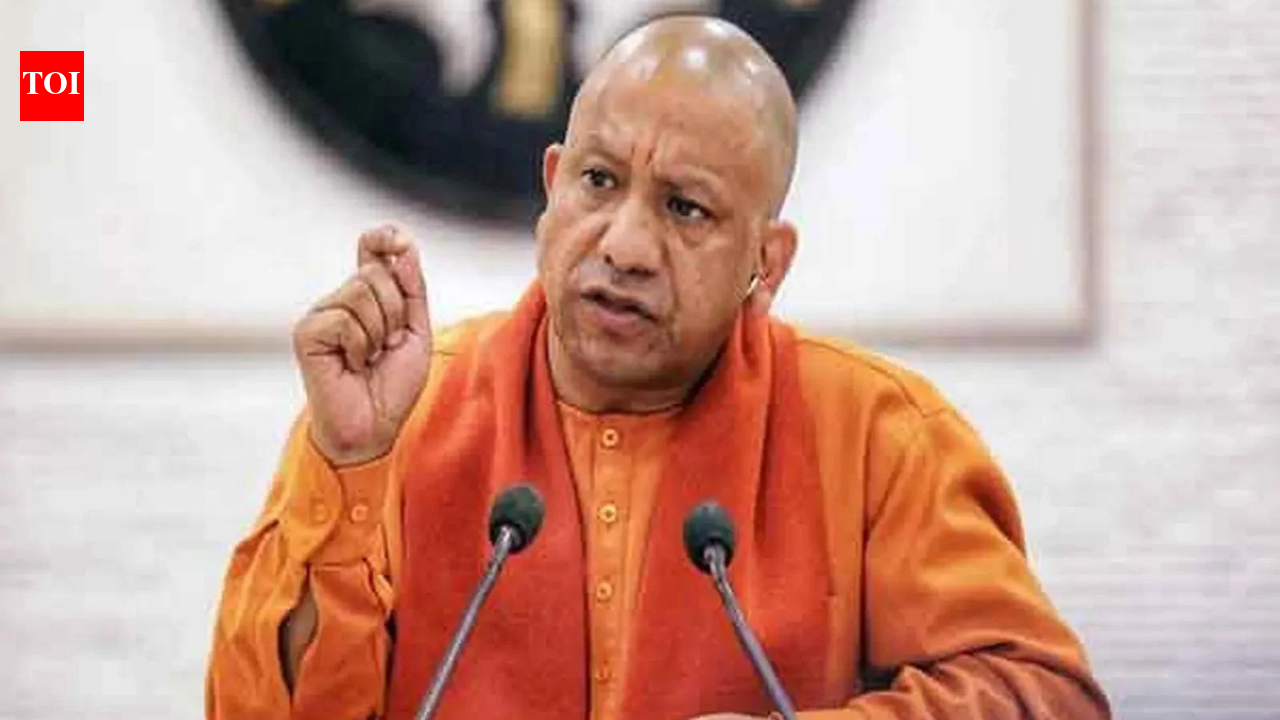
LUCKNOW: The success of Uttar Pradesh’s investment strategy under the Yogi Adityanath government is increasingly being measured not merely by the number of investment proposals signed on paper, but by projects moving from announcements to construction, production and employment. The latest example is Crown Packaging India Private Limited’s Rs 2,078.44-crore aluminium beverage can manufacturing plant in Unnao, a project that illustrates how the state’s FDI-focused policy framework is translating global corporate confidence into tangible industrial capacity.The ground-breaking ceremony for Crown Holdings’ first manufacturing unit in India at the Integrated Manufacturing and Logistics Cluster (IMLC), Unnao, marks another significant milestone in Uttar Pradesh’s evolving industrial story.The nearly 40-acre facility is expected to create more than 200 directjobs and over 1,500 indirect employment opportunities, while generating new demand for logistics, warehousing, transportation, maintenance and local supplier networks.More importantly, the project demonstrates the changing character of investment flowing into Uttar Pradesh.Global companies are increasingly looking at the state not merely as a large consumer market but as a manufacturing and supply-chain destination.From investment proposals to projects on the groundFor the Yogi government, attracting investment has been closely linked with the larger objective of transforming Uttar Pradesh into a major manufacturing and economic powerhouse. The state investment policies have increasingly sought to combine financial incentives with infrastructure, connectivity, land availability, digital approvals and investor facilitation. The Uttar Pradesh FDI/FCI, Fortune Global 500 and Fortune India 500 Companies Investment Promotion Policy, 2023, represents a particularly important component of this strategy. The policy was designed specifically to attract foreign capital investment as well as large global and Indian corporations.Under the framework, eligible foreign capital investment projects with investment of at least Rs 100 crore can qualify for policy benefits, while projects involving Fortune Global 500 and Fortune India 500 companies with capital investment above Rs 100 crore are also covered, subject to policy conditions. Crown’s Unnao project fits squarely into this approach. The investment is not simply a foreign capital inflow; it is the establishment of a large manufacturing ecosystem with substantial capacity and long-term employment potential.The plant will initially have an installed capacity of approximately 116.2 crore aluminium beverage cans annually, with the potential to expand capacity to 178.6 crore cans. Production is estimated at around 67 crore cans in the first year and could rise to nearly 170 crore cans annually by the ninth or tenth year.Thus, the project has implications extending well beyond its initial investment figure. Crown project showcases changing investor confidence Crown Holdings is a global packaging company, and the Unnao project will be its first manufacturing unitin India. Its decision to establish a greenfield facility in Uttar Pradesh therefore carries significance beyond the immediate investment.The project indicates that Uttar Pradesh’s industrial ecosystem is increasingly being assessed by international companies in terms of infrastructure, market access, logistics, policy support and ease of establishing operations.The state’s geographical advantage is a major factor. Uttar Pradesh provides access to one of India’s largest consumer markets while also being connected to the National Capital Region and major industrial corridors. The development of expressways, airports, dedicated industrial areas and multimodal logistics infrastructure has strengthened the state’s proposition for manufacturing companies.For a packaging manufacturer, proximity to large beverage and consumer-goods markets and efficient movement of raw materials and finished products are particularly important. The location of the Crown facility within an Integrated Manufacturing and Logistics Cluster reinforces this advantage.FDI policy built around high-value investmentA distinguishing feature of Uttar Pradesh’s 2023 FDI policy is that it seeks to attract investments capable of creating substantial economic value rather than focusing only on the headline investment amount. The policy provides an incentive framework for qualifying foreign capital investment and Fortune 500 projects, alongside provisions related to land and investment facilitation. The state’s wider industrial policy framework also provides differentiated incentives depending on the size and location of projects.The policy framework is also designed to make Uttar Pradesh more competitive in attracting innovation and technology-intensive investment. Incentives include support for international patents, standalone R&D centres and Centres of Excellence, among other provisions. This approach is important because the long-term objective is not simply to bring capital into the state, but to develop manufacturing capabilities, technology, skilled employment, innovation and stronger domestic supply chains.From ‘ease of doing business’ to ‘ease of doing production’The investment story of Uttar Pradesh cannot be separated from the administrative reforms undertaken during the Yogi government. One of the most important changes has been the move towards digital and time-bound investor facilitation. The state has developed platforms such as Nivesh Mitra for approvals and clearances, while Invest UP functions as the nodal agency for investment facilitation.Uttar Pradesh was recognised as a “Top Achiever” under the Business Reforms Action Plan in both the 2022 and 2024 assessment cycles. According to Invest UP, the state implemented 434 reforms across 25 areas in the 2024 assessment, while Nivesh Mitra had handled more than 22 lakh applications with a reported satisfaction rate of 97.3 per cent.This shift is critical for large investors. For a multinational corporation, the decision to invest depends not only on incentives but also on whether land, approvals, utilities, infrastructure and government coordination can be delivered within predictable timelines. The emphasis, therefore, has increasingly moved from Ease of Doing Business to Ease of Doing Production.Infrastructure strengthens the FDI propositionThe industrial transformation has been supported by a rapid expansion of physical infrastructure. Expressways and industrial corridors are creating stronger links between production centres and markets. Airports, logistics parks, warehousing infrastructure and multimodal connectivity are further improving themovement of goods. For projects such as Crown’s, this infrastructure becomes a competitive advantage because packaging manufacturing is closely linked with large consumer industries. Faster transportation reduces logistics costs and delivery time while enabling manufacturers to serve multiple markets from a single production base. The state’s policy framework has also expanded beyond traditional manufacturing. Uttar Pradesh now lists more than 20 sectoral policies covering areas ranging from electronics, semiconductors and defence to pharmaceuticals, food processing, logistics, green hydrogen, GCCs and private business parks. This policy diversification is creating multiple entry points for global investors.Investment ecosystem expands beyond large factoriesThe Crown project also illustrates an important multiplier effect of FDI. The more than 200 direct jobs expected at the plant represent only one component of its economic impact. The projected indirect employment of more than 1,500 people is likely to involve transportation, logistics, warehousing, maintenance, ancillary services and supplier networks. This is how large investment projects can create a wider industrial ecosystem. A multinational manufacturing unit requires vendors, maintenance contractors, transport operators, packaging and material suppliers, engineering services, security agencies, skilled technicians and other service providers. Over time, some of these enterprises can themselves expand, creating a second layer of investment and employment. The state’s FDI strategy is therefore increasingly being linked with MSME development and local supply chains.Unnao emerges as part of the new industrial geographyThe choice of Unnao is equally significant. For many years, India’s major industrial investment narrative was concentrated around established metropolitan centres. Uttar Pradesh’s current strategy is increasingly creating industrial opportunities outside the traditional urban centres. The development of integrated manufacturing and logistics clusters can help distribute industrial growth across regions while providing investors with organised infrastructure and connectivity. This supports the government’s broader objective of reducing regional disparities and creating employment closer to population centres. In this context, Crown’s investment in Unnao sends an important signal: large global manufacturing companies can establish sophisticated production facilities in emerging industrial locations when infrastructure and policy support are available.FDI strengthens the state’s $1-trillion economy ambitionUttar Pradesh’s investment strategy is closely connected with the government’s ambition of building a $1-trillion economy. Investment is critical to this objective because higher capital formation creates productive capacity, employment, exports, tax revenues and demand for services. The state’s Industrial Investment and Employment Promotion Policy 2022 explicitly links industrial expansion with the broader objective of taking the state’s economy towards the $1-trillion milestone.The FDI policy complements this framework by targeting companies with the financial strength, technology and global market networks to establish large-scale operations. The strategy is therefore not simply about attracting foreign money. It is about attracting productive capital that creates factories, jobs, technology, supply chains and market opportunities. Global investors increasingly see UP as a long-term destination The changing investor sentiment is also visible in the state’s international outreach. In February 2026, Invest UP reported that Uttar Pradesh received investment proposals worth1 lakh crore from Singapore, with investment agreements worth Rs 60,000 crore being signed. Such engagements indicate that the state’s investment promotion strategy is increasingly focused on sustained international business relationships rather than one-time investment summits.The objective is to convert international interest into actual projects and ultimately into production. That is precisely why projects such as Crown’s are important. A ground-breaking ceremony is a tangible stage in the investment cycle: it represents movement from policy and proposal towards physical implementation.A wider manufacturing ecosystem is taking shapeCrown is only one example of how the state’s investment policies are broadening the industrial base. The policy architecture now encompasses manufacturing, electronics, semiconductors, defence and aerospace, food processing, pharmaceuticals, logistics, renewable energy, IT and emerging technology sectors. The state’s official policy platform lists initiatives including the Semiconductor Policy, Electronics Component Manufacturing Policy, Multi-Modal Logistics Park Policy, Green Hydrogen Policy, GCC Policy and Bio-plastic Industry Policy. This diversification is important because a resilient industrial economy cannot depend on a handful of sectors. The objective is to create an ecosystem where manufacturing companies, technology firms, logistics providers, startups, MSMEs and global capability centres can operate alongside each other.The real measure of FDI successThe success of an FDI policy ultimately cannot be measured only by the number of MoUs signed or investment proposals announced. Its real test is whether projects reach the ground, whether factories begin production, whether employment is generated and whether local businesses become part of the supply chain. The Crown project offers a clear example of this transition. An investment of Rs 2,078.44 crore, a nearly 40-acre manufacturing facility, an initial annual capacity of 116.2 crore cans, more than 200 direct jobs and over 1,500 indirect employment opportunities together demonstrate the economic multiplier that a single large investment can generate. For Uttar Pradesh, the larger message is equally important. A global company establishing its first Indian manufacturing facility in the state is a vote of confidence in the emerging industrial ecosystem.From investor destination to manufacturing powerhouseThe Yogi government’s FDI strategy represents a broader shift in Uttar Pradesh’s economic narrative.The state is attempting to move from being primarily a large consumption market to becoming a major production centre. Policy incentives are being combined with land, infrastructure, connectivity, digital governance and investor handholding to create conditions for large-scale industrialisation. The Crown Packaging project in Unnao captures this transformation in one investment: global capital, modern manufacturing, local employment, logistics growth and supply-chain expansion coming together in one project. As more such investments move from proposals to implementation, the impact will extend beyond individual industrial units. It can strengthen MSMEs, deepen supply chains, increase skilled employment, expand exports and accelerate regional economic development.For the Yogi government, therefore, the success of the FDI policy is increasingly visible not in promises but in factories rising from the ground. And Crown’s Rs 2,078-crore Unnao plant is emerging as a powerful example of that new Uttar Pradesh—an Uttar Pradesh increasingly positioning itself as a credible destination for global manufacturing and a key contributor to India’s next phase of industrial growth.


