



XPeng carved out a space in China’s car market with autonomous driving. But it’s robots, not vehicles, that could become the company’s biggest money maker.
Though the U.S.-listed company’s robotics unit has yet to generate meaningful revenue, XPeng Co-President Brian Gu thinks its margins will eventually eclipse those of the core electric-vehicle business.
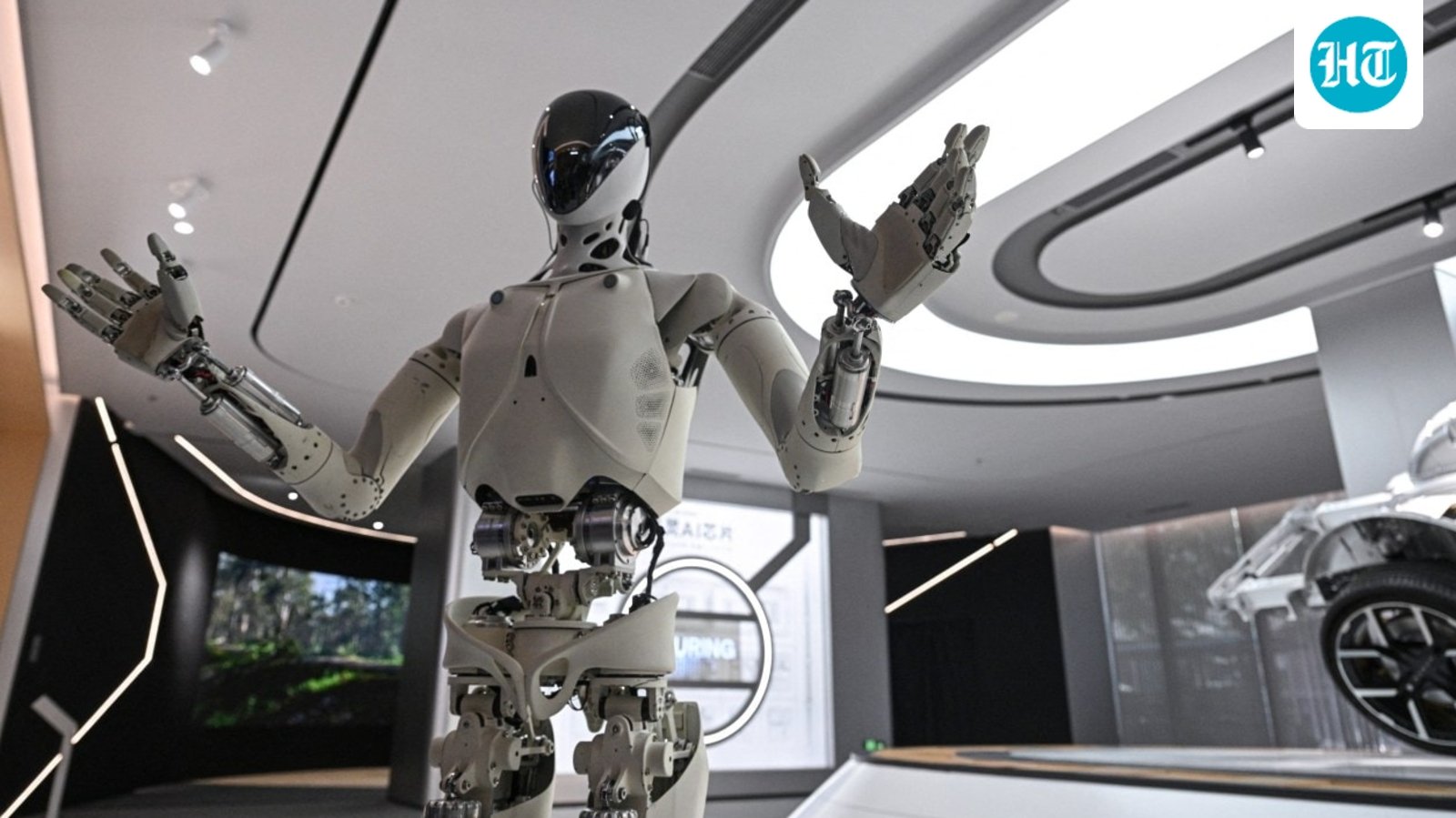
Valued at more than $6.3 billion, the unit will start mass producing XPeng’s humanoid robot this year. Iron, a realistic-looking robot with electronic skin and a bionic spine, could deliver a hardware gross margin of more than 50%, said Gu, who is also vice chairman of the Guangzhou-based company.
That compares with the 12.1% gross margin XPeng’s vehicle segment recorded in the second quarter.
“Once it [Iron] has reached volume production at a steady state, we think it has potential to be more than twice of the BOM [bill of materials] cost,” Gu said, referring to the amount spent to manufacture a product.
That stacks up promisingly against industry leaders. Unitree Robotics, one of China’s top humanoid-robot firms, reported a gross margin of more than 60% in 2025.
China dominates the global supply of humanoid robots, and analysts expect momentum to keep growing as Beijing throws its weight behind the sector and technological breakthroughs continue. But there are reservations about monetization in the capital-intensive industry.
Building a robot capable of handling multiple tasks like staffing an information desk or making coffee requires significant training and computing power that will probably cost more than developing a vehicle, Gu said.
Despite the conviction on margins, it’s not yet clear when XPeng’s robotics unit will reach operating breakeven, meaning it can cover costs with revenue but has not made a profit.
XPeng’s robotics arm could still reach operating breakeven faster than the EV business did, said Gu, as it can rely on existing manufacturing infrastructure, reducing factory spend. Software and capability updates could also generate recurring revenue, recouping investment.
For now, the company’s robotics financial targets remain preliminary as it builds up production and develops its commercial team.
Potential profitability challenges haven’t deterred institutional investors from backing XPeng’s ambitions.
Earlier this week, XPeng’s robotics unit raised more than $900 million in what it said was the largest-ever single-round private capital raise in China’s embodied AI industry. IDG Capital—a China-focused venture-capital firm—led the financing, with participation from Gaorong Ventures, plus Alibaba Group and Tencent Holdings as strategic investors.
External investors committed $600 million, while XPeng Chief Executive He Xiaopeng and Gu put in $100 million. The remainder came from the group itself.
Securing such backing is a good start for a business that has yet to prove its viability.
“We see this as a strong validation of its [XPeng’s] physical AI strategy and a positive step toward unlocking value in its robotics platform,” Jefferies analysts said in a recent note.
Unlike many of its peers, XPeng isn’t making a humanoid robot solely for factories. “We want to build a general-purpose robot,” said Gu.
Iron was designed with a human-like form and movements that Gu said makes it ideal for use in offices and residences.
XPeng’s initial target market is small and medium businesses and storefronts. Factory and home use could follow, the executive said.
XPeng plans to make its robotics operations more independent within 18 months, but that doesn’t necessarily mean it will pursue an initial public offering.
Gu said there is “no pressure” to spin off the business, with XPeng focusing on production and commercialization instead.
The next big test for XPeng’s ambitions will be whether it can progress Iron from in-store demonstrations to real-world deployment.
“We have a lot of hopes for the business beyond the $6.3 billion [valuation],” Gu said.
Write to Jiahui Huang at Jiahui.Huang@wsj.com


