



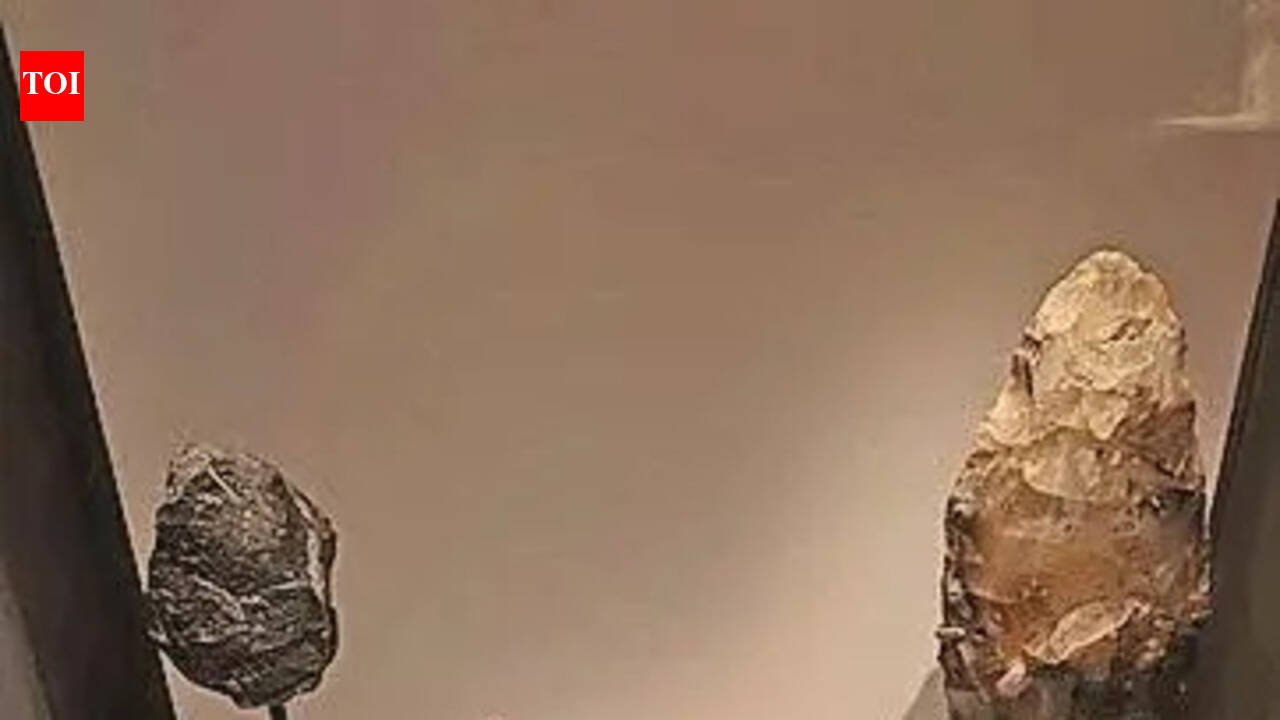
Mumbai: A course-correction is being attempted at Chhatrapati Shivaji Maharaj Vastu Sangrahalaya (CSMVS)—Indian pre-history “always ignored in museums” or given compact spaces for display is now finally getting its due. The museum on Thursday inaugurated ‘The Stone Age: Journey Through Time’, a long-awaited extension of the ‘Networks of the Past’ gallery.The Stone Age marks the first and longest chapter of shared human history. The gallery displays some of the world’s earliest tools and weapons and will remain open for visitors for the next three years. “We are proud of our roots, but we never highlight them,” said Sabyasachi Mukherjee, director-general of CSMVS, expressing his desire to put pre-historic India on the world history map. “India, being one of the earliest civilisations, was not highlighted enough as compared to other civilisations. That was the whole idea behind coming up with this exhibition.”As part of the inaugural ceremony, the chief guest, archaeologist and art historian Arvind Jamkhedkar, chancellor of Sir JJ De Novo Deemed University (School of Art, Architecture, and Design), conducted a special masterclass on archaeology and pre-historic influences on what is perceived as “culture and art” today.Aparna Bhogal, curator in-charge (archaeology section) at the museum, said the oldest tool on display is the chopping tool or “chopper” from Olduvai gorge in Tanzania crafted by Homo habilis nearly 2.5 million years ago in Africa. The exhibition also showcases pear-shaped hand-axe from Karnataka, an obsidian blade from Mesoamerica, knives and scrapers from Maharashtra and Sindh. The exhibition is divided into three main stages: Palaeolithic (Old Stone Age), Mesolithic (Middle Stone Age) and Neolithic (New Stone Age). The tools and weapons reveal the journey of early human development and provide an insight into “adaptability, migration, group dynamics, consumption pattern and trade”. A plaquette from France, obtained from the British Museum, presents superimposed drawings and signs depicting a reindeer and three horses —offering proof of “early human artistic expression”. The exhibition also displays prehistoric cave paintings, with the gallery greeting visitors with a descriptive diorama of Bhimbetka paintings. The exhibition has been set up through collaborations with the British Museum and a series of global partnerships with Getty’s Sharing Collection Program.An Assyrian gallery was also unveiled, with relics from Mesopotamia (modern day Iraq and the surrounding region), and other objects from Egypt, including the only known Mummy in Mumbai.At the heart of the initiative is the cardinal yearning: “understanding our place in human history”, said Jamkhedkar.


