


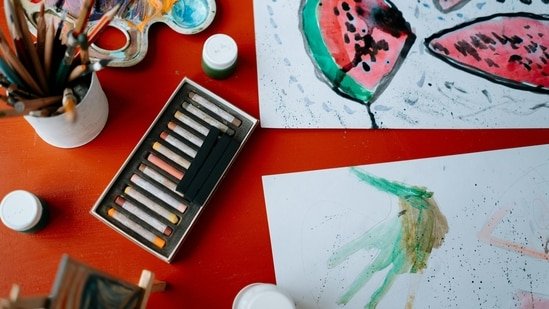
When a child loses their parents, they lose more than just a home. They lose the people who usually help them understand who they are. The world can suddenly feel very loud, confusing, and scary. In these moments of deep silence and hurt, words often fail. That is where art steps in. For a child growing up without a mother or father, a simple box of crayons or a piece of clay isn’t just a toy; it is a crutch to lean on while they learn to walk through life again.
Children who have gone through hard times often carry ‘heavy’ feelings inside. They might feel angry, sad, or lonely, but they don’t always know how to say those words out loud. Art gives them a way to vent or let those feelings out without having to speak. It also acts as a medium for child development.
When a child scribbles hard on a paper with a red crayon, they are letting out their anger. When they paint a dark, stormy sky, they are showing their sadness. By putting these feelings on paper, the feelings stop living purely inside their heads. It makes the pain feel a bit smaller and more manageable. It is a safe way to deal with the past so it doesn’t stay bottled up inside.
Healing in colours: How art helps children process loss and trauma
For a child without parents, it can be hard to imagine what tomorrow looks like. Without a traditional family to guide them, the future might look like a blank, scary space. Art allows them to fill that space with their own dreams. It also helps children to develop creativity, problem solving abilities and boost self-esteem. It also helps in developing a diverse range of cognitive abilities, resilience and adaptability to life.
In a drawing, a child can be anything. They can draw themselves as a hero, a teacher, or a traveller. These pictures are like seeds of hope. By seeing themselves doing great things on paper, they start to believe they can do those things in real life. It builds a quiet kind of confidence. Using a brush or crayon for extensive periods of time also helps them improve their motor skills.
From silence to selfhood: Building confidence and identity through creativity
Creating something takes time and patience. Whether it’s building a small house out of popsicle sticks or carefully colouring inside the lines, art teaches children how to concentrate. It tells them, “My life is not just what happened to me; it is also what I can imagine for myself.”
For a child whose life has been full of big changes and chaos, focusing on one small task is very healing. It gives them a sense of control. They learn that if they stay patient and keep trying, they can finish what they started. This small win is huge for their self-esteem. It teaches them that they have the power to create something beautiful from start to finish, which helps them feel stronger when facing other challenges in life.
Losing parental care can make a child look at the world as a grey or threatening place. Art forces them to look closer and see things differently. To draw a tree, you have to really look at the branches. To paint a sunset, you have to notice all the different shades of orange and pink.
This shift in how they see the world is life-changing. They start to look for beauty in small places. They begin to realise that even if their story started with a sad chapter, there are still many colours left to use. Art helps them realise that they are the authors of their own identity. They aren’t just children without parents’, they are artists, creators, and thinkers with their own unique way of seeing the world.
In the end, art is much more than a hobby. It is a bridge. It connects the hurt of the past to the hope of the future. It gives children a voice when they are silent and a sense of self when they feel lost. By picking up a brush, these children are not just making pictures, they are rebuilding their lives, one stroke at a time.
Sumanta Kar is the Chief Executive Officer of SOS Children’s Villages India and has over 31 years of experience in alternative care and skilling. He has conceptualised and implemented numerous community development projects at SOS India.
