


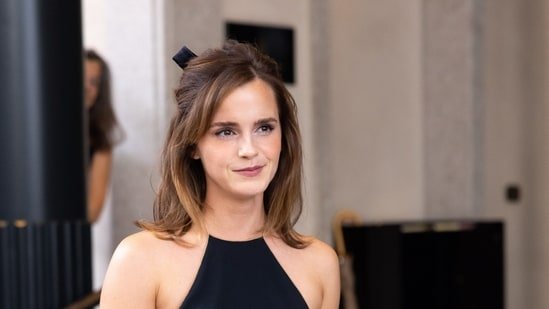
Emma Watson turns 36 on April 15. She became a household name with her lovable, witty portrayal of Hermione in the Harry Potter series, and later went on to star in several critically acclaimed films such as The Perks of Being a Wallpaper and Little Women. She is also a feminist, advocating for women’s rights and frequently taking a stand on gender equality. On the occasion of her birthday, let’s take a quick glimpse at one of her perspectives on feminism, which helps explain the concept at its root while clarifying many common misconceptions people may hold.
ALSO READ: Quote of the day by Emma Watson: ‘Feeling uncomfortable sometimes is good…’
During the press tour of her film Beauty and the Beast, in one of the interviews, she wore light makeup with thick coats of mascara. She was asked by the interviewer how she could be a feminist and still like to put on mascara. To this, the actor responded, “This is a complete misunderstanding of what feminism is,” she said, and then went on to break down what feminism really means, starting from the basics.
“Feminism is about equality, and it is about choice. It is about a woman being able to say, ‘I want to wear a dress,’ or ‘I don’t want to wear a dress,’ or ‘I want this kind of future,’ or ‘I don’t want that kind of future.’ It is about the ability to choose. It really boils down to choice. I think there are so many misconceptions and misunderstandings about what that is. Feminism is not a stick with which to beat other women,” she elaborated.
What does Emma Watson’s definition of feminism mean?
Feminism remains one of the most debated ideas, even though at its core, the principle is simple: equality and choice. Emma Watson has addressed this as well.
Women are often boxed into stereotypes. Those who are outspoken and opinionated, and who advocate for social causes, are expected to dress a certain way, often more androgynously. But a woman can choose to exist however she likes. Emma defines feminism in its most basic, rudimentary sense: that women have the agency to decide for themselves. Feminism is not about rejecting the traditional leaning feminine ideas, but about existing without judgment or societal pressure.
Why is it significant?
The meaning of feminism is often clouded by stereotypes that frame it as anti-fashion, anti-beauty, or anti-men. But in reality, it is about personal choice. Feminism is a blueprint for freedom. Instead of putting women into boxes, it reframes the narrative of advocating for agency in everyday decisions. In the end, feminism is not about telling people what they should or should not look like in order to advocate for equality. Any kind of policing goes against the very idea of freedom and choice.
