






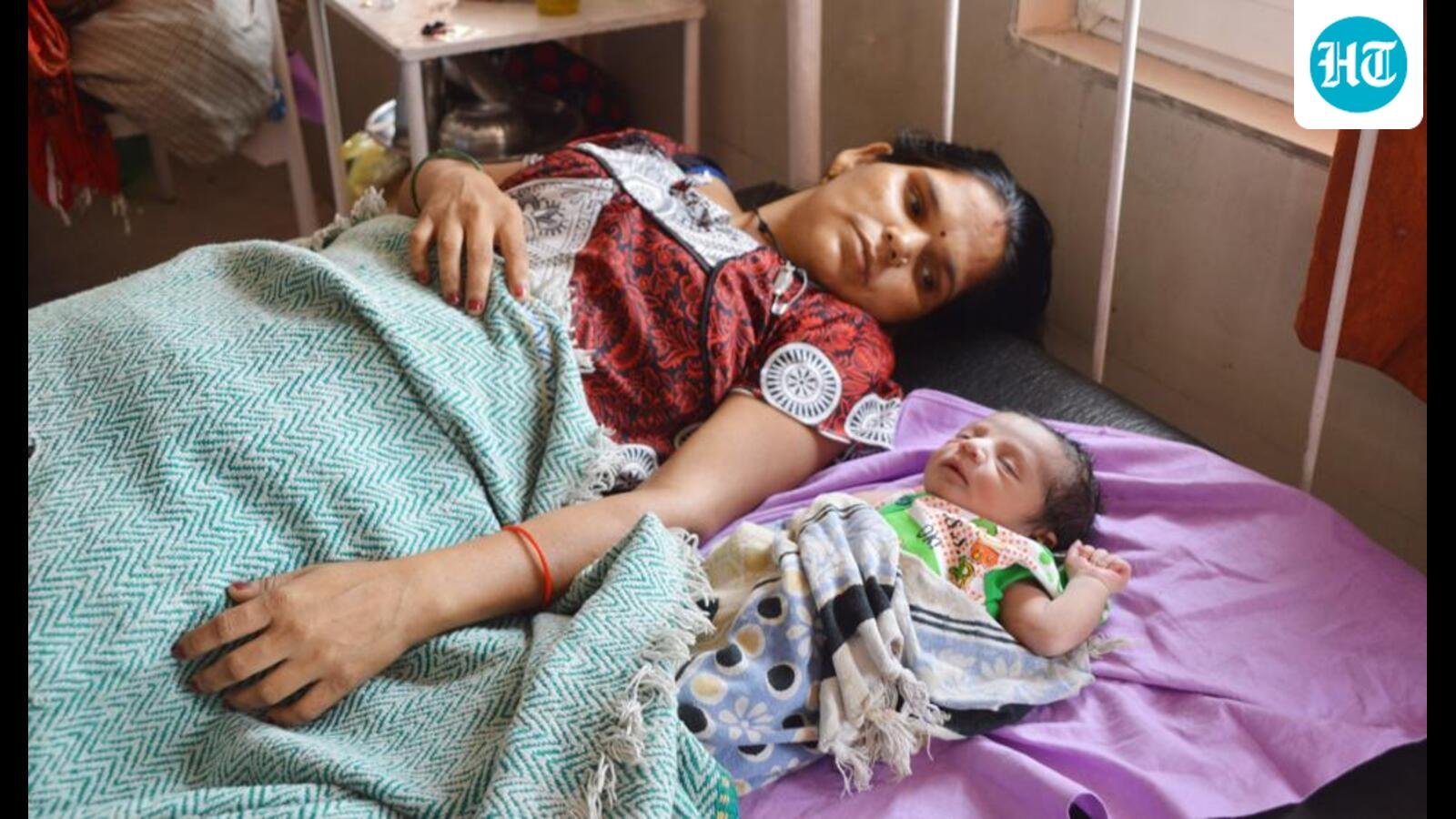
Many women in India live for years with illnesses and ailments they never mention to anyone. They know what these are, and often know exactly what these are doing to their bodies. But within their households, their illness is never made a priority.

In most cases, school fees might come first, followed by textbooks, and maybe the husband’s medicines. Poorer households internalise this order early, where every rupee is already accounted for.
More often than not, a woman’s own health often settles at the bottom of the household ledger because something else always feels more urgent, more important whenever a choice has to be made.
That old hierarchy, I believe, is now being rewritten at a systems level. The Ayushman Bharat Pradhan Mantri Jan Arogya Yojana (AB PM-JAY) made an unprecedented design choice: It set no limit on family size. Earlier insurance schemes, government and private alike, capped how many members a single policy could cover.
In large households, that ceiling had a predictable effect — wage-earning men and sons received coverage, and the women were the ones left out of it.
AB PM-JAY covers every member of an eligible family, whatever its size or composition, for cashless secondary and tertiary care up to ₹5 lakh a year.
For much of India’s public health history, a woman met the system chiefly through her reproductive role — antenatal visits, institutional deliveries, family planning — services built out systematically on the logic that a healthy mother meant a healthy child.
Since then, screening programmes for non-communicable diseases, cervical and breast cancer, along with HPV vaccination drives have scaled well beyond that original focus. However, beyond that a woman’s claim to health care has often depended on her family’s discretion.
AB PM-JAY cannot be expected to undo decades of that conditioning in one fell swoop, but it does mark a meaningful departure: treating a woman’s health as an entitlement in her own right, independent of pregnancy.
Routine pregnancy care and uncomplicated deliveries still remain the work of Janani Suraksha Yojana (JSY) and Janani Shishu Suraksha Karyakram (JSSK). AB PM-JAY complements this by covering high-risk pregnancies, complications needing tertiary care, or gynaecological conditions unrelated to pregnancy.
More than 1,900 procedures across secondary and tertiary hospitalisation cover gynaecological surgery, oncology, cardiac care, and orthopaedic conditions, arriving at any age, for every eligible woman. The dignity in this shift carries a weightage that is as significant as that of the monetary relief to the household.
Cashless treatment means a woman no longer has to ask her family for money before treatment, and that difference has a direct effect on timely treatment. For too long, women’s use of hospital services in India ran well below what their disease burden would predict.
For even longer, women depended on a male family member to authorise their care. I think it is by no means a small win that women who have spent a lifetime with little to no economic agency are finally beginning to have an equal footing inside the health care system.
There’s also a small army of women who have long connected India’s rural, remote households to the health system. We know them as ASHA and anganwadi workers. They carry different names across the breadth of our country: Mitanins, Jaankar Mahilas, Sanginis, Sahiyas, Tais, Didis. These remarkable women literally cycle/walk the last mile of public health delivery, often underpaid for the hours this truly takes. AB PM-JAY extends coverage to this workforce as a recognition that those carrying India’s public health system deserve to be covered by it too.
By no means do I intend to imply that the effort is complete, or that structural challenges have disappeared.
An entitlement, by itself, is not access, just yet. What turns entitlement into access is the wider reform now under way with digital health records, work on hospital quality, and overall systems strengthening. What AB PM-JAY has already done is dismantle one of the most stubborn barriers in a woman’s path — the treatment expense.
What began as a health insurance initiative is steadily morphing into a vehicle for social dignity. For millions of women, it means their turn to visit the doctor no longer comes last.
Nikhil Tandon is the director of AIIMS Delhi. The views expressed are personal


