



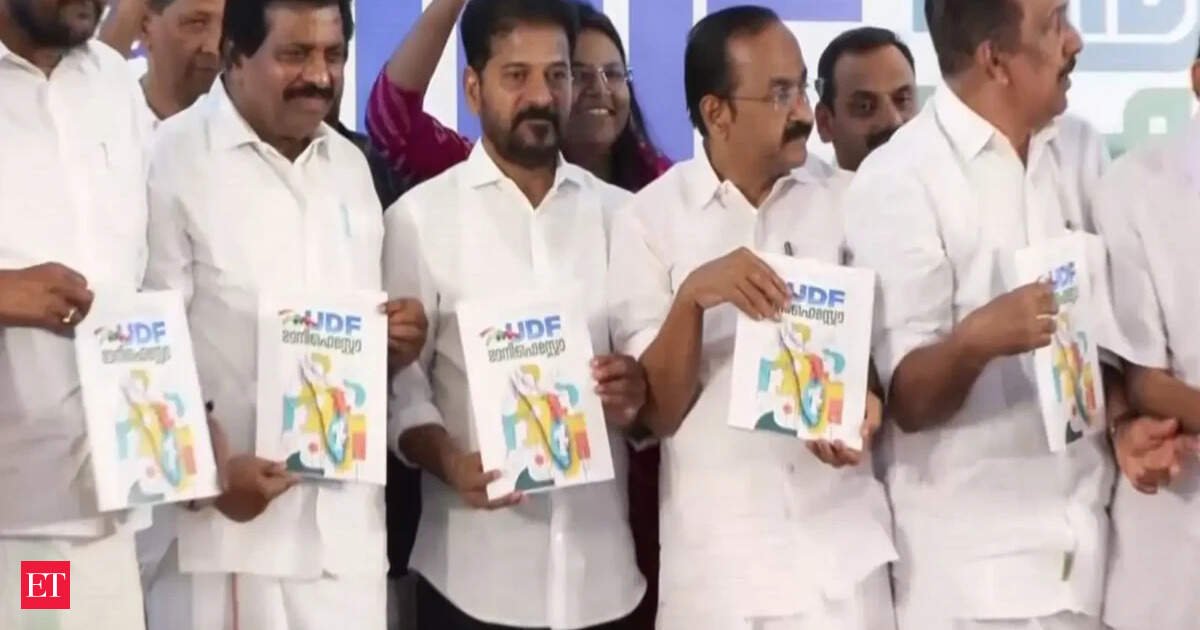
The UDF’s manifesto is anchored on five key guarantees, including free bus travel for women on Kerala State Road Transport Corporation (KSRTC) services. The scheme mirrors Karnataka’s Shakti programme, which is estimated to cost the state exchequer about Rs 5,300 crore in 2026-27. If the UDF were to form the government after May 4, then this promise may prove to be a tightrope walk. Delays in bus subsidy payments—as seen in Karnataka—would only further weaken the finances of the debt-laden KSRTC if replicated in Kerala.
UDF releases manifesto for Kerala Assembly polls, promises free bus travel for women
Unlike other states, Kerala rides on a robust private sector transport ecosystem, supporting the livelihood of thousands of youth and their families. Women in Kerala may cheer a Karnataka-style free bus travel programme, but that may roil incomes of private bus operators, and consequently the road taxes they pay.
The LDF, confident of returning to power for a third term, is pitching continuity. Its promises include housing for the homeless, transition to a knowledge-driven economy and a focus on jobs and skilling.
All three alliances have, however, converged on increasing the monthly welfare pension to Rs 3,000 from Rs 2,000 now.
The UDF’s additional commitments include a Rs 1,000 monthly aid for college-going girls, health insurance cover of Rs 25 lakh per family annually and interest-free loans of up to Rs 5 lakh for entrepreneurs.The NDA, on its part, has proposed 20,000 litres of free water per month, free LPG cylinders for poor families and a monthly recharge card worth Rs 2,500 for medicines and groceries. It has also promised to establish an AIIMS and a high-speed rail corridor between Thiruvananthapuram and Kannur.
Kerala polls: LDF pledges Rs 3,000/month pension; jobs, growth push in election manifesto
Recent experiences in Congress-ruled Karnataka and Telangana have revealed fiscal pressures arising from welfare guarantees. Telangana chief minister Revanth Reddy flagged financial stress due to similar commitments, impacting capital expenditure.
In Karnataka, deputy chief minister DK Shivakumar has acknowledged the strain imposed by guarantee schemes, even as chief minister Siddaramaiah soldiers on, pushing up the state’s debt. Discontent has also surfaced among Congress MLAs in Karnataka over reduced constituency allocations to fund these programmes.


