



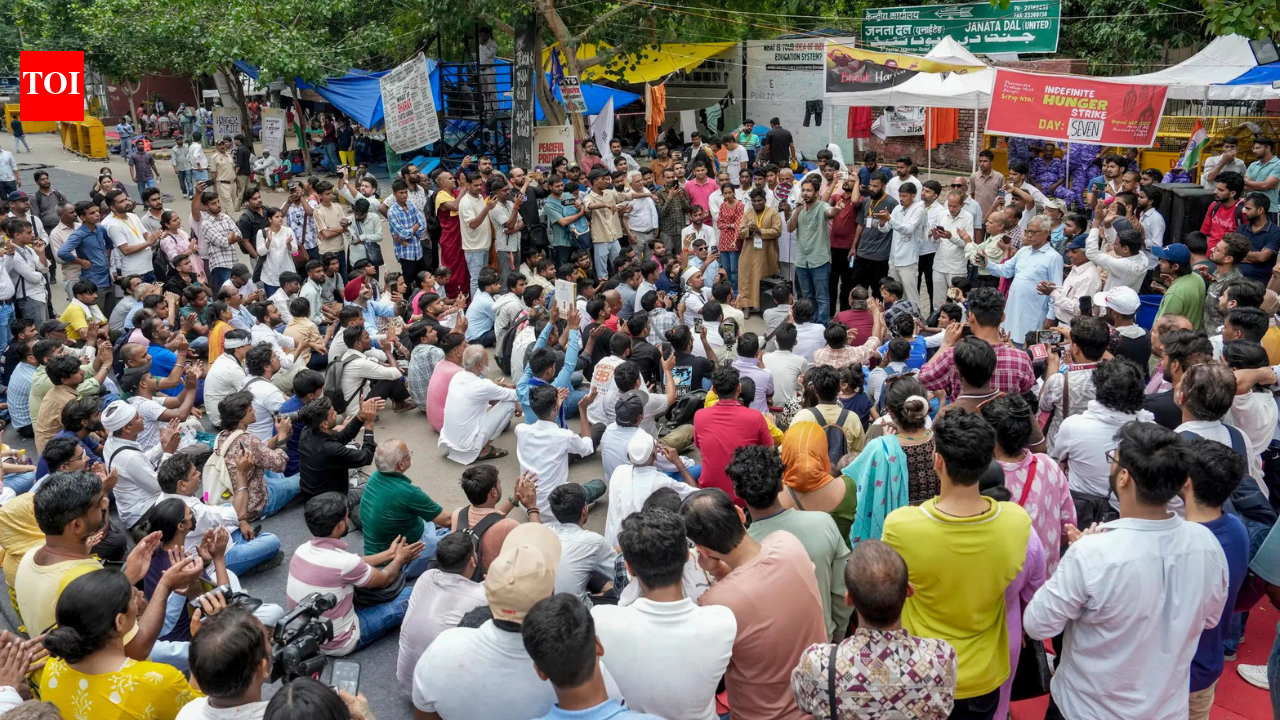
NEW DELHI: Paving the way for the dropping of cases against student protesters, Supreme Court on Monday permitted Delhi and state govts to withdraw or close FIRs lodged during NEET paper leak protests in different parts of India and said these youngsters must be allowed to pursue their studies without the fear of getting prosecuted.The bench clarified its July 28 order in which it had stayed coercive action against student protesters but permitted police to proceed with the investigations. This had created an apprehension in the minds of students about the future consequences of the cases remaining live.The go-ahead came after solicitor general Tushar Mehta told a bench of CJI Surya Kant, and Justices Joymalya Bagchi and V Mohana that “govt is serious about honouring the commitment (given to CJP) on withdrawal of cases against student protesters. We are discussing the modalities of dropping cases”.However, Mehta said that FIRs registered during student protests against 2,738 people who had criminal antecedents – having been accused of rape, murder and child sexual abuse under Pocso Act — and had infiltrated the protests to indulge in violence and vandalism will not be dropped. The bench said the rider would apply to those accused of heinous and grave offences and not petty offences or political cases.Want to lay down norms on use of graded force, says SCMehta said, “Those who were leading the protests are again in touch with govt to work out the modalities for dropping cases against genuine student protesters as withdrawal of cases may not be possible under the law.” The top court posted the matter for further hearing on Aug 18.CJI Kant was firm that student protesters must be freed from the fear of future prosecution. He said, “Parameters for students are altogether different. Their cases should be considered in a different manner so that they remain in the mainstream and their education is not disturbed.“The parents are spending their hard-earned money on their children’s education. We must not keep aside the expectations of the parents of these youngsters. If the children are unnecessarily dragged into such (police and court) processes, it is not going to serve any purpose,” the CJI said.The solicitor general agreed and said modalities for the withdrawal/dropping of cases against student protesters will be worked out soon. He added, “There will be some people who would like to keep the pot boiling — we must be very careful even while taking legal steps.”Justice Bagchi said that when the parties agree to it, the court can engender and enable the process so that the FIRs do not remain hanging over students’ heads.Senior advocate Vrinda Grover said both CJP leaders and other students are in talks with the SG and govt to chart out an agreed modality for the dropping of cases. She cited a Patna FIR registered against 142 people and 5,000 unknown persons, and said this appeared to be ‘catch all’ tactics to pick up anyone randomly in the future. A comprehensive mechanism needs to be evolved, she said.Justice Bagchi said, “There are many options. The prosecution can file a closure report, the public prosecutor can advise withdrawal of cases or we can quash the FIRs.”The CJI-led bench said that while the violence and police excesses would be investigated by an SIT, “we want to lay down comprehensive guidelines for the future on use of graded force, whether it should include pellet guns or not, after getting recommendations from the high-powered committee we intend to constitute”.
Share your thoughts in the comments
Be respectful · TOI community guidelines
Senior advocate Shyam Divan said the committee/commission should be headed by a retired CJI. The bench said getting a former CJI to head the committee is difficult, and it will be chaired by a former SC judge. It asked Delhi Police, Centre and states to file their responses to the petition and give their suggestions on the terms of reference of the committee.Senior advocate N Hariharan questioned how Delhi Police could identify 2,738 criminals among the protesters and said they must have used face recognition devices on all protesters and profiled them, which is a serious violation of privacy of the individuals guaranteed under Article 21.


