





Prediction markets are showing a rising belief among traders that the United States might carry out a military strike on Iran as tensions escalate in the Middle East. On Polymarket, a popular prediction trading platform where contract prices reflect the likelihood of real-world events, the implied probability that the US will strike Iran by the end of March 31, 2026 climbed to around 57%, up sharply from lower odds in late February.

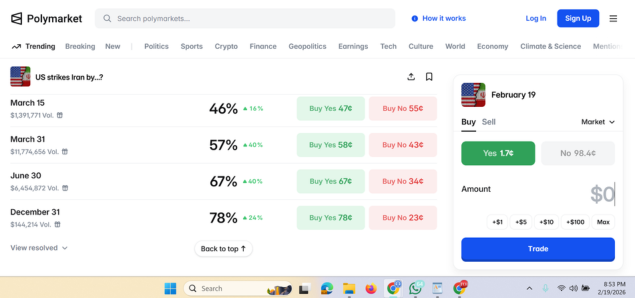
These markets — which have seen hundreds of millions of dollars wagered on whether a strike will occur — suggest traders are pricing in an increasing chance of military action as diplomatic talks falter and US forces build up in the region. By comparison, the chances priced for an attack by February 28 were significantly lower, reflecting the idea that if strikes happen, they may be more likely in March or later.
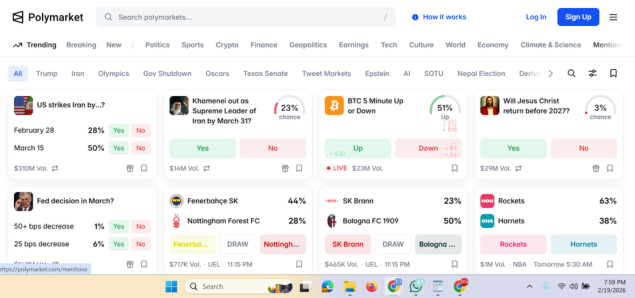
However, experts cautioned that prediction market data is not an official forecast or government assessment, but it does reveal how participants perceive geopolitical risk based on the latest developments, including troop deployments and public statements from both Washington and Tehran.
How markets reacted
Wall Street opened lower on Thursday and Iran pushed oil prices to multi-month highs, dampening investor sentiment. US benchmark crude, West Texas Intermediate (WTI), climbed 2.2% to $66.62 a barrel after briefly touching its highest level since August, while Brent crude rose 2.0% to $71.76. The spike followed comments from Iran’s atomic energy chief Mohammad Eslami asserting Tehran’s right to nuclear enrichment and renewed hints of possible military action from President Donald Trump after talks in Geneva. Analysts described the move as an “undercurrent of concern” driven by geopolitical risk. Major equity indices retreated in early trading. About 10 minutes after the opening bell, the Dow Jones Industrial Average was down 0.6% at 49,379.46. The S&P 500 slipped 0.5% to 6,849.35, while the Nasdaq Composite fell 0.6% to 22,621.38, reflecting broader unease about potential supply disruptions and escalating tensions in the Middle East. Corporate developments added to the mixed tone. Walmart shares initially dipped after the retailer issued forecasts that fell short of analyst expectations, despite reporting solid quarterly results. However, the stock reversed course to trade 1.7% higher after executives highlighted investments in artificial intelligence during a conference call. Meanwhile, fresh government data showed the US goods trade deficit widened to a record in 2025, underscoring ongoing economic crosscurrents even as markets focus on geopolitical risks.


