



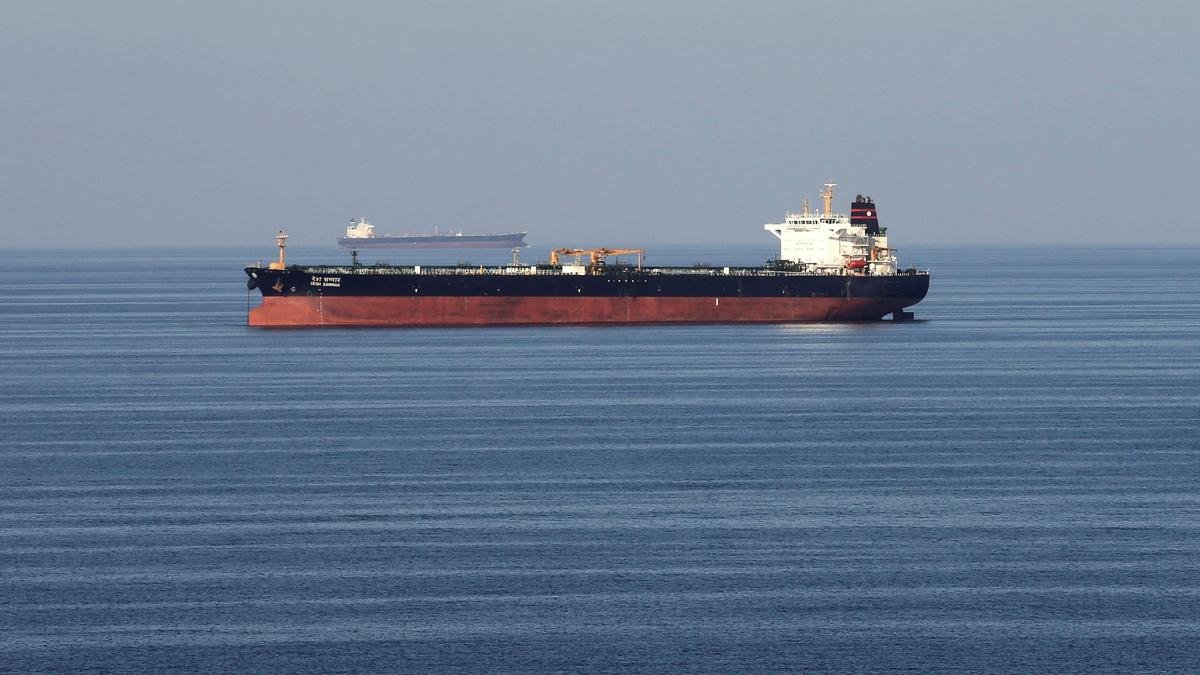
The story so far: Global oil markets are bracing for a potential upward price shock as trade resumes Monday (March 2, 2026) amidst escalation of hostilities in West Asia, as Israel and its ally United States (U.S.) launched air strikes against Iran on Saturday (February 28, 2026), with Tehran acting in retaliation.
More importantly for the oil market, Tehran has announced the closure of Strait Of Hormuz, which accounts for approximately one-fifth of the global crude oil flow, following the death of their supreme leader Ayatollah Ali Khamenei. At close of trade on Friday (February 27, 2026; 7:29 p.m. GMT), Brent Crude futures for April were trading near flat at $72.52 per barrel.
Why is the tension creating panic about oil prices?
The Strait of Hormuz is an essential chokepoint that connects the Persian Gulf with the Gulf of Oman and Arabian Sea. For perspective, chokepoints are narrow channels along widely used global sea routes that are utilised for transporting oil through sea. The closure of a chokepoint, even if for a temporary period, can translate to potential delays in supply, reduction in traffic and rise in shipping and insurance costs. All of it culminating into increased price of crude. Though alternatives exist for some chokepoints, but they could entail significant increase in transit times.
The closure of the Strait would translate to New Delhi being barred access to Suez Canal and the Red Sea. This is expected to have cost and time escalations for Indian exporters utilising the maritime route.
Further, the Paris-headquarterd International Energy Association (IEA) observed in June last year, that the Strait served as the exit route from the Gulf for approximately one-fourth of the global oil supply including from major oil-producing nations Saudi Arabia and United Arab Emirates alongside Kuwait, Qatar, Iraq and Iran itself.
From the larger perspective of trade, S.C. Ralhan, President of the Federation of Indian Export Organisations (FIEO), said, “If diversions become prolonged, shipments may increasingly have to reroute via the Cape of Good Hope, adding an estimated 15–20 days to transit time for Europe and the United States.”
He added that heightened geopolitical risks may result in “higher marine insurance premiums, further addingv to transaction costs for exporters”.
How has India utilised the Strait of Hormuz?
According to Prashant Vasisht, Senior Vice President and Co-Group Head, at rating agency ICRA, about half of India’s crude oil and 54% of liquified natural gas (LNG) imports were routed through the Strait in financial year 2025.
“For Indian refiners while crude oil could be sourced from alternate locations such as the US, Africa, South America, however elevated energy prices could lead to a soaring import bill,” he states, adding, “Elevated crude oil prices would moderate the marketing margins and profitability of oil marketing companies.”
How is the world assessing the uncertainty?
According to analysts at S&P Global Commodities at Sea (CAS), activity in the strait has fallen by approximately 40-50% as 7.30 p.m. coordinated universal time (UTC) on February 28. It added that most vessels appeared to flee the strait at the time.
Fatih Birol, Executive Director at the IEA wrote on social media that the energy association was “actively monitoring events in the Middle East & the potential implications for global oil & gas markets and trade flows.”
However, he maintained, “Markets have been well supplied to date.”
Also, essential to note, according to a report from JM Financial, brent crude had already risen to a seven-month high of about $72.8 per barrel as fears about a potential strike mounted earlier.
“Scenario analysis suggests limited retaliation could add $5–10 per barrel; direct damage to Iranian oil infrastructure could add $10–$12 per barrel; Hormuz disruption could push prices above $90 for every barrel; and a broader regional war could drive crude beyond $100 per barrel,” their note read.
What does it mean back home?
According to Aditi Nayar, Chief Economist at ratings agency ICRA, the unfolding escalation in West Asia and its extent, “would have a bearing on India’s macros, including things like the impact of fuel prices on inflation and the twin deficits, as well remittances.”
Published – March 01, 2026 05:36 pm IST


