


NEW DELHI: In the shadowy corridors of north India’s underworld, a gangster’s name has often been more than just an identity — it has been a GPS coordinate. For decades, the most notorious figures of Delhi, Haryana and Punjab defined themselves by the soil they sprang from.Neeraj Sehrawat became Neeraj Bawana, Suneel Maan preferred Tillu Tajpuria, and Sandeep Singh turned into Kala Jathedi. This tradition of “village-tagging” served as a brand of local ferocity, signaling to rivals and residents alike exactly which patch of earth the gangster claimed as his own.
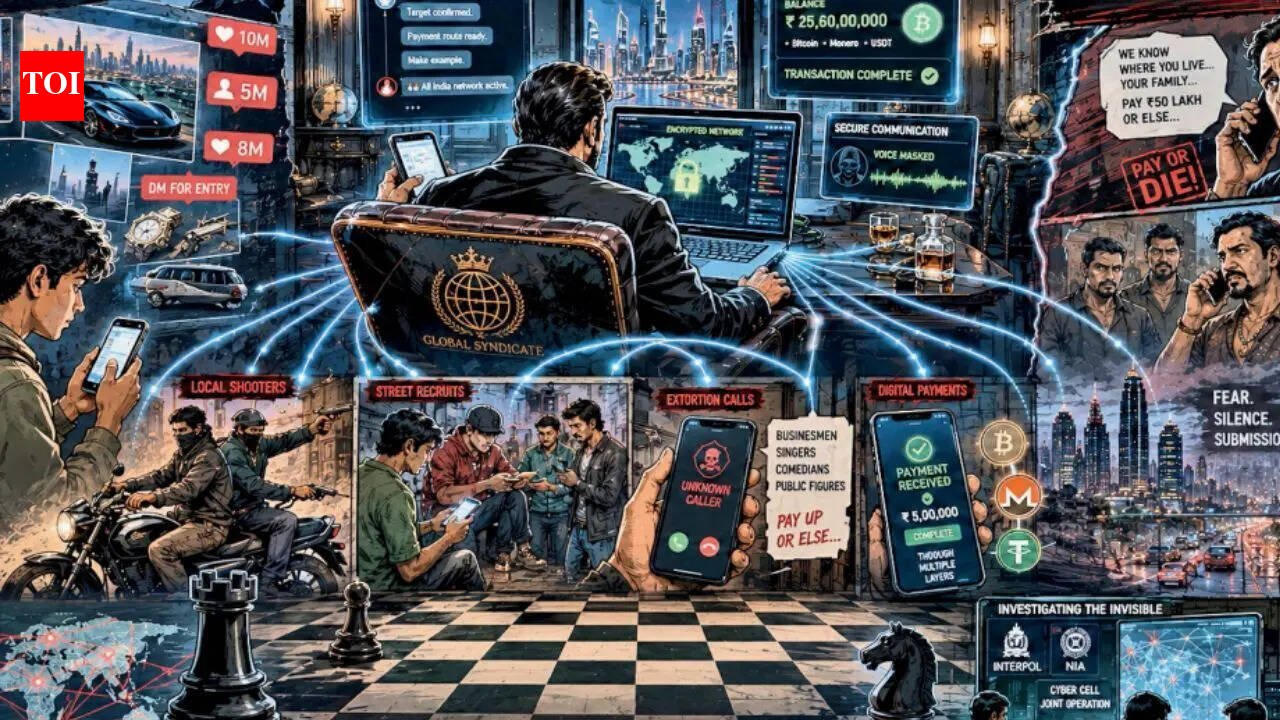
However, as the heat from Indian law enforcement intensified and the reach of organised crime stretched across oceans, this naming convention has undergone an international makeover. The village suffix is being replaced by the sovereign state, and the local strongman has evolved into a global franchise.Recent social media activities by factions associated with Lawrence Bishnoi and other groups reveal that the digital landscape is now populated by monikers like Fateh Portugal, Manna Brampton, Mandeep Spain, Anil Pandit USA, Sam Canada, Shera Sandhu Australia and Boss Europe. There are many others who are little known but quickly following the trend during phone calls they make to India, sources said.This isn’t just a change in geography; it is a declaration of immunity and a testament to the transnational nature of modern Indian gang wars. After every shooting in Delhi-NCR or neighbouring places like Sonipat or Panipat, a Facebook message or an Instagram post by the foreign-based conduit of an Indian gangster surfaces claiming the crime.The obsession with these international suffixes serves a dual purpose: branding and psychological warfare, sources said. “When a post from ‘Anil Pandit USA’ claims responsibility for a firing on Assandh Road in Panipat, it projects an image of a sophisticated, remote-controlled operation. It tells the victim and the authorities that the perpetrator is operating from a position of systemic advantage, using the shield of a foreign country to extort the wealthy back home,” a special cell cop said.“By attaching ‘USA’ or ‘Brampton’ to their names, these individuals are also signaling that while their targets remain in the streets of Delhi or Panipat or the suburbs of Mumbai, the hands pulling the strings are safely out of reach of local police,” the cop added.It also acts as a recruitment tool, painting a picture of a glamorous, jet-setting life of crime. “These days the local youths find it more charming to work for a Fateh Portugal than their area’s don whose kingpin is a gangster in Tihar Jail,” said a crime branch officer.The threats are also no longer limited to rival gang members or local traders. High-profile celebrities like singers Badshah or Karan Aujla and comedian Kapil Sharma have found themselves in the crosshairs of these “globalised” entities. Singer Sindhu Moosewala was gunned down by the Lawrence Bishnoi gang, a hit coordinated and claimed by a foreign entity.Whether it is a warning issued from Surrey regarding a ‘Chai Sutta Bar’ or a claim of responsibility for a shooting at a towing company in Canada, the message seems consistent: this underworld has no borders. “The names Manna Brampton and Mandeep Spain are not just aliases; they are flags planted in the digital soil of the internet, indicating a network that can strike in the West and boast about it in the East simultaneously,” said a source.This evolution has posed a significant challenge for global policing. The transition from the Bawana to Brampton model reflects a shift from local thuggery to a decentralised, franchise-based system of organised crime. “These criminals use social media not just to communicate, but to build a cult of personality that leverages their international status to intimidate,” a senior cop said. As the village-based identity gives way to a passport-based brand, the north Indian underworld has effectively announced its arrival on the world stage.
