



Nepal is a Hindu-majority country where cremation is the customary final rite for most Hindus. Yet after the devastating floods that swept through parts of the country, authorities have been burying unidentified bodies instead of cremating them. The reason is not a change in religious practice. It is a response to the large number of bodies being recovered, limited morgue space and the fact that many victims cannot yet be identified.Authorities are treating the burials as a temporary arrangement. Before a body is placed in the ground, officials are collecting DNA samples and recording identifying details so that families may still be able to locate and claim the remains later.According to The Statesman and various media reports, unidentified flood victims are being buried in Chitwan district after authorities collect DNA samples, assign identification codes and record the exact locations of their graves.
Why are the bodies being buried?
Bodies recovered from the floods were also beginning to decompose, making prolonged storage increasingly difficult.
The scale of the disastrous floods has put Nepal’s mortuaries under severe pressure. Bodies recovered from the floods were also beginning to decompose, making prolonged storage increasingly difficult. According to media reports, authorities were dealing with unidentified bodies at hospitals while freezing facilities were unable to accommodate all the remains. With the bodies decomposing, temporary burial became necessary.Morgues and mortuaries were overwhelmed by the number of bodies being brought in, leaving authorities with the difficult task of managing and preserving unidentified remains. The burials therefore do not mean that the victims’ identities have been abandoned. Instead, authorities are trying to preserve enough information to identify them later.
Each body is being given an identification number
Each unidentified victim is assigned a unique identification code, while the burial location is recorded so the remains can be traced later.
The bodies are not simply being placed in an anonymous mass grave. Authorities are creating records for the individual remains. According to The Statesman, each unidentified victim is assigned a unique identification code, while the burial location is recorded so the remains can be traced later. This creates a link between the remains and the records kept by the authorities. The burial sites are also being documented. Photographs and other records are being maintained, while GPS coordinates are being recorded for the graves. That means authorities can potentially locate a particular grave even after the burial has taken place.
DNA is the key to identifying the dead
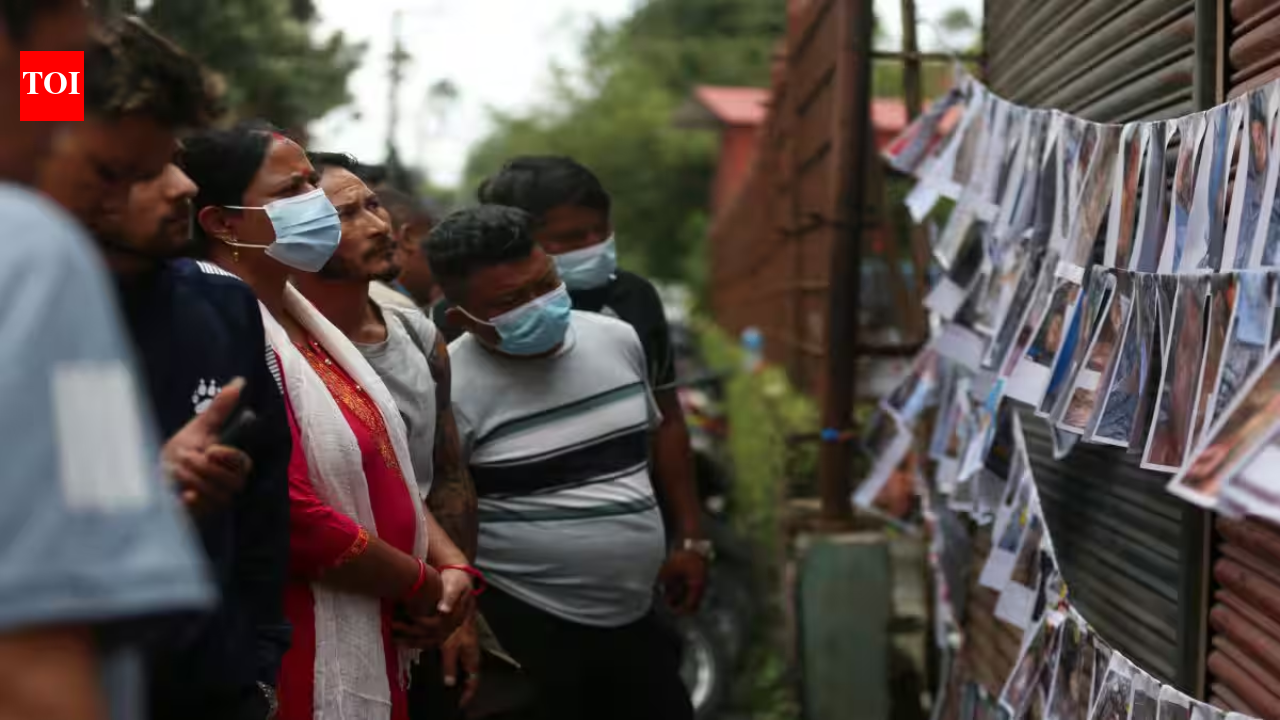
DNA samples are being collected from unidentified bodies before burial. At the same time, relatives of people reported missing can provide their own DNA samples. The samples can then be compared with DNA taken from the recovered remains. DNA records are being preserved specifically to allow future identification if relatives come forward.The process is important because some bodies have been recovered far from where people went missing, while others are too badly decomposed or damaged to be identified through appearance alone.Officials are recording more than genetic material. According to various media, photographs, clothing, jewellery, tattoos and other identifying marks are also being documented. Nepal Police has also published details of some unidentified victims in an effort to help families searching for missing relatives.
Why are the graves being prepared carefully?
The burial arrangement is designed with future identification in mind. Burial pits are being dug around 1.5 metres deep, with about 40 cm of space left between bodies. The arrangement is intended to reduce the risk of DNA contamination and make future identification and exhumation possible.
What happens if a victim is identified later?
Photo credit: Reuters
Identification does not end with the burial. If DNA testing establishes that a buried victim is the missing member of a family, officials can use the identification number and burial records to locate the remains. According to media reports, the remains can be handed over to the family once the victim has been identified. The family can then perform the funeral rites according to its traditions. This is why the burials are being handled differently from a conventional mass burial. Authorities are attempting to preserve the identity of every victim even when the person cannot be named immediately.
The problem is bigger than the burial grounds
The decision to bury the unidentified bodies comes as Nepal continues to deal with a large number of missing people. Close to a thousand bodies have been recovered and thousands of people are still missing.


