



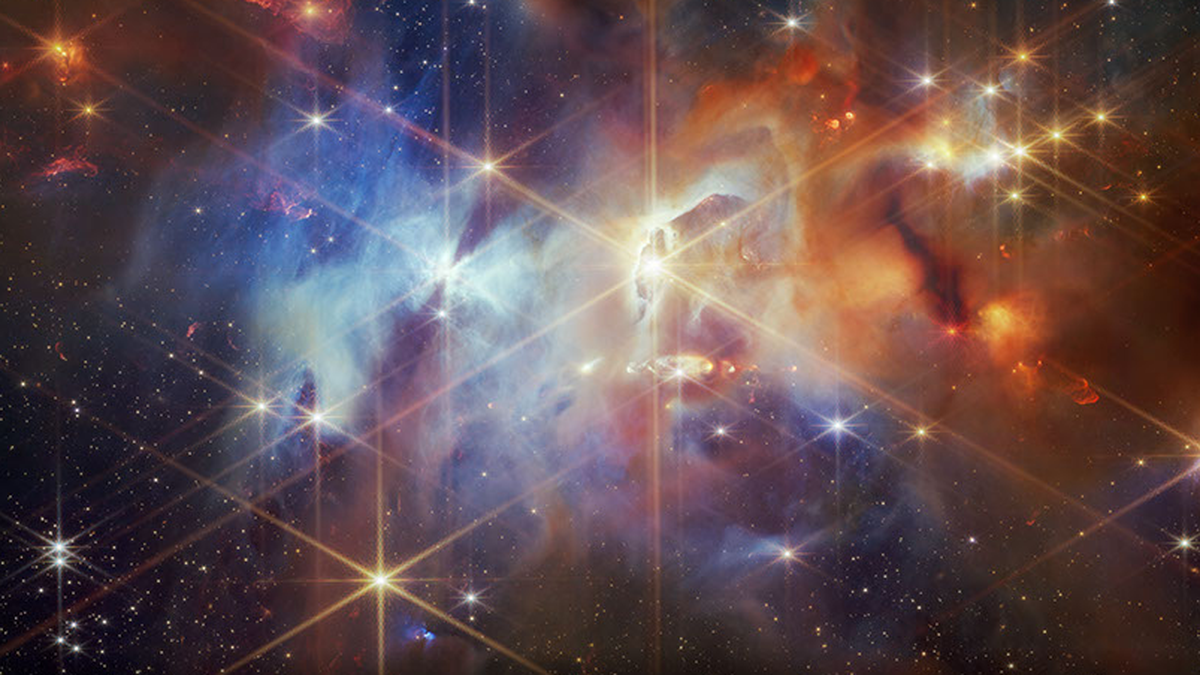
The Webb space telescope’s image of the Serpens Nebula.
| Photo Credit: NASA
A: Most believers of this idea follow an argument made by the philosopher Nick Bostrom. In half a century, video games have gone from dots on a screen to lifelike 3D worlds. Believers argue that in future, we will eventually create simulations indistinguishable from reality.
If an advanced civilisation creates millions of such simulations, simulated ‘people’ could far outnumber real people. Extrapolating from there, if there are a million ‘fake universes’ and only one real one, it’s statistically more likely that we’re in a fake one.
There are many problems with the idea. For one, it doesn’t explain the origins of reality, only pushes it back one level, because it can’t say who simulated our simulators. Another is Occam’s razor: our universe alone being real is simpler than our universe being simulated by a parent universe. The best computers also struggle to simulate a few hundred atoms at the quantum level; simulating an entire universe could demand more energy than what the universe itself holds.
One condition for a scientific theory to be valid is it must be falsifiable, i.e. you can prove it wrong with an experiment. The simulation idea isn’t falsifiable.
Published – March 05, 2026 07:30 am IST


