






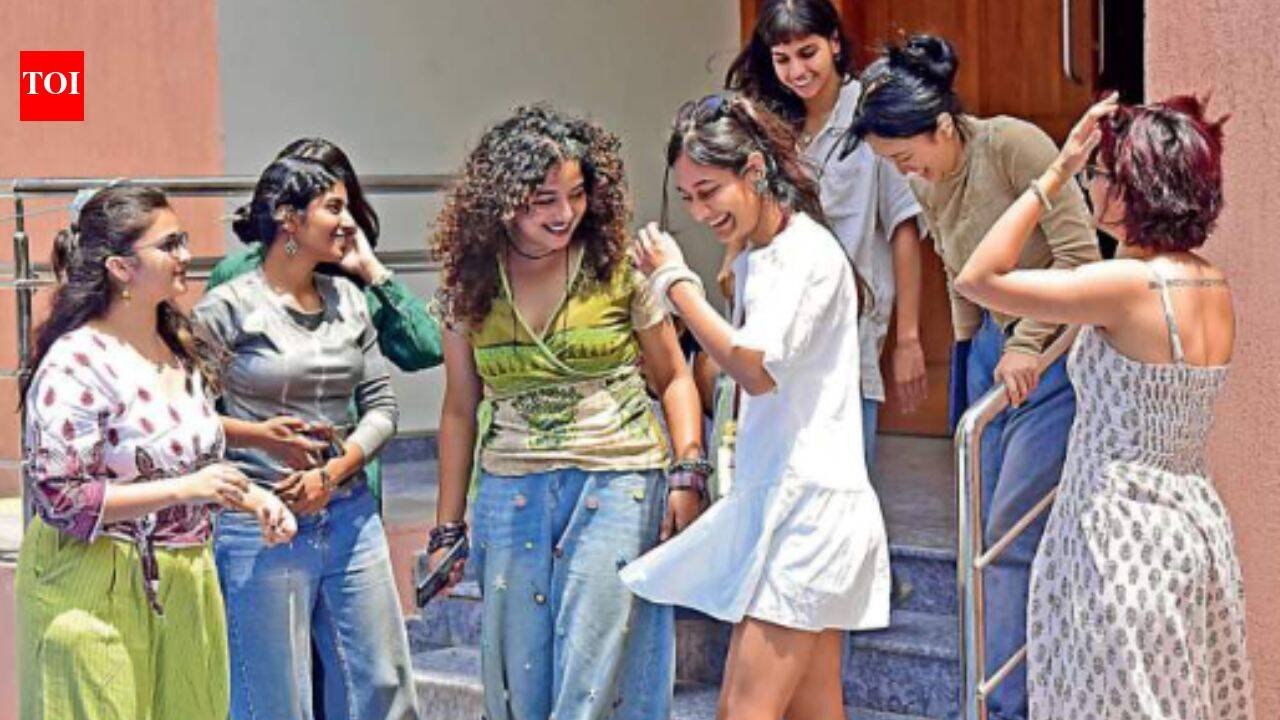
Although dress codes may prepare college students for professional life, dictating what they wear is unlikely to produce the outcomes such policies aim forAfortnight ago, students of a degree college in East Bengaluru staged a demonstration outside the campus after they were asked to show up in uniform, blazers and all! It was the ‘uniform day’ of the week, as per the college dress code, which also insists that male students appear clean-shaven and with their hair trimmed.Outraged, students wrote on Instagram: “Why are these rules compulsory? Why should students have no choice regarding their appearance? And why were students’ concerns not being properly heard?”Bengaluru is no stranger to schools and colleges imposing strict rules on students’ appearance. Several city schools have barred boys from growing their hair beyond the prescribed close crop. A decade ago, students had erupted after a city-based university linked dress-code compliance to attendance.Dress-code disputes have become an almost annual feature on Bengaluru’s campuses, with students repeatedly pushing back against rules governing their clothes, hairstyles and facial hair. What begins as a tussle over “discipline” often grows into a wider debate over personal freedom, gender bias and institutional control.
Thin line between grooming & policing
The pushback against dress codes in colleges begins with how rules are implemented. The codes are often interpreted in letter and spirit by security personnel and faculty, leading to a standoff, as happened at the East Bengaluru college.“Boys are not permitted to have ear piercings and beards. I had friends who would take off their earrings at the gate. If they wanted to keep them on, or if there are religious reasons, they had to take special permission. Boys are sent home if they have facial hair,” rues a student from a deemed university.Students naturally look for workarounds. Girls at a city college either hide their coloured hair by tying it up in a bun or cover their heads while entering the campus. Once inside, they leave the hair open. Those who are “caught” say they’ve been asked to paint it black.“When you give students strict rules to follow, they would want to rebel. Here, we have no rules, we are free to express ourselves and build our own individuality,” says Shahina Aslam, a design student at National Institute of Fashion Technology (NIFT).“When our peers in conventional colleges go to buy a pair of jeans, they immediately turn to big brands. But not here. We don’t buy brands, but some of the cheapest jeans available in places like Chickpet. We experiment on them, building on sustainability and upcycling.”
Why do colleges impose dress codes?
While several institutions contacted for this story chose not to comment, faculty members of some institutions offered a rationale for such regulations.“In Indian society, class is expressed the most through dress. Students come from very different socio-economic backgrounds — from those who are underprivileged to those who can literally buy us out. Dress codes remove clothing as a marker of family income, reducing peer comparison, social pressure and the risk of exclusion or bullying based on what a student can or cannot afford to wear,” says a faculty member.“When institutions talk about holistic education, it is also about the world-view they provide students, the value system and grooming they impart. Dress is one part of that larger experience,” he argues.A vice-chancellor of another university says the rules are intended to maintain professionalism and the culture of the institution.“It is necessary for students to be groomed to maintain the academic environment. We ask them to come in formals three days a week. On the remaining days, they are free to come in informal clothes, but must adhere to the dress code,” he says. “We don’t want to get into the nitty-gritty, but the general instruction is to come well groomed.”For private institutions, dress codes can also be a way of projecting an institutional identity, said Yathindra L, director, NIFT.“It is all about branding. Private institutions like to have a dress code because it is part of their branding exercise. That is how they build their visibility in the public eye as a serious, disciplined institution. It signals seriousness, order and a shared code of conduct, and is often tied to broader disciplinary norms such as punctuality, decorum and campus rules.”“A public institution, on the other hand, is more about having an equitable environment, so they allow their students to express themselves the way they want,” he adds.
Public universities, practical spaces
John Joseph Kennedy, former dean, School of Arts and Humanities, Christ (Deemed-to-be-University), believes that higher education institutions should draw a distinction between discipline in schools and individual choice in colleges.“Schools are a formative space and children need to be taught discipline. But once they come to higher education, one cannot force it on them. It is the time they begin to think independently. In fact, the university system should encourage independence and critical thinking,” he says.“But there is no harm in telling them what the university system expects.”His larger concern, he says, was the amount of time institutions spend policing students’ appearance. “Here, the focus should be more on academics and research.”Most public universities and colleges, meanwhile, do not have similarly stringent dress codes.“None of the postgraduate departments in Bangalore University have a dress code. Some undergraduate programmes, such as BCom, have a uniform. But there are varied opinions about it within the university itself. Many feel that it is a financial burden on students,” says Muralidhara BL, senior professor, department of computer science, Bangalore University.“None of the renowned postgraduate institutions in India and abroad have dress codes. We believe it is a freedom of choice and that students are old enough to make their own individual choices. Campus activities should be more about academics than these issues,” he adds.


